7 Tips on How to Succeed in AP Seminar

You push open the library door, backpack heavier than usual, and your notebook full of half-finished ideas.
You’re in AP Seminar, and today you have to turn a messy question into a clear IRR. (College Board)
In AP Seminar, you learn to track sources, build claims, and present finding which can give you skills that can boost your high school success. (College Board)
Why this should matter to you
You’re balancing classes, activities, and college prep. AP Seminar asks more than memorization.
It asks you to evaluate evidence and explain in your own words why it matters. (College Board)
You can improve by practicing focused note-taking, reading smartly, and drafting as early as possible. (Learning Strategies Center)
Below is a quick roadmap of what this article will give you.
- Research-backed strategies that strengthen academic research skills. (Purdue Online Writing Lab)
- Simple note-taking moves to help your high school academic success. (Learning Strategies Center)
7 Tips to Succeed in AP Seminar
- Master focused note-taking (start with Cornell)
- Build a tight research question and a clear roadmap
- Prioritize evidence-based arguments (claim → evidence → reasoning)
- Use time management strategies that actually work
- Evaluate and document sources carefully
- Draft early, revise often, and rehearse your oral delivery
- Use research repositories and tools (including ScholarSphere)
Tip 1 — Master focused note-taking (start with Cornell)

Good notes turns reading into evidence you can paraphrase or state.
- Divide each page into cue, notes, and summary sections. (Learning Strategies Center)
- Write full source details with every note so you never hunt for a citation later. (Learning Strategies Center)
- Summarize the page in one line that becomes a possible claim or counterclaim. (Learning Strategies Center)
Tip 2 — Build a tight research question and a clear roadmap
A focused question makes reading efficient and keeps your argument sharp.
Narrow a big idea into a question you can answer with a few solid sources. (College Board)
- Start with one broad topic, then list three precise subquestions to guide searches. (College Board)
- For each subquestion, note the exact type of evidence you need. (College Board)
- Keep a short “roadmap” note that links subquestions to which notes supply the best evidence. (College Board)
Tip 3 — Prioritize evidence-based arguments (claim → evidence → reasoning)

Your claim is a starting point; evidence and reasoning make it convincing.
Always pair each claim with at least two different forms of proof and explain the connection. (Purdue Online Writing Lab)
- For every claim, list distinct pieces of evidence and sentences of reasoning. (Purdue Online Writing Lab)
- Avoid long summaries; show how the evidence changes or supports your claim. (Purdue Online Writing Lab)
- Keep short “evidence → reasoning” lines in your notes to speed drafting. (Purdue Online Writing Lab)
Tip 4 — Use time management strategies that actually work
Break big tasks into 45–60 minute time frames with clear goals.
Schedule separate blocks for searching, evaluating, writing, and rehearsing to protect focus. (College Board)
- Use a weekly plan: research blocks, synthesis blocks, and a rehearsal block for presentations. (College Board)
- Set mini-deadlines for draft, revision, and practice so last-minute stress drops. (College Board)
- Treat revision as separate work—plan two distinct passes: structure first, clarity second. (College Board)
Tip 5 — Evaluate and document sources carefully

Not every source deserves equal weight; check who wrote it and why.
Note author credentials, publication date, and the type of evidence used before relying on a source. (Purdue Online Writing Lab; UNC Writing Center)
- Mark each source with a short reliability note in your citation list. (Purdue Online Writing Lab)
- Prefer primary studies, reputable institutions, or peer-reviewed work for stronger backing. (UNC Writing Center)
- Keep a running bibliography entry when you first use a source to avoid errors. (Purdue Online Writing Lab)
Tip 6 — Draft early, revise often, and rehearse your oral delivery
Drafting early gives you time to test claims against evidence.
Practice the 60–90 second explanation, then expand with two strong examples for each main point. (College Board — AP Scoring Guidelines)
- Make a one-page “talking map” with three claims and the best evidence for each. (College Board)
- Record one run-through and mark where you lose clarity or drop evidence. (College Board)
- Revise after rehearsal: tighten language and remove anything that doesn’t support the claim. (College Board)
Tip 7 — Use research repositories and tools (including ScholarSphere)

Organize PDFs, tags, and citation metadata so sources are ready when you write.
A shared repository speeds group projects and protects against lost files or mismatched citations. (Penn State University Libraries)
- Tag sources by subquestion or theme so you can pull grouped evidence fast. (Penn State University Libraries)
- Export citations from your repository to build a working bibliography as you go. (Penn State University Libraries)
- Share a curated reading list with teammates to avoid repeated searching. (Penn State University Libraries)
Each tip above connects directly to skills that strengthen your academic research skills and improve high school academic success in AP Seminar. (Purdue Online Writing Lab; College Board; Learning Strategies Center)
Put the 7 Tips into Practice
Make a study schedule that sticks
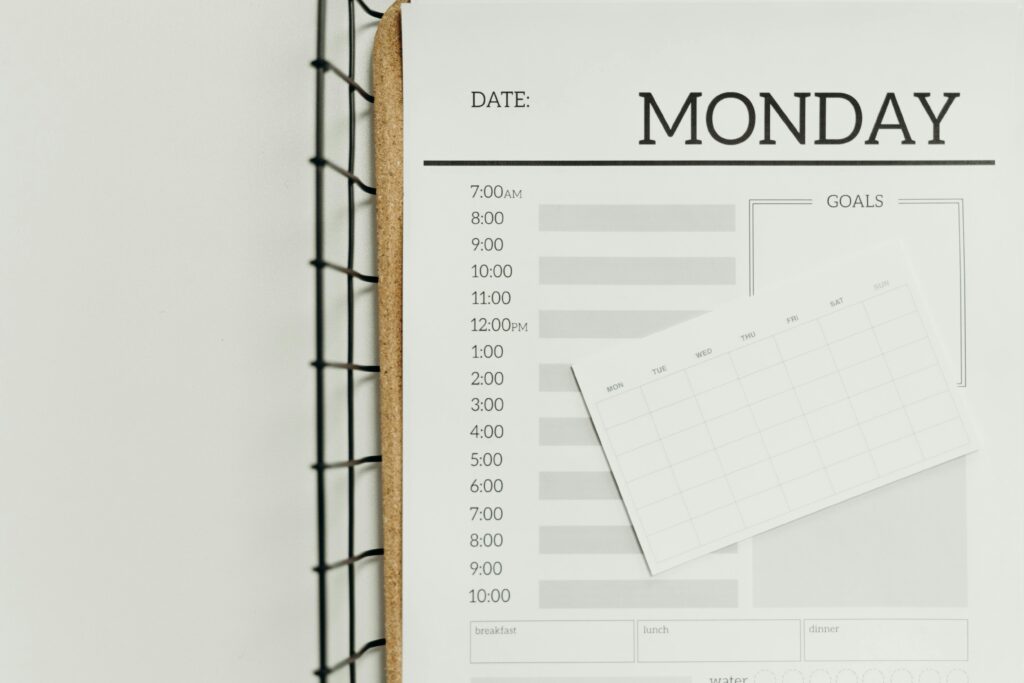
Start small and build consistency.
Plan three focused sessions each week for AP Seminar work. (College Board)
- Block 45–60 minutes for reading or research, then a 10–15 minute break. (College Board)
- Reserve one weekly session for organizing academic research skills: tagging sources, writing summaries. (Cornell University)
- Use a separate session for drafting claims and linking evidence to reasoning. (Purdue Online Writing Lab)
Why this matters: short, regular sessions beat marathon study sprints. (College Board)
You’ll avoid panic and keep your high school academic success steady.
Turn feedback into a revision engine
Feedback is fuel, not a verdict.
Collect comments from peers, teachers, or practice rubrics and log them. (College Board)
- Create a three-column feedback table: comment, action, result. (Purdue Online Writing Lab)
- Prioritize changes that strengthen evidence-based arguments and clarity first. (Purdue Online Writing Lab)
- Re-run your 60–90 second explanation after edits to test clarity and timing. (College Board)
Why this matters: repeated, small revisions improve structure and argument quality. (Purdue Online Writing Lab)
You’ll rehearse evidence and reasoning until they sound natural.
Long-term habits that lift your AP Seminar work

Treat research and writing as skills you cultivate every week. (Jagesic et al.)
Rotate practice: one week on note-taking, the next on source evaluation, the next on presentations. (Cornell University; College Board)
Focus on building academic research skills each month.
Do a short audit: ask what skills improved, what still slows you down. (Purdue Online Writing Lab)
Keep a running log of your best evidence and where you found it. (Penn State University Libraries)
This habit saves time and prevents scrambling when you draft. (Cornell University)
Practice mini-presentations for classmates.
Explaining claims to a peer exposes weak links in your reasoning. (College Board)
Record one presentation a week; listen for places you add unnecessary details. (College Board)
Make citation work part of research time, not an afterthought. (Purdue Online Writing Lab)
Export citations from your repository early so a bibliography isn’t a last-minute chore. (Penn State University Libraries)
Remember: progress often looks like repeated small wins. (Jagesic et al.)
Improving your high school academic success in AP Seminar is a series of tiny, steady steps.
Final push — what to do this month
Pick two tips to practice this week: note-taking and question narrowing. (Cornell University; College Board)
Next week, focus on drafting claims and matching two pieces of evidence each. (Purdue Online Writing Lab)
At the end of four weeks, review: are your claims clearer?
Is your evidence easier to find?
Are your presentations under 90 seconds and still persuasive? (College Board)
Keep what helps and discard what doesn’t.
Small, evidence-driven habits now can change how you write and present later. (Jagesic et al.; Purdue Online Writing Lab)
Which two tips will you commit to this week?
References
College Board. “AP Seminar Course.” AP Central, College Board, https://apcentral.collegeboard.org/courses/ap-seminar
Accessed 21 Jan. 2026
College Board. “AP Seminar — 2024 Scoring Guidelines: End-of-Course Exam (Set 1).” AP Central, College Board, 17 Sept. 2024, https://apcentral.collegeboard.org/media/pdf/ap24-sg-seminar-eoc-set-1.pdf
Accessed 21 Jan. 2026
College Board. “AP Seminar – AP Students.” AP Students, College Board, https://apstudents.collegeboard.org/courses/ap-seminar
Accessed 21 Jan. 2026
College Board. “AP Program Results: Class of 2024.” College Board Reports, College Board, https://reports.collegeboard.org/ap-program-results/class-of-2024
Accessed 21 Jan. 2026
Jagesic, Sanja; Maureen Ewing; Jing Feng; Jeff Wyatt. “AP Capstone™ Participation, High School Learning, and College Outcomes: Early Evidence.” ERIC (ED603711), College Board, 2020, https://eric.ed.gov/?id=ED603711
Accessed 21 Jan. 2026
Purdue Online Writing Lab. “Writing a Research Paper.” OWL Purdue, Purdue University, https://owl.purdue.edu/owl/general_writing/common_writing_assignments/research_papers/index.html
Accessed 21 Jan. 2026
Purdue Online Writing Lab. “Best Practices to Avoid Plagiarism.” OWL Purdue, Purdue University, https://owl.purdue.edu/owl/avoiding_plagiarism/best_practices.html
Accessed 21 Jan. 2026
The Writing Center, University of North Carolina at Chapel Hill. “Literature Reviews.” UNC Writing Center, University of North Carolina, https://writingcenter.unc.edu/tips-and-tools/literature-reviews/
Accessed 21 Jan. 2026
Learning Strategies Center, Cornell University. “The Cornell Note Taking System.” Learning Strategies Center, Cornell University, https://lsc.cornell.edu/how-to-study/taking-notes/cornell-note-taking-system/
Accessed 21 Jan. 2026
Penn State University Libraries. “ScholarSphere — Documentation / About ScholarSphere.” ScholarSphere Documentation, Penn State University, https://docs.scholarsphere.psu.edu/
Accessed 21 Jan. 2026