Understanding STEM Education
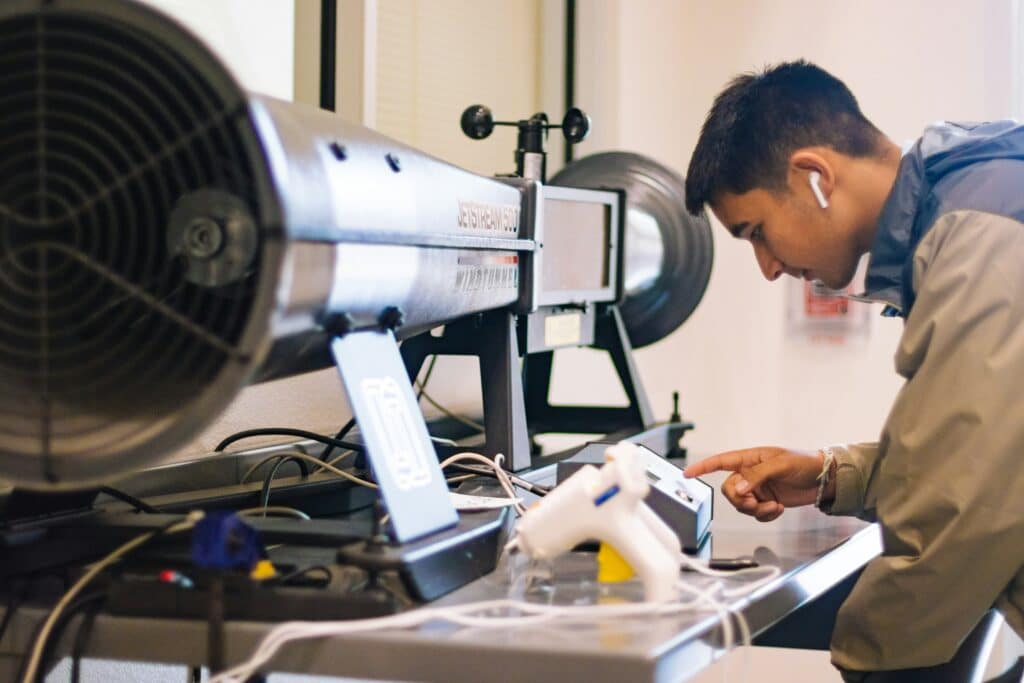
When Mia was in middle school, she loved building small robots with her dad. She didn’t know it yet, but what she was doing was part of something much bigger—STEM education. STEM stands for Science, Technology, Engineering, and Mathematics, and it’s a way of learning that connects these subjects to prepare students for the future. Instead of just memorizing facts, STEM is about solving real-world problems in creative ways.
STEM education is becoming more important every year because the world is changing fast. New technology, medical research, and engineering projects are shaping how we live. According to the U.S. Bureau of Labor Statistics, jobs in STEM fields are projected to grow by 10.8% between 2022 and 2032, compared to only 2.3% for non-STEM jobs BLS, 2023. That means students who focus on STEM skills have a much better chance of finding stable, well-paying jobs when they grow up.
But STEM isn’t only about future jobs. It’s also about developing skills that help in everyday life. For example, teamwork is learned when students build a bridge together in an engineering class. Problem-solving is sharpened when a coding project doesn’t work the first time, and students must figure out why. Creativity is encouraged when students design science fair experiments or come up with solutions to global challenges like clean energy. These lessons carry far beyond the classroom.
Schools that focus on STEM often use hands-on learning instead of just lectures. That means students get to build, test, and improve projects. Making mistakes is a big part of the process. In fact, failure in STEM is not seen as something bad—it’s an important step toward finding better answers. This way of learning teaches students to stay curious and not give up, which are skills they can use in school and in life.
To make STEM education easier to understand, here’s a simple table that shows what each part of STEM means:
| Letter | Subject | Focus |
|---|---|---|
| S | Science | Learning how the natural world works |
| T | Technology | Using tools, computers, and coding |
| E | Engineering | Designing and building solutions |
| M | Mathematics | Understanding numbers and patterns |
Another reason STEM is so powerful is because it prepares students to think globally. Problems like climate change, healthcare, and cybersecurity cannot be solved with just one subject. They need a mix of science, math, and creative design. By learning in a STEM environment, students are training to be the problem-solvers the world needs in the future.
To help students see the value of STEM, resources like Scholarly Sphere share blogs and articles about learning and education. These resources give examples of how STEM applies to schoolwork, careers, and even hobbies, so students can picture themselves in these roles.
STEM is not just a subject in school—it’s a mindset. It’s about curiosity, discovery, and using knowledge to make the world a better place.
Why STEM Education Matters for Students
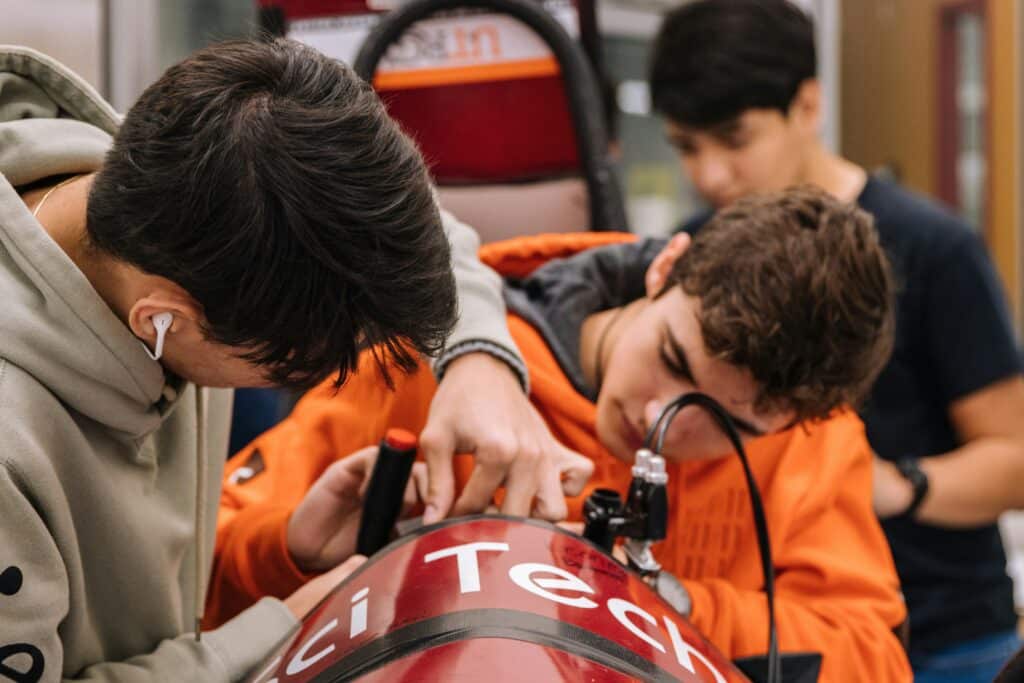
Think about the last time you used your phone, a computer, or even a video game system. All of these tools were made possible because of STEM. The apps we use, the medical tools doctors depend on, and even the bridges we cross every day exist thanks to people trained in science, technology, engineering, and math. This is why STEM education is more than just a trend—it’s a pathway to the future.
One of the biggest reasons STEM matters is because it leads to opportunities. According to the U.S. Department of Education, people working in STEM careers earn, on average, $25,000 more per year than those in non-STEM jobs U.S. Dept. of Education, 2022. This shows that students who learn STEM skills have a clear advantage when it comes to financial stability later in life. For students who want to support their families, travel, or save money, this can make a huge difference.
Another reason STEM is so important is because the world is facing big challenges. Issues like climate change, clean water access, and space exploration require smart, creative thinkers. For example, engineers are designing solar panels that work in cloudy weather, and scientists are studying ways to fight diseases faster. Without STEM education, students may miss the chance to take part in solving these global problems.
STEM also helps students with skills they will use no matter what job they choose. Critical thinking, problem-solving, and working as a team are not only for scientists or engineers—they are useful in everyday life. For example, students who practice coding learn how to break down big problems into smaller steps, which is the same skill needed to plan a group project or manage time wisely.
Here are some of the top benefits students gain from STEM education:
- Stronger problem-solving skills – learning how to handle challenges step by step.
- Creativity and innovation – finding new ways to approach problems.
- Collaboration – working together with others on group projects.
- Confidence in technology – understanding the tools that shape our future.
- Career opportunities – preparing for jobs that are in high demand.
Another key point is that STEM education is for everyone. In the past, some students felt that STEM was only for “math geniuses” or kids who loved science. But today, schools and programs are making STEM open to all students, no matter their background. Girls, for example, are now joining robotics teams and computer science classes in record numbers. According to the National Science Foundation, women earned 45% of all STEM bachelor’s degrees in 2020, a number that continues to rise NSF, 2023. This shows that STEM is becoming more inclusive, which makes it stronger.
Students can also explore STEM outside of the classroom. Many schools have clubs for robotics, coding, or math competitions. Communities often have science fairs or local programs where students can experiment with new ideas. Even at home, students can explore STEM by using free online resources, building projects with friends, or trying coding apps. These activities help connect what students learn in school with their personal interests.
This is where resources like Scholarly Sphere come in again. By offering blogs and articles about school and education, they make STEM topics easier to understand. Students can learn how others have used STEM to create exciting projects, and they can get tips for building their own skills. Having a place to explore new ideas encourages students to see themselves as future scientists, engineers, or innovators.
STEM education is not just about equations or lab work—it’s about preparing students for a future filled with possibilities. Whether someone wants to be a doctor, a video game designer, or an inventor, STEM provides the foundation they need to succeed. And the best part is, anyone can start learning STEM skills right now.
How We Can Support Students in STEM

STEM education can feel exciting, but sometimes it also feels overwhelming for students. Many wonder, “Where do I even start?” The good news is that STEM is everywhere, and students can explore it step by step. With the right support from teachers, parents, and communities, students can grow their skills in fun and meaningful ways.
One of the best ways to support students in STEM is by making it hands-on. Instead of only reading about science or math, students should be given the chance to build, create, and test ideas. For example, building a small bridge out of popsicle sticks teaches engineering design. Coding a simple game introduces technology and problem-solving. These small projects build confidence and show students that STEM is about experimenting, not just getting the right answer on a test.
Teachers play a huge role in helping students connect to STEM. When teachers use real-world examples, students see how their lessons apply to life outside the classroom. A math teacher might show how geometry is used in architecture. A science teacher might explain how chemistry helps design new medicines. Connecting subjects to careers helps students imagine themselves in those roles one day.
Parents and families can also encourage STEM by supporting curiosity at home. Asking simple questions like, “Why do you think the sky changes colors?” or “How could we design this to work better?” opens the door to critical thinking. Even visiting science museums, watching documentaries, or building small projects at home can inspire students to think like scientists and engineers.
Communities, too, play an important role. Local libraries, after-school clubs, and community centers often have STEM programs for students. These spaces give students a chance to meet others with the same interests and to work on projects outside of school. Competitions like robotics tournaments or math contests also motivate students to challenge themselves and learn new skills.
Here are a few simple ways students can get involved in STEM today:
- Join a school STEM club like robotics, math team, or coding.
- Use free apps and websites that teach coding or science experiments.
- Enter a local or online STEM competition to practice new skills.
- Read blogs and articles about STEM, like the ones we share here, to stay inspired.
- Work on a fun project at home, such as building with LEGO, designing an experiment, or creating a digital design.
The most important thing to remember is that STEM is not only for future scientists or engineers. It is for anyone who is curious, creative, and ready to learn. By supporting students with resources, encouragement, and opportunities, we help them believe in themselves and discover what they can achieve.
Conclusion
STEM education is more than just four subjects—it is a way of thinking and solving problems that will shape the future. With hands-on learning, support from teachers and families, and resources like blogs and articles about learning, students can grow their confidence and skills. As the world continues to change, STEM will be at the center of every major innovation. The question is, are you ready to be part of it?
References
National Science Foundation. Diversity and STEM: Women, Minorities, and Persons with Disabilities 2023. National Center for Science and Engineering Statistics, 2023.
https://ncses.nsf.gov/pubs/nsb20223
U.S. Bureau of Labor Statistics. Employment in STEM Occupations. U.S. Department of Labor, 2023.
https://www.bls.gov/emp/tables/stem-employment.htm
U.S. Department of Education. Science, Technology, Engineering, and Math: Education for Global Leadership. 2022.
https://stem.ed.gov/