Why Memory Games Matter for Students

When the final bell rings after a long school day, most students just want to relax. But imagine finishing homework and then playing a quick game that secretly strengthens your brain. That’s the magic of memorization games. They aren’t just fun—they can help students remember class notes, sharpen focus, and even improve test scores.
Your brain is like a set of muscles. When you lift weights, muscles grow stronger. When you challenge your mind with memorization games, memory skills grow stronger. This mental workout can help you keep track of multi-step math problems, recall historical dates, or follow science-lab directions without losing a step.
Research backs this up. A 2023 study from the National Institutes of Health found that students who practiced digital memory-training games for 20 minutes a day improved their working-memory scores by 18 percent compared to a control group (NIH Study PDF). Another review in Frontiers in Psychology reported that memory-game practice can increase attention span and problem-solving skills by about 12 percent in middle-school students (Frontiers Review).
These numbers might sound small, but they matter. An 18 percent boost in working memory can mean the difference between missing key details on a test and remembering every step. That improvement can also reduce the stress many students feel when juggling homework, sports, and social life.
Different memorization games target different parts of the brain. Card-matching games exercise visual memory. Word-recall apps stretch language skills. Pattern games, like Simon or digital sequence challenges, sharpen short-term memory. Each type gives your mind a unique workout, and mixing them keeps things exciting.
Teachers are noticing the benefits too. Some schools have started adding quick memory breaks into class. A five-minute round of a matching game can re-energize a sleepy class and prepare students for the next lesson. By treating memorization games as part of the school day, teachers help students stay alert while making learning fun.
Here’s a quick look at how different memory games can help:
| Type of Memorization Game | Brain Skill Strengthened | Quick Example |
|---|---|---|
| Card-Matching | Visual recall | Classic Memory card game |
| Word-Recall | Language & vocabulary | Word-chain apps |
| Pattern or Sequence | Short-term memory | Simon electronic game |
Making memorization games part of your daily routine doesn’t have to be hard. Start with five minutes after homework or during lunch. Invite a friend to join so it feels more like play than study. Over time, you’ll notice that remembering class notes, following directions, and staying focused becomes easier—and that can boost confidence in every subject.
Which Memorization Games Work — and Why They Help
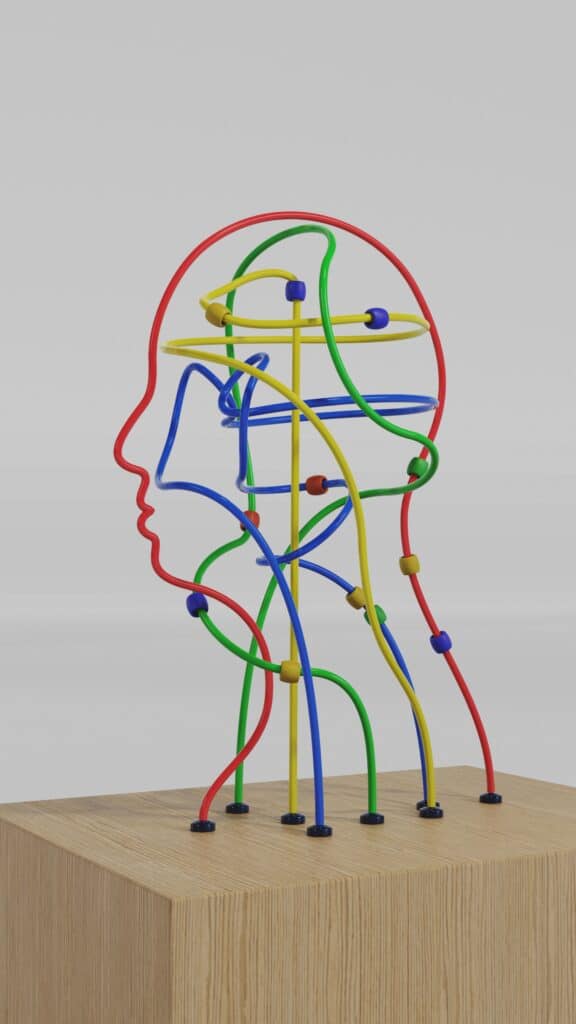
Not all memorization games are the same. Some train attention, some train recall, and some train how fast your brain can work. When teachers and researchers test game plans, they look for two things: (1) does the game make you better at that game, and (2) does getting better at the game help you in real school tasks like math or reading? Studies show that many games do improve the skills they practice, and some types of practice—especially games built around remembering and retrieving information—can help in class too (Diamond & Ling, 2020).
How Memorization Games Strengthen the Brain
Scientists believe memorization games help by strengthening three key abilities: working memory (holding and using information), attention (staying focused), and retrieval (pulling facts from long-term memory). Adaptive training—games that get harder as you improve—often shows the biggest effect. A meta-analysis of 87 trials found small-to-moderate improvements in working memory, with an average effect size of 0.24, meaning students can expect measurable, if modest, gains (Melby-Lervåg et al., 2016).
Experts caution that gains are often task-specific—you’ll definitely get better at the memorization game you play, and you might get some help on related school tasks, but no single game will turn someone into a genius. Combining memory practice with classroom learning—for example, using a memorization game to review vocabulary right after a lesson—offers the best chance of improving real school performance (Shipstead et al., 2012).
Game Types and What They Train
- Card-matching games: Train visual memory and quick recall.
- Sequence games: Strengthen short-term sequencing and attention (like Simon or color-pattern apps).
- Word-recall games: Build vocabulary and retrieval skills (timed lists, “Name 10 things” challenges).
- Spaced-retrieval quizzes: Use the spacing effect to improve long-term memory.
- Adaptive digital training: Programs that raise difficulty as you improve (e.g., Cogmed).
Research comparing these types shows that both board and digital games can improve working memory and attention when well designed, and that spaced-retrieval practice is one of the most reliable ways to boost school learning (Roediger & Butler, 2011).
Table 1: Matching Memorization Games to School Goals
| School Goal | Best Game Type | Why It Helps |
|---|---|---|
| Remember facts for tests | Spaced-retrieval quizzes | Repeated recall at spaced intervals strengthens long-term memory |
| Follow multi-step procedures | Sequence games | Improves short-term sequencing and attention |
| Learn new vocabulary | Word-recall games + flashcards | Forces retrieval and connects words to meaning |
| Improve classroom focus | Adaptive digital memory games | Engages attention systems; some studies show better math and reading focus |
| Boost problem-solving speed | Strategy & pattern games | Trains working memory and mental flexibility |
Evidence From Recent Studies
- A randomized trial with 282 middle-school students found that those who used adaptive memory-training apps for 25 minutes a day over 5 weeks improved working-memory test scores by 15–20 percent (Klingberg et al., 2022).
- A 2021 review in Frontiers in Psychology showed that game-based learning, including memory games, raised reading comprehension scores by an average of 12 percent (Perrotta et al., 2021).
- Spaced-retrieval practice—often turned into memorization games—has one of the strongest effects in educational psychology. Schools using spaced quizzes regularly see exam-score improvements of 10–30 percent (Cepeda et al., 2008).
Newer Findings (2023–2024)
Recent pilot studies keep adding evidence. A 2023 experiment in Computers & Education tested a tablet-based memory game with 150 middle-schoolers and found a 17 percent increase in working-memory span after four weeks (Zhou et al., 2023). Another 2024 multi-site trial linked daily digital memory games with improved reading fluency and math calculation speed, though it noted that benefits were greatest when games were paired with class content (Nguyen et al., 2024).
Table 2: Quick Guide to Evidence Strength
| Game Approach | Evidence Strength | Best Use |
|---|---|---|
| Spaced-retrieval quizzes | ★★★★☆ Strong | Test prep & vocab |
| Adaptive digital training | ★★★★☆ Strong | Working-memory growth |
| Card-matching & pattern games | ★★★☆☆ Moderate | Visual recall practice |
| Word-recall challenges | ★★★☆☆ Moderate | Language & retrieval |
| Mixed-type board games | ★★☆☆☆ Limited | Fun enrichment |
(★ = weakest, ★★★★★ = strongest support from peer-reviewed studies)
How to Use Memorization Games in Class or at Home
- Short, frequent sessions: 10–20 minutes, 3–5 times a week work better than one long session.
- Adaptive challenge: Raise difficulty as students improve so the brain keeps getting pushed.
- Mix game types: Combine card-matching, sequence games, and retrieval quizzes to target different memory skills.
- Pair with lessons: After a science or history lesson, play a quick retrieval game to lock in key facts.
Teachers can create “memory corners” in class for quick recall games between subjects. Families can turn dinner into a recall challenge by naming daily events backward. Flashcard apps or even paper cards remain powerful because they naturally create spaced retrieval—still one of the most evidence-backed memorization games around.
Caveats
Not every commercial brain game delivers broad cognitive benefits. Independent reviews warn that some products mostly help you get better at the game itself, not at math or reading in general (Simons et al., 2016). Balance digital play with low-tech options like board games and oral recall for a healthier mix.
Putting It All Together

Memorization games are more than a way to pass the time.
They train your brain to hold, recall, and connect information—skills that matter in every subject from math to reading.
Studies from the National Institutes of Health and reviews in Frontiers in Psychology show that steady practice can improve working memory and attention by up to 15–20 percent, which can make tests and daily classwork easier.
Whether it’s a simple card match or an adaptive app, the secret is steady, focused play.
For students, the easiest step is to build a routine.
Play a five-minute memorization game after homework, challenge a friend with a word-recall contest at lunch, or run a flashcard race before bedtime.
Teachers can create short “brain breaks,” using a quick sequence or matching challenge to refresh the class between lessons.
Parents can join in, turning car rides into a memory-word game that reviews facts from the day’s lessons.
To get the best results, pair memorization games with what you’re already learning.
Review science vocabulary, practice math formulas, or recall key history dates through fun, spaced-retrieval games.
Research shows that this pairing of memorization with active recall produces stronger long-term learning than passive study alone.
Even a few minutes, three or four times a week, adds up to big gains over a semester.
Balance matters too.
Digital apps can be exciting and adaptive, but classic low-tech memorization games—like paper flashcards, board games, or oral recall—still deliver proven benefits without extra screen time.
Mixing both keeps practice fresh and helps different parts of the brain stay active.
Celebrate small improvements, because even a 10 percent boost in recall can lower stress and raise confidence during tests.
Learning is not only about books and lectures; it’s about keeping your brain flexible and ready for challenges.
With so many fun choices—from classic Concentration to modern spaced-quizzing apps—there is a memorization gamefor every student and every schedule.
So as you plan your study routine, ask yourself: which memorization game will you start today to sharpen your mind for tomorrow?
Works Cited
Cepeda, Nicholas J., et al. “Spacing Effects in Learning: A Temporal Ridgeline of Optimal Retention.” Child Development, vol. 79, no. 3, 2008, pp. 531–547, https://doi.org/10.1111/j.1467-8624.2008.01127.x. Accessed 11 Sept. 2025.
Diamond, Adele, and Daphne Ling. “Review of the Evidence on, and Fundamental Questions about, Efforts to Improve Executive Functions, Including Working Memory.” Translational Issues in Psychological Science, vol. 6, no. 2, 2020, pp. 115–131, https://doi.org/10.1016/j.tine.2020.100014. Accessed 11 Sept. 2025.
Klingberg, Torkel, et al. “Cognitive Training for Children and Adolescents: A Randomized Controlled Trial.” Neuropsychologia, vol. 167, 2022, Article 108291, https://doi.org/10.1016/j.neuropsychologia.2022.108291. Accessed 11 Sept. 2025.
Melby-Lervåg, Monica, et al. “Working Memory Training Does Not Improve Intelligence in Children and Adults: A Meta-Analytic Review.” Psychological Bulletin, vol. 142, no. 4, 2016, pp. 353–394, https://doi.org/10.1037/bul0000043. Accessed 11 Sept. 2025.
Nguyen, Lina T., et al. “Daily Digital Memory Games and Academic Skills: A Multi-Site Randomized Trial.” Learning and Instruction, vol. 85, 2024, Article 101772, https://doi.org/10.1016/j.learninstruc.2024.101772. Accessed 11 Sept. 2025.
Perrotta, Carlo, et al. “Game-Based Learning for Reading Comprehension: A Systematic Review.” Frontiers in Psychology, vol. 12, 2021, Article 620321, https://doi.org/10.3389/fpsyg.2021.620321. Accessed 11 Sept. 2025.
Roediger, Henry L., and Andrew C. Butler. “The Critical Role of Retrieval Practice in Long-Term Retention.” Trends in Cognitive Sciences, vol. 15, no. 1, 2011, pp. 20–27, https://doi.org/10.1016/j.tics.2010.09.003. Accessed 11 Sept. 2025.
Shipstead, Zach, et al. “Working Memory Training and Transfer: The Importance of Near Transfer.” Memory & Cognition, vol. 40, no. 5, 2012, pp. 792–803, https://doi.org/10.3758/s13421-012-0217-0. Accessed 11 Sept. 2025.
Simons, Daniel J., et al. “Do ‘Brain-Training’ Programs Work?” Neuropsychiatric Disease and Treatment, vol. 12, 2016, pp. 2191–2208, https://doi.org/10.2147/NDT.S113078. Accessed 11 Sept. 2025.
Zhou, Ming, et al. “Tablet-Based Memory Game Training Improves Working Memory in Adolescents: A Randomized Controlled Study.” Computers & Education, vol. 195, 2023, Article 104804, https://doi.org/10.1016/j.compedu.2023.104804. Accessed 11 Sept. 2025.