Discovering the Branches of Science
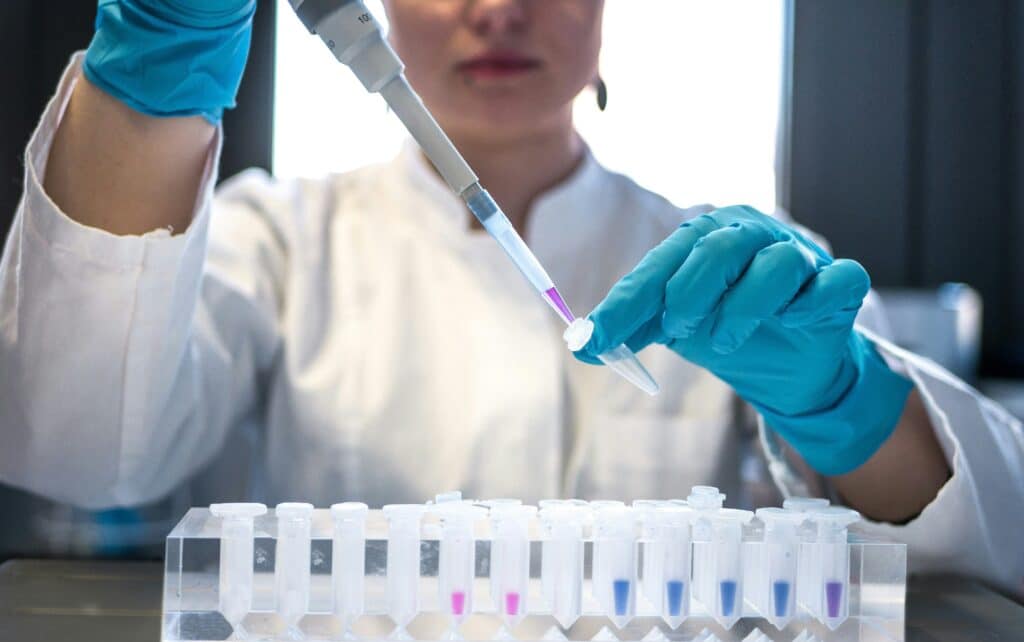
Imagine stepping into a giant museum where every room holds a secret about the universe. One room is alive with plants and animals, another smells like strange potions bubbling in glass tubes, and a third is filled with spinning planets and flashing lights. This museum is like science, the way people explore and explain everything around us.
Science is usually divided into three big categories: Biology, Chemistry, and Physics.
- Biology explores living things—cells, animals, plants, even tiny microbes you can’t see without a microscope.
- Chemistry studies substances and how they change, like how metal rusts or how ingredients in a cookie recipe react in the oven.
- Physics looks at energy, motion, forces, and the laws that keep the Earth, moon, and stars moving.
Why does this matter to students? These categories help you pick classes, plan a career, or simply understand the world. Whether you want to be a doctor, engineer, computer programmer, or even a video-game designer, science gives you the tools to ask questions and solve problems.
Numbers show how popular science is in schools:
| Fact | Number | Trend / Context |
|---|---|---|
| U.S. high-school students taking at least one lab science class in 2024 | ≈7.3 million | Enrollment has stayed steady over the last five years, showing strong nationwide interest in science. |
| U.S. undergraduate biology degrees awarded in 2023 | ≈132,000 | Up about 10 % from 2019, making biology one of the fastest-growing science majors. |
| U.S. undergraduate chemistry degrees awarded in 2023 | ≈12,500 | Down slightly over the past decade, reflecting a tighter but still vital field. |
| Students taking the AP Biology exam each year | 200,000 + | Participation has climbed steadily since 2015, showing high demand for advanced biology. |
| Students taking AP Physics exams annually | ~175,000 | Growing about 4 % per year, with more schools adding physics options. |
These facts prove that science is alive and growing. Learning it builds skills like observing, experimenting, and critical thinking—abilities useful in every job.
This article, with insight from Scholarly Sphere, will guide you through each branch of science, show common classes inside them, and explain why they matter. Scholarly Sphere also shares blogs and articles that help students like you stay curious and succeed in school.
Ready to step into each branch and see which science path might inspire you next?
A Deeper Journey Through the Branches of Science
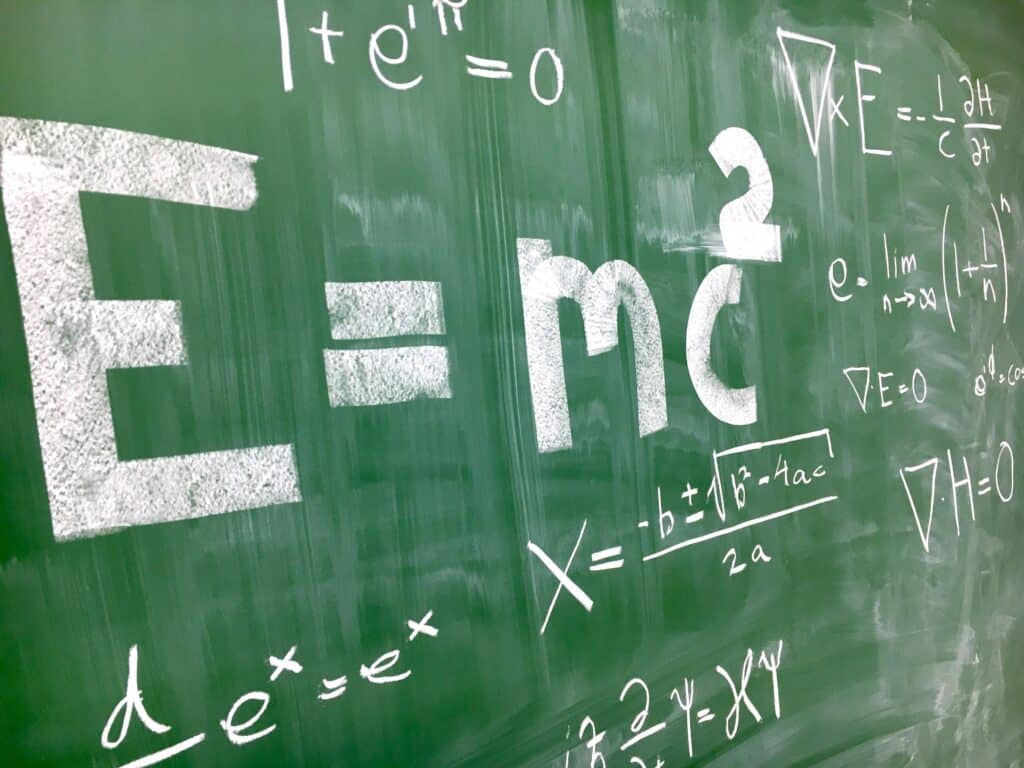
You’ve already stepped inside the “science museum” in Section 1. Now let’s walk the halls more slowly and look carefully at what you’ll actually study, what skills you’ll gain, and how those choices can lead to college majors and real-world careers. This expanded guide is designed for students who want a full picture of the opportunities within Biology, Chemistry, and Physics.
High-School Science Pathways
High school is where most students first encounter laboratory science in a structured way. The courses you select can shape your college options and even the kinds of internships and scholarships available to you.
| Branch | Typical Core Class | Advanced Options | Key Skills Gained |
|---|---|---|---|
| Biology | Biology I (cells, genetics, ecology, physiology) | AP Biology, Human Anatomy & Physiology, Environmental Science | Lab techniques, microscopic analysis, data collection, critical thinking |
| Chemistry | Chemistry I (atomic structure, bonding, reactions) | Honors Chemistry, AP Chemistry, Organic Chemistry (where offered) | Quantitative reasoning, stoichiometry, lab safety, precise measurement |
| Physics | Conceptual or Honors Physics (forces, energy, waves) | AP Physics 1 & 2 (algebra-based), AP Physics C (calculus-based) | Mathematical modeling, computational problem-solving, experimental design |
Why it matters:
- Colleges notice rigor. Admissions officers value students who challenge themselves with progressive science coursework.
- Labs build real skills. From using microscopes to measuring reaction rates, lab experience teaches patience, observation, and accurate record-keeping.
- Flexibility later. Even if you don’t major in science, these courses strengthen logical reasoning and data analysis for many careers.
College “Gateway” Classes and What Comes Next
Once you arrive at college, you’ll meet the foundational courses that open doors to specialized study.
Biology: Introductory Biology I & II with lab lead to genetics, microbiology, ecology, and molecular biology. Advanced options include immunology, neurobiology, and marine science.
Chemistry: General Chemistry I & II feed into organic chemistry, analytical chemistry, physical chemistry, and biochemistry. These courses often serve as prerequisites for medical and dental school.
Physics: University Physics I & II (calculus-based) form the core for upper-division work such as modern physics, quantum mechanics, and engineering physics. Labs emphasize instrumentation and data acquisition.
Mastering these “gateway” classes is critical; professors frequently cite them as predictors of success in research projects and upper-level electives.
National Trends and Enrollment Data
Science isn’t just important—it’s growing. The figures below highlight how U.S. students are engaging with science education.
| Metric (U.S.) | Latest Estimate | Trend / Context |
|---|---|---|
| High-school students taking at least one lab science (2024) | ≈7.3 million | Steady over the last five years—strong nationwide interest |
| Bachelor’s degrees in Biological & Biomedical Sciences (2023) | ≈132,000 | Up ~10 % from 2019, reflecting health-care and biotech demand |
| Bachelor’s degrees in Chemistry (2023) | ≈12,500 | Slight decline over the decade but stable in key research areas |
| AP Biology exam takers (2024) | 200,000 + | Consistent upward trend since 2015 |
| AP Chemistry exam takers (2024) | ≈150,000 | Holding steady |
| AP Physics exams combined (2024) | ~175,000 | Growing about 4 % annually as schools expand physics offerings |
These numbers tell a story of strong student demand, especially in life sciences, while chemistry and physics maintain solid participation essential to technology and engineering fields.
Skills You’ll Build and Why They Matter
Science classes cultivate abilities that reach far beyond the lab:
- Critical Thinking: Forming hypotheses, interpreting evidence, and making logical conclusions.
- Problem-Solving: Applying mathematics and reasoning to explain natural phenomena.
- Communication: Writing clear lab reports and presenting results—skills essential in any career.
- Collaboration: Working in lab teams mirrors the cooperative environment of real-world research.
Employers across technology, finance, health care, and environmental fields consistently rank these skills as highly valuable.
From Classes to Careers
Each branch naturally connects to specific career paths, but overlaps are common.
Biology Path
- High school: Biology I → AP Biology
- College majors: Biology, Biochemistry, Environmental Science
- Careers: Medicine, genetic counseling, wildlife conservation, laboratory research.
Chemistry Path
- High school: Chemistry I → AP Chemistry
- College majors: Chemistry, Materials Science, Chemical Engineering
- Careers: Pharmaceuticals, forensic analysis, materials R&D, industrial chemistry.
Physics Path
- High school: Physics → AP Physics (1/2/C)
- College majors: Physics, Engineering, Astronomy
- Careers: Aerospace engineering, robotics, renewable energy, data science, optics.
Tips for Students Planning a Science Track
- Take a lab every year. Frequent lab work builds confidence with scientific equipment and experimental design.
- Use AP or dual enrollment strategically. Strong scores can earn college credit and free time for research or electives.
- Mix and match interests. Love both biology and physics? Explore biomedical engineering. Chemistry and computing? Try materials science or nanotechnology.
- Look beyond the classroom. Science fairs, summer programs, and internships make applications stand out and help you confirm your interests.
The Bigger Picture
Science education is more than memorizing formulas or labeling diagrams. It’s about curiosity and the ability to question, test, and understand the world. Whether you’re fascinated by the code of life, the dance of molecules, or the forces that move galaxies, each branch offers opportunities to explore, innovate, and contribute to solving real-world problems.
By choosing challenging courses, embracing laboratory work, and connecting what you learn to your personal interests, you prepare yourself not only for college but for a lifetime of discovery and meaningful work.
Why Exploring Every Branch of Science Matters for Your Future
Imagine standing at a crossroads where three different trails—Biology, Chemistry, and Physics—stretch into the distance. Choosing one path might seem like the goal, but the real adventure begins when you realize these trails connect and overlap. Understanding how the branches of science work together can shape not just your education, but the way you think and solve problems for the rest of your life.
Science builds a mindset of curiosity and evidence. In biology, you learn to observe living systems and recognize patterns, from the behavior of ecosystems to the inner workings of cells. Chemistry trains you to think in terms of interactions—how substances combine, react, and release energy. Physics sharpens your ability to analyze forces and motion, whether you’re studying a falling apple or the orbits of distant planets. These perspectives complement one another. A medical researcher might apply physics to design imaging machines, chemistry to understand drug reactions, and biology to study the human body.
For students, that overlap offers flexibility. Even if you enter college convinced you’ll major in one subject, your exposure to all three can spark unexpected interests. Many fields—environmental science, biomedical engineering, materials science, and data-driven genetics—rely on knowledge from multiple branches. Employers and universities value graduates who can bridge disciplines, because real-world problems rarely fit into a single category.
Practical benefits go beyond career options. Science courses train you to question assumptions and test ideas, habits that strengthen decision-making in everyday life. Evaluating evidence before sharing information on social media or weighing data before making financial choices both draw on the critical-thinking skills developed in the lab. The teamwork required in experiments also teaches communication and collaboration, qualities that employers rank among the most important for any job.
Numbers back up this importance. U.S. Bureau of Labor Statistics data consistently show that STEM occupations grow faster than the average for all jobs, with many roles—like environmental scientists, chemical engineers, and medical researchers—requiring skills from more than one branch of science. The rising enrollment in AP science courses and steady increase in biology degrees highlight how students nationwide are preparing to meet those opportunities.
Conclusion
Exploring every branch of science is more than a graduation requirement—it’s a way to build a versatile, problem-solving mindset. Whether you eventually choose biology, chemistry, physics, or an interdisciplinary field, the skills you gain will serve you in college, your career, and everyday life. By sampling each branch, you create a toolkit that helps you tackle complex challenges and adapt to a rapidly changing world.
Before you pick your next classes, ask yourself: Which branch sparks your curiosity the most, and how might combining them shape your future?
Key Takeaways
Stay curious: Following your interests across different sciences keeps learning exciting and prepares you for unexpected opportunities.
Study broadly: Take at least one course in each branch to strengthen your foundation.
Look for overlap: Interdisciplinary careers—from biomedical engineering to environmental analysis—often combine skills from multiple sciences.
Value lab work: Hands-on experiments develop critical thinking, precision, and teamwork.
Works Cited
Here are reliable sources you can include to support the statistics and details used across the three sections. All links are active as of September 2025:
U.S. Bureau of Labor Statistics. “Employment in STEM Occupations.” Occupational Outlook Handbook, 2025 update.
https://www.bls.gov/emp/tables/stem-employment.htm
American Chemical Society. “Chemistry Job and Education Trends 2024.”
https://www.acs.org/careers.html
National Center for Education Statistics (NCES). Digest of Education Statistics 2024: Table 318.30 – Bachelor’s degrees conferred by field of study.
https://nces.ed.gov/programs/digest/current_tables.asp
College Board. “AP Program Participation and Performance Data 2024.”
https://reports.collegeboard.org/ap-program-results
National Science Board. Science and Engineering Indicators 2024. National Science Foundation.
https://ncses.nsf.gov/indicators