Why Teacher-Student Relationships Matter
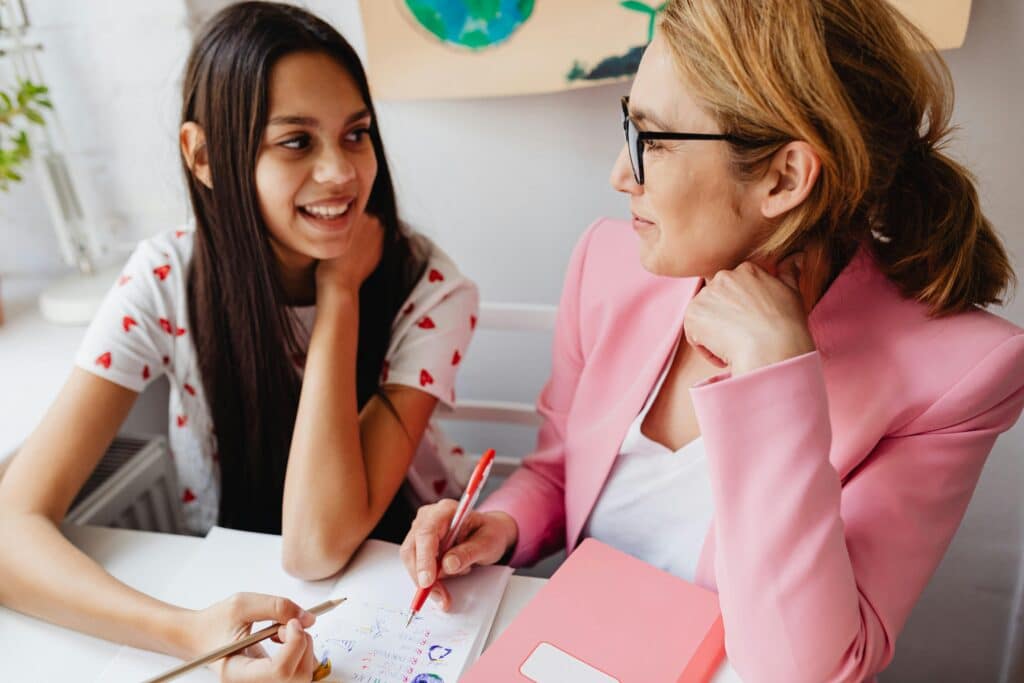
Ms. Lopez stood at the classroom door as her students walked in. She greeted each one by name, noticing who smiled and who looked worried. That small daily habit built trust over time. For one shy student, it meant finally raising a hand in class. This simple moment shows how a strong teacher student relationship can change how students feel about learning.
Ms. Lopez stood at the classroom door as her students walked in. She greeted each one by name, noticing who smiled and who looked worried. That small daily habit built trust over time. For one shy student, it meant finally raising a hand in class. This simple moment shows how a strong teacher student relationship can change how students feel about learning.
A positive teacher student relationship is more than friendly greetings. When teachers and professors build real connections, students feel welcomed and safe. Research shows that students who believe their teachers care about them are more engaged and do better academically. Feeling valued helps students take risks in their learning, from speaking up in class to trying a difficult math problem.
Building these relationships takes effort but not perfection. Listening, showing respect, and keeping communication open are key. Teachers who learn about students’ interests can design lessons that match their goals and experiences. Professors who check in with college students during office hours can help them stay motivated when assignments feel overwhelming.
Below is a quick look at why these connections matter.
| Benefit of Strong Teacher Student Relationships | Why It Helps |
|---|---|
| Higher engagement | Students participate more and stay focused. |
| Better academic results | Trust makes students more willing to tackle hard work. |
| Improved classroom behavior | Respect lowers conflict and builds cooperation. |
| Stronger self-confidence | Students feel seen and capable. |
Teachers and professors who want to strengthen relationships can start small. Greeting students, giving positive feedback, and sharing a bit about your own learning journey create an atmosphere of trust. Over time, these actions help students feel that their voices count.
Our collection of blogs and articles about education, learning, and school offers practical tips and real stories to guide teachers and professors. By reading how other educators nurture a teacher student relationship, you can find ideas that fit your own classroom style.
In the scholarly sphere, experts remind us that relationships are not just “extra”—they are the heart of good teaching. Whether you lead a college lecture or a middle-school science lab, investing in these connections benefits everyone.
How Teachers and Professors Can Build Strong Teacher-Student Relationships
The Evidence
A strong teacher student relationship doesn’t just “feel nice”—it has measurable impacts.
- A review of 46 studies found that strong teacher student relationships are linked with higher student engagement, better attendance, higher grades, fewer disruptive behaviors, fewer suspensions, and lower dropout rates, even when controlling for differences in students’ family, school, and personal backgrounds (Education Week, 2019).
- In a study of nearly 20,000 fourth graders and over 11,000 eighth graders in China, positive teacher student relationships promoted academic achievement both directly and indirectly, especially through increasing students’ subjective well-being. For fourth graders, well-being mediated about 42.8 % of the link between relationship and achievement; in eighth grade, about 22.7 % (Zhou et al., 2023).
- Another study followed young children across preschool and the first two school years: those with stable, high-quality teacher student relationship trajectories had significantly fewer mental health problems by the second school year, even after accounting for family background (O’Connor et al., 2014).
These statistics show that building strong teacher student relationships early and keeping them steady matters for learning, behavior, mental health, and overall classroom life.
Practical Tips for Teachers/Professors
Below are specific strategies teachers or professors can use to build strong relationships. These tips are drawn from education blogs, research in the scholarly sphere, and real classrooms.
| Strategy | What to Do | Why It Helps / Evidence |
|---|---|---|
| Greeting and small talk daily | Spend 1–2 minutes every class greeting students by name or asking how they are (Edutopia, 2022). | Builds trust and raises engagement. |
| Empathic listening | When a student shares worries, listen without rushing to fix things (Edutopia, 2021). | Creates emotional safety. |
| “2×10” structured interactions | For 10 days, spend 2 minutes per day with one student talking about interests (Edutopia, 2020). | Deepens connections quickly. |
| Consistency and fairness | Apply rules equally and be predictable (Ratnam Schools Blog, 2023). | Students trust and respect fair teachers. |
| Welcoming classroom space | Use get-to-know-you surveys and student boards (Edutopia, 2022). | Validates students’ identities. |
| Positive reinforcement | Celebrate effort and growth, not just top grades (Edu.com, 2023). | Builds confidence and motivation. |
| Authenticity | Share appropriate personal stories (Edutopia, 2021). | Humanizes the teacher. |
| Relationship mapping | Track which students you know well and who needs outreach (Edutopia, 2020). | Ensures no student is overlooked. |
Step-by-Step Plan
- Week 1 – Welcome & Surveys
Greet students by name and gather interest surveys (Edutopia, 2022). - Weeks 2–4 – Personal Check-Ins
Try the 2×10 method and begin relationship mapping (Edutopia, 2020). - Weeks 5–8 – Authentic Sharing
Share stories and celebrate growth (Edutopia, 2021). - Ongoing – Empathic Listening & Fairness
Practice active listening and consistent expectations (O’Connor et al., 2014).
Overcoming Challenges
| Challenge | Barrier | Solutions |
|---|---|---|
| Large classes | Limited time | Use quick greetings, peer mentors (Edutopia, 2020). |
| Shy or mistrustful students | Hesitant to connect | Be patient and consistent (Zhou et al., 2023). |
| Lack of training | Little formal guidance | Read education blogs and observe peers (Education Week, 2019). |
| Cultural differences | Misunderstandings | Learn about students’ backgrounds and adapt communication (Edutopia, 2022). |
Key Takeaways
Combining research from the scholarly sphere with practical blogs and articles gives teachers both the “why” and the “how.”
Intentional daily actions build trust.
Fairness and consistency sustain respect.
Listening and celebrating growth foster belonging.
Bringing It All Together

Picture a classroom where every student feels noticed. The teacher knows who loves science fiction, who plays soccer after school, and who is quietly worried about a test. In that room, learning is more than memorizing facts—it’s a conversation built on trust. That picture captures the heart of a strong teacher student relationship.
The research is clear. When teachers and professors invest time in relationships, students attend more often, engage deeply, and achieve at higher levels (Education Week, 2019; Zhou et al., 2023). These connections also protect mental health and encourage students to take academic risks (O’Connor et al., 2014). Even small actions—like greeting each student at the door or listening without interrupting—can spark big changes in classroom culture.
Building these relationships isn’t about adding more to an already full schedule. It’s about weaving relationship-building into what you already do. A short check-in before a lecture, a quick note of encouragement on an assignment, or a few minutes of authentic conversation during office hours all matter. Over time, those moments form a web of trust that supports both teaching and learning.
Teachers and professors don’t have to figure it out alone. Our collection of blogs and articles about education, learning, and school offers step-by-step ideas, real classroom stories, and practical strategies. These resources translate insights from the scholarly sphere into actions you can try tomorrow. Whether you teach a lecture hall of college students or a small middle-school class, you can find guidance and encouragement to strengthen every teacher student relationship.
Strong relationships also benefit educators. When students feel connected, classrooms run more smoothly, discussions are richer, and teachers often find renewed purpose in their work. Investing in relationships is not just for students’ success—it’s a path to a more rewarding teaching career.
The journey starts with a single decision: to see and value every student. From there, each greeting, question, and moment of listening adds to a foundation of respect and care. Are you ready to take the next step and create a classroom where every learner feels truly known?
Key Points to Remember
Stay flexible: Adapt methods when students’ needs or circumstances change.
Start small, stay steady: Daily greetings or short check-ins lay the groundwork for trust.
Be consistent and fair: Predictable expectations help students feel safe.
Listen with empathy: Show you value students’ feelings before offering solutions.
Celebrate growth: Recognize effort, improvement, and acts of kindness—not just high scores.
Integrate relationship time: Use moments already in your schedule, like transitions or office hours.
Know your students’ interests: Use surveys, journals, or informal chats to learn what matters to them.
Share your own stories: Appropriate self-disclosure helps students see you as a real person.
Use relationship mapping: Track which students need more attention so no one feels invisible.
Create inclusive rituals: Morning meetings, weekly reflections, or group projects build community.
Seek professional resources: Blogs, articles, and education networks provide new strategies and encouragement.
Reflect often: Pause to evaluate which relationships are thriving and which need support.
Support yourself, too: Strong connections can lower teacher stress and reignite motivation.
Encourage peer bonding: Facilitate group tasks so students also build friendships.
Model respect: Show courtesy in every interaction to set the tone for the class.
Be culturally responsive: Learn about students’ backgrounds and adapt communication styles.
Provide meaningful feedback: Feedback that highlights strengths and offers guidance shows you care.
Maintain high expectations with support: Communicate belief in every student’s ability to succeed.
Celebrate classroom milestones: Mark achievements like completing a project or reaching a collective goal.
Offer choice in learning: Let students select topics or project formats to show their voices matter.
Works Cited
O’Connor, E., et al. “Preschool Teachers’ Relationships with Children: Links to Early Childhood Mental Health.” BMC Psychology, 2014.
https://bmcpsychology.biomedcentral.com/articles/10.1186/s40359-014-0027-2
Education Week. “Why Teacher-Student Relationships Matter.” Education Week, 2019.
https://www.edweek.org/teaching-learning/why-teacher-student-relationships-matter/2019/03
Edutopia. “23 Ways to Build and Sustain Relationships With Students.” Edutopia, 2022.
https://www.edutopia.org/article/23-ways-to-build-and-sustain-relationships
Edutopia. “Building Deeper Relationships With Students.” Edutopia, 2021.
https://www.edutopia.org/article/how-building-deeper-relationships-students
Edutopia. “Creating Purposeful Relationships With Students.” Edutopia, 2020.
https://www.edutopia.org/article/creating-purposeful-relationships-students
Ratnam Schools Blog. “Tips to Build Teacher-Student Relationships.” Dr. Kishore S. Ratnam Schools, 2023.
https://www.drkishoresratnamschools.com/tips-to-build-teacher-student-relationships
Edu.com. “7 Proven Strategies to Strengthen Relationships Between Teachers and Students.” Edu.com, 2023.
https://www.edu.com/blog/7-proven-strategies-to-strengthen-relationships-between-teachers-and-students
Zhou, Y., et al. “Teacher–Student Relationship and Academic Achievement: The Mediating Role of Subjective Well-Being.” Frontiers in Psychology, 2023.
https://pmc.ncbi.nlm.nih.gov/articles/PMC9909438/