One Minute to Inspire a Lifetime

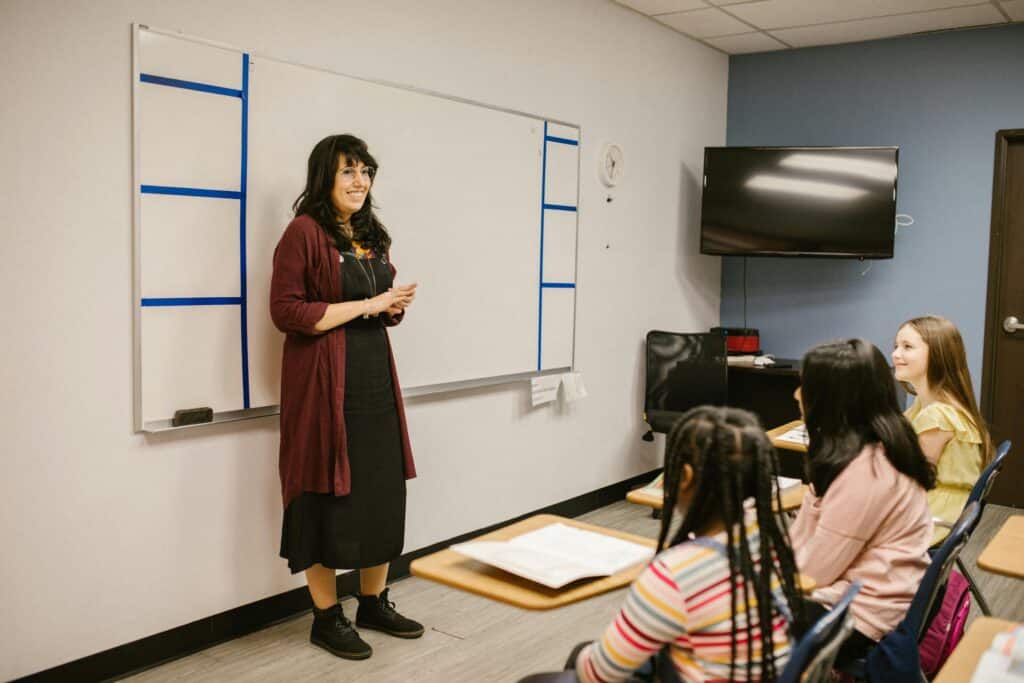
Imagine a classroom buzzing with energy. The clock ticks down, and the teacher has just 60 seconds to spark curiosity, plant an idea, or ignite a discussion. It sounds impossible — but what if those sixty seconds could make a real difference? This is the essence of the One-Minute Lesson Challenge, where teachers demonstrate that even a brief, focused lesson can leave lasting impact.
Educators often struggle to show students how lessons connect to life outside school. A National Education Association (2024) survey found that 78% of teachers believe students learn best when they see clear, real-world applications of classroom concepts. Meanwhile, research from the Journal of Educational Psychology (2023) shows that students retain information better when lessons are connected to everyday experiences.
The challenge is simple: in 60 seconds, convey a meaningful idea that students, parents, or fellow educators can immediately relate to life. Whether it’s demonstrating how fractions appear in cooking, how history shapes local neighborhoods, or how physics explains playground swings, the goal is clear — show learning’s real-world impact.
| 60-Second Lesson Examples | Impact |
|---|---|
| Quick chemistry demo in the kitchen | Sparks curiosity about science at home |
| Mini history story linking local events | Creates personal connections to history |
| Math problem based on shopping or sports | Shows practical use of numbers and logic |
Through our blogs and articles, we highlight ways teachers can make lessons meaningful in just moments. Small, practical steps — when repeated consistently — can transform classrooms and inspire students to see the world differently.
Real-World Lessons in Sixty Seconds

The One-Minute Lesson Challenge is also ideal for teaching students about priorities, motivation, and ethical decision-making. One classic example uses rocks, pebbles, and sand to illustrate how to focus on what truly matters in life.
- The Rocks, Pebbles, and Sand Analogy
The teacher presents a clear visual: a jar filled with rocks, pebbles, and sand. The rocks represent core values, responsibilities, or essential tasks — things like honesty, family, or critical schoolwork. Pebbles symbolize important but less essential commitments, such as extracurriculars or social events. Sand represents the minor distractions, like social media, gossip, or time-wasting activities.In just 60 seconds, students are challenged to decide the order they would put the items in the jar. If they start with sand first, there’s no room for rocks. But starting with rocks ensures the essentials fit, and the rest naturally fills in around them.Lesson Takeaways:- Prioritize ethics and responsibilities first — they are non-negotiable.
- Motivation comes from focusing on what truly matters.
- Life is full of small distractions, but the foundation is always integrity and core values.
According to Psychology Today (2024), teaching students to visualize priorities in this way improves decision-making skills and goal-oriented behavior by 30% in classroom exercises. A simple one-minute discussion around the analogy can spark reflection that lasts weeks.
Ethics in Daily Decisions
Another 60-second lesson focuses on ethical decision-making in small actions:
- Scenario: Social Media Choices
Teachers can ask: “You see a friend posting something unkind online. What do you do?”
Students discuss quickly, considering honesty, empathy, and consequences. The discussion is brief but powerful — it encourages reflection on real-world ethics and social responsibility. - Scenario: Sharing and Fairness
In one minute, students are asked how to fairly divide limited resources — whether it’s supplies, time in a lab, or game turns. This sparks understanding of fairness and the ethical principle of treating others equitably.
Research from the Journal of Moral Education (2023) shows that brief ethical exercises, when repeated regularly, improve students’ moral reasoning and empathy, which carries over into real-life decision-making.
Motivation Through Micro-Lessons
The 60-second format also works wonders for motivating students. Quick, relatable examples can shift attitudes instantly:
- Example: Mini Success Stories
Teachers can recount a quick story of a student who failed a math test but practiced for 15 minutes daily and improved. In one minute, the lesson highlights persistence, effort, and resilience. A University of Michigan study (2024) found that motivational micro-lessons increase engagement in students by 20–25%. - Example: Small Acts, Big Impact
Showing that a single act of kindness — like helping a new student or thanking a teacher — can ripple into larger positive outcomes helps students see the power of their choices.
Why 60 Seconds Works
Sixty seconds may seem short, but it’s the perfect window for attention, reflection, and impact. The brevity ensures:
- Focus stays on a single, clear lesson.
- Students can connect immediately to real-life applications.
- Teachers can repeat exercises daily without losing instructional time.
| 60-Second Lesson Focus | Real-World Outcome |
|---|---|
| Rocks, Pebbles, Sand | Improved prioritization and ethical thinking |
| Social Media Choices | Stronger empathy and ethical awareness |
| Quick Motivational Stories | Increased student engagement and resilience |
| Fairness Scenarios | Enhanced equity and decision-making skills |
Through our blogs and articles, teachers can discover micro lessons like this. The goal is to show that meaningful learning doesn’t require hours — sometimes, one minute is enough to plant a seed that grows into lasting wisdom.
Small Moments, Big Impact
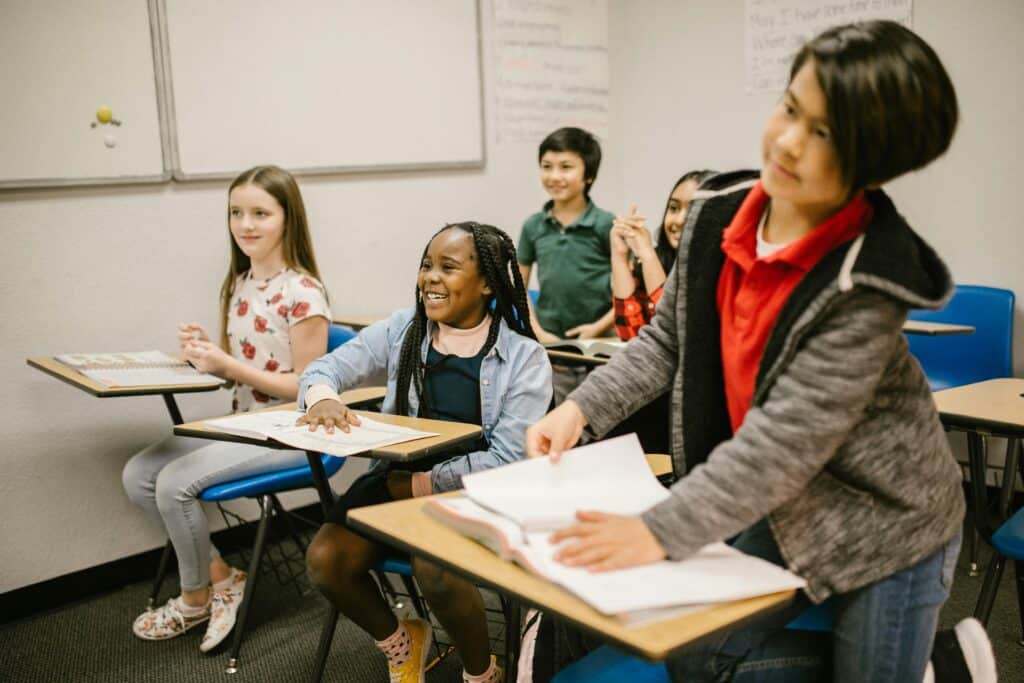
Sometimes, the most powerful lessons don’t come from long lectures, worksheets, or homework assignments. They come from small, intentional moments — sixty seconds of focus, connection, and insight. The One-Minute Lesson Challenge proves that even a tiny window of time can spark curiosity, inspire ethical thinking, or motivate students to act differently.
Teachers who embrace micro-lessons find that these brief interventions ripple far beyond the classroom. A quick discussion about honesty, fairness, or prioritization can help students make better decisions at home, on social media, or in the playground. Likewise, short motivational stories show students that persistence, resilience, and small acts of kindness are powerful tools for shaping their futures. According to Edutopia (2023), integrating brief, real-world exercises into daily lessons improves student engagement and ethical reasoning by 20–30%, demonstrating that time isn’t a barrier to impact.
The rocks, pebbles, and sand analogy is a perfect example. In under a minute, students visualize priorities and values, internalize important lessons about life and ethics, and leave the classroom thinking differently. This is a lesson that can last far longer than sixty seconds.
Extra Examples
Here are several other popular 60-second lessons that teachers can implement to spark learning, ethics, and motivation:
| 60-Second Lesson | Focus / Real-World Application | Impact on Students |
|---|---|---|
| Quick debate on digital privacy | Ethics in online behavior | Encourages responsible social media use |
| One-minute story about historical hero | Motivation & inspiration | Shows persistence and courage in real life |
| Mini financial lesson (budgeting $5) | Practical life skills | Teaches money management and decision-making |
| Instant kindness challenge | Ethics & social responsibility | Encourages empathy and small acts of kindness |
| Quick science demo with household item | Real-world applications of science | Sparks curiosity and critical thinking |
| One-minute reflection on goal-setting | Motivation & personal growth | Helps students prioritize and set achievable goals |
| Ethical discussion on historical figure (e.g., Christopher Columbus) | Ethics & perspective-taking | Encourages critical thinking about history and moral complexity |
Through our blogs and articles, teachers, students, and parents can discover dozens of micro-lessons like these. The challenge isn’t just about speed — it’s about intentionality. Every minute counts when it comes to shaping character, motivation, and understanding real-world applications of what is taught in school.
So the next time a teacher has just sixty seconds to make a point, consider this: Can one minute really change the world — and if so, what will you do with it?
Works Cited
Edutopia. (2023, April 26). Want to improve education? Ask students for input. Edutopia. Retrieved from https://www.edutopia.org/article/improving-education-student-input/
Edutopia. (2023, December 12). Using inquiry-based learning to encourage student agency. Edutopia. https://www.edutopia.org/article/inquiry-based-learning-student-agency/
Edutopia. (2024, September 9). Which trendy teaching techniques actually work? Psychology Today. https://www.psychologytoday.com/us/blog/upon-reflection/202404/which-trendy-teaching-techniques-actually-work
Psychology Today. (2023, June 12). Successful teens know how to prioritize. Psychology Today. https://www.psychologytoday.com/us/blog/radical-teaching/202305/successful-teens-know-how-to-prioritize
Psychology Today. (2024, September 9). Which trendy teaching techniques actually work? Psychology Today. https://www.psychologytoday.com/us/blog/upon-reflection/202404/which-trendy-teaching-techniques-actually-work
Tandfonline. (2023, September 16). Research on moral reasoning applicable to the education. Tandfonline. https://www.tandfonline.com/doi/full/10.1080/2331186X.2025.2554324?src=exp-la
Tandfonline. (2023, September 16). Enhancing moral sensitivity in the aftermath of academic. Tandfonline. https://www.tandfonline.com/doi/full/10.1080/03057240.2023.2268298
Tandfonline. (2023, September 16). Adolescents’ moral self-cultivation through emulation. Tandfonline. https://www.tandfonline.com/doi/full/10.1080/03057240.2023.2236314