Why So Many Students Struggle with Math

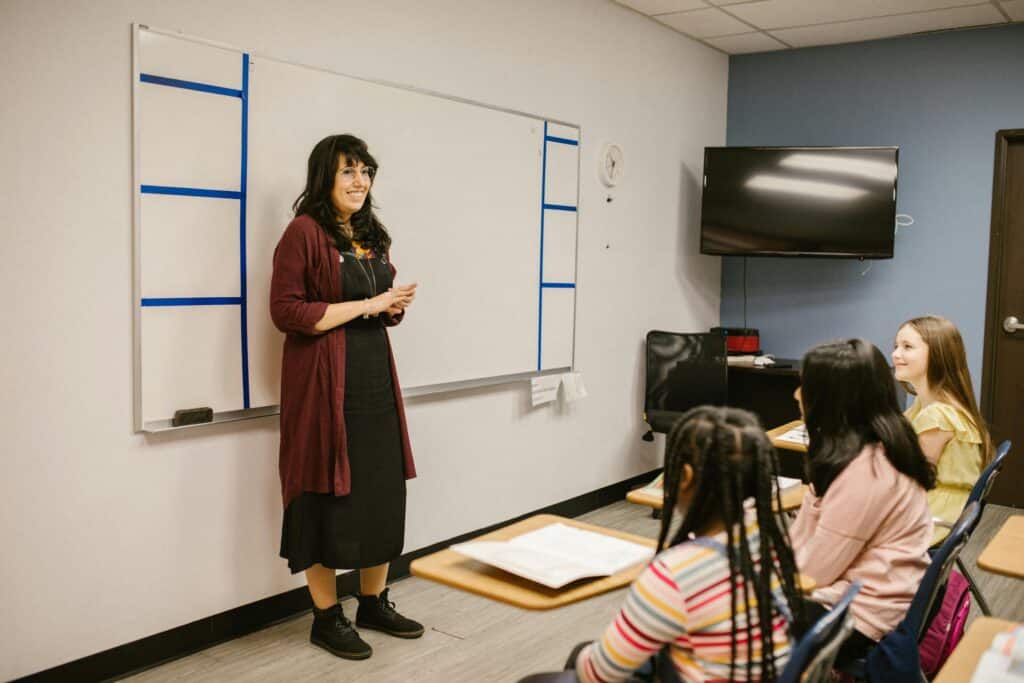
Mrs. Rivera had seen it all—students rolling their eyes at equations, doodling through fractions, and sighing through algebra. But she noticed something interesting: it wasn’t math itself they hated—it was how it was taught. When lessons felt disconnected from their world, students shut down. The good news? With the right teaching methods, even the most reluctant learners can rediscover confidence and curiosity.
Research supports what teachers see every day: over 50% of middle and high school students identify math as their least favorite subject (Gallup, 2022). A major reason is the abstract nature of math instruction, which often lacks real-world connection or creative engagement. Many students believe math is about memorizing rules rather than solving meaningful problems.
Why Students Lose Interest in Math:
- Lessons often focus on repetition instead of reasoning.
- Limited connection between classroom math and real-life use.
- Fear of failure creates performance anxiety.
- Traditional lectures don’t support diverse learning styles.
- Lack of hands-on, collaborative experiences.
Modern teaching methods are transforming how students learn math by focusing on active engagement, collaboration, and personalization. Teachers are discovering that shifting from “teaching formulas” to “teaching thinking” changes everything.
Key Shifts in Math Instruction:
- From rote learning → to conceptual understanding.
- From teacher-led lectures → to student-centered exploration.
- From individual drills → to cooperative problem solving.
- From memorization → to application and discovery.
Table: Old vs. Modern Teaching Methods in Math
| Traditional Approach | Modern Approach | Key Benefit |
|---|---|---|
| Memorization of formulas | Conceptual understanding | Improves retention and application |
| Teacher lectures | Collaborative projects | Boosts engagement and teamwork |
| Textbook exercises | Real-world problem solving | Makes math meaningful |
| Individual drills | Group discussions and games | Builds confidence and motivation |
| Standardized testing focus | Growth mindset and feedback | Reduces anxiety and encourages effort |
Five Effective Teaching Methods
To move students from “math haters” to confident learners, teachers need a small set of high-leverage teaching methodsused consistently and well. Below are five methods that research and classroom practice show deliver strong gains when implemented thoughtfully.
1. Project-Based Learning (PBL) — learning by doing

Why it works: PBL places mathematics inside an authentic problem that matters to students, increasing engagement and long-term retention (Bell, 2010).
Step-by-step implementation:
- Start with a compelling, real problem (e.g., designing a community garden, calculating materials and budget).
- Define clear math objectives (percentages, scaling, measurement, budgeting).
- Chunk the project into milestones with short deadlines.
- Teach mini-lessons just-in-time (targeted skills when students need them).
- Use regular checkpoints and rubrics for assessment.
- Have a public product (presentation, poster, budget spreadsheet).
Lesson example (middle school — scaling & ratios, single 2-week project):
- Day 1: Launch with problem + brainstorm.
- Day 2–4: Skill mini-lessons (ratios, scale factors) + practice.
- Day 5–8: Design phase (sketches, calculations).
- Day 9: Budget and materials list.
- Day 10: Presentations & reflection.
Formative assessment: Milestone checklists, peer critiques, exit tickets that ask “What calculation did you use today and why?”
Differentiation: Give roles matching strengths (researcher, calculator, presenter). Provide template spreadsheets or scaffolded calculation sheets for students who need it.
Common pitfalls & fixes: Pitfall — project becomes “busy work.” Fix — tie every task explicitly to a math standard and short mini-lessons. Pitfall — uneven group work. Fix — use individual checkpoints and role rotations.
Tools: Google Sheets, Desmos, simple budgeting templates.
Evidence: PBL can increase engagement and deeper understanding versus traditional approaches (Bell, 2010).
2. Growth Mindset + Metacognitive Reflection — teaching how to learn

Why it works: Changing beliefs about ability (from fixed to growth) reduces math anxiety and increases persistence; metacognitive reflection helps students internalize strategies (Dweck, 2015).
Step-by-step implementation:
- Begin units by discussing how the brain learns and improves with effort.
- Model thinking aloud when you make and correct mistakes.
- Require short reflection entries after problem sets: “What strategy helped? What will I try next?”
- Use feedback that praises effort, strategy, and progress, not just correctness.
- Teach specific learning strategies (chunking, self-explanation, retrieval practice).
Lesson example (algebra warm-up routine):
- 5 min retrieval practice of last lesson.
- 10 min mini-lesson modeling problem solving and productive struggle.
- 10 min partner practice with required reflection sentence.
- 5 min exit ticket: one strategy learned.
Formative assessment: Reflection journals, growth rubrics (focus on strategies used), low-stakes quizzes with feedback.
Differentiation: For students who avoid writing, allow audio reflections or quick video notes. Use sentence starters for ELLs.
Common pitfalls & fixes: Pitfall — empty “praise for effort” without guidance. Fix — pair praise with concrete next steps. Pitfall — students say “I tried hard” but use ineffective strategies. Fix — explicitly teach and model effective strategies.
Tools: Digital journals (Flipgrid for short video reflections), low-stakes quiz tools (Socrative, Google Forms).
Evidence: Classrooms that emphasize growth mindset see improved resilience and effortful engagement (Dweck, 2015).
3. Flipped Classroom — maximize practice time in class

Why it works: Moving direct instruction outside class (short videos/readings) frees class time for targeted practice, collaboration, and teacher coaching — boosting engagement and learning (Educause, 2021; Tamim et al., 2011).
Step-by-step implementation:
- Create or curate 5–8 minute micro-lessons (video + guiding notes).
- Assign the micro-lesson as homework; require a 1–2 question check to ensure accountability.
- Use class time for guided practice, differentiated stations, and teacher conferencing.
- Track student preparation and adjust in-class plans accordingly.
- Rotate station types: remediation station, challenge station, application/project station.
Lesson example (high school — quadratic functions, single class period):
- Prework: 6-minute video on vertex form + 2 quick questions.
- In class: 10-min mini-assessment, 30-min station rotations (teacher at remediation station), 10-min summary & reflection.
Formative assessment: Quick prework checks, mini-quizzes during class, on-the-spot teacher notes.
Differentiation: Provide accelerated extension tasks for ready learners; scaffolded station prompts for those needing support. Provide video captions and transcripts for ELLs.
Common pitfalls & fixes: Pitfall — students skip prework. Fix — make prework short, meaningful, and graded for completion/reflection. Pitfall — videos are passive. Fix — embed questions and prompts to make them interactive.
Tools: EdPuzzle (interactive videos), Loom, Khan Academy.
Evidence: Flipped models increase active learning time and can boost engagement and scores when combined with in-class practice (Educause, 2021; Tamim et al., 2011).
4. Visual & Hands-On Representation — concrete → pictorial → abstract

Why it works: Moving from manipulatives and visual models to abstract symbols helps students form robust conceptual schemas; concrete representational approaches reduce misconceptions (NCTM, Principles to Actions).
Step-by-step implementation:
- Introduce a concrete manipulative (counters, fraction tiles) for a new concept.
- Move to pictorial (diagrams, bar models) showing the same structure.
- Transition to symbolic/abstract notation once understanding is evident.
- Spiral back periodically with quick concrete checks to strengthen retention.
Lesson example (fractions, single class):
- 10 min manipulatives: represent 3/4 using tiles.
- 10 min pictorial: draw bar models and relate to tiles.
- 20 min abstract practice: numerical operations and word problems.
- 5 min exit ticket: draw a bar model for a real-life fraction.
Formative assessment: Have students explain (orally/visually) how the manipulative matches the equation. Use quick checks where students convert between representations.
Differentiation: Visual supports for ELLs and students with language barriers; tactile options for students with low fine motor skills (larger manipulatives).
Common pitfalls & fixes: Pitfall — skipping the concrete stage. Fix — mandate representational evidence for mastery. Pitfall — students become dependent on manipulatives. Fix — set clear goals for transition to abstract work.
Tools: GeoGebra, virtual manipulatives (NLVM), fraction tiles, graphing tools.
Evidence: Visual and concrete scaffolds are recommended by NCTM to build conceptual understanding and reduce errors (NCTM, Principles to Actions).
5. Peer Teaching & Structured Collaborative Learning — students learn by teaching

Why it works: Explaining concepts strengthens understanding; structured collaboration develops communication and social skills while improving retention (peer teaching often yields high retention rates) (National Training Laboratories, 2019; P21, 2019).
Step-by-step implementation:
- Teach students how to tutor: modeling explanation language, question prompts, and error-handling strategies.
- Use short, structured peer-teaching tasks (jigsaw, think-pair-share, peer review).
- Include accountability: each “teacher” must produce a one-sentence summary of their partner’s learning.
- Rotate roles so all students practice both teaching and learning.
Lesson example (geometry vocabulary & proofs, 45 min):
- 10 min teach modeling (how to explain a proof step).
- 20 min jigsaw: groups master different theorem proofs then teach each other.
- 10 min synthesis and individual exit reflection.
Formative assessment: Use paired checklists and short teacher observations. Require student artifacts (annotated notes) showing the explanation process.
Differentiation: Pair students strategically (peer mentors with guidance), or use triads with one student as recorder to reduce pressure.
Common pitfalls & fixes: Pitfall — inaccurate peer explanations spread misconceptions. Fix — quick teacher checks and a “fact-checking” step where students verify with a teacher or rubric. Pitfall — social loafing. Fix — assign clear, graded roles and individual accountability.
Tools: Collaborative docs, whiteboard apps, breakout rooms for virtual instruction.
Evidence: Structured peer teaching supports retention, communication, and engagement in problem solving (P21, 2019; National Training Laboratories, 2019).
Summary Table — Implementation Snapshot
| Method | Quick Implementation Snapshot | Formative Check | Differentiation Tip |
|---|---|---|---|
| PBL | Launch authentic project → teach mini-lessons → milestones | Milestone checklists, rubrics | Role scaffolds, templates |
| Growth Mindset + Reflection | Model struggle → require reflections → praise strategies | Reflection journals, growth rubrics | Audio/video reflections for ELLs |
| Flipped Classroom | Short prework videos → class practice stations | Prework checks, station exit tickets | Video transcripts, station scaffolds |
| Visual & Hands-On | CRA progression (manipulative → pictorial → abstract) | Representation translation tasks | Larger manipulatives, visual supports |
| Peer Teaching | Teach tutoring skills → structured jigsaw/triads | Paired checklists, teacher spot-checks | Strategic pairing, role rotation |
Summary paragraph:
These five teaching methods—when implemented with fidelity—create a classroom culture where curiosity, effort, and understanding replace anxiety and avoidance. Each method supports both cognitive development (conceptual schemas, strategy use) and affective gains (confidence, persistence). Teachers can pick one or two methods to master, iterate quickly, and layer in the others over the term; the key is deliberate planning, formative checks, and consistent reflection.
Turning Struggles into Success — Practical Support for Teachers

Transforming struggling math learners into confident problem-solvers requires more than good intentions; it demands continuous support, reflection, and adaptable teaching methods. Teachers who take time to refine their approach often discover that even small changes can reignite student motivation.
Reflecting and Adapting
After implementing new teaching methods, reflection allows educators to identify what resonates with students. Keeping a short teaching journal or gathering quick student feedback helps pinpoint areas for improvement. Tracking performance trends ensures that instruction aligns with student needs. Reflection isn’t about perfection—it’s about consistent progress and awareness.
Collaboration and Shared Learning
Effective teaching grows stronger through collaboration. When educators share lesson plans, discuss strategies, and co-develop interdisciplinary projects, they exchange proven insights that can transform math instruction. Whether through teacher networks, online forums, or informal peer discussions, collaboration builds a culture of innovation and support.
Accessing Practical Resources
Teachers now have abundant access to educational resources that make classroom transformation easier. Blogs dedicated to education and learning provide evidence-based ideas, ready-to-use strategies, and examples of successful implementation. These platforms keep teachers current, save planning time, and ensure that math instruction remains engaging and relevant.
Table: Practical Support Tools for Math Teachers
| Resource Type | Purpose | How It Helps | Example Use |
|---|---|---|---|
| Educational Blogs | Ongoing professional growth | Offers new research-based teaching methods | Reading weekly posts on math engagement |
| Peer Collaboration | Collective problem solving | Encourages sharing of strategies | Hosting small group teaching exchanges |
| Digital Tools | Enhance engagement | Visualize abstract math concepts | Using GeoGebra or Desmos for interactive lessons |
| Reflective Journals | Professional development | Track insights and improve instruction | Recording weekly successes and challenges |
| Case Studies | Real-world success stories | Model proven strategies | Applying ideas from similar classrooms |
Works Cited
Stanford Graduate School of Education. (2022). How Teachers Can Help Students Overcome Math Anxiety. https://ed.stanford.edu/news/how-teachers-can-help-students-overcome-math-anxiety
Boaler, J. (2016). Mathematical Mindsets: Unleashing Students’ Potential through Creative Math, Inspiring Messages and Innovative Teaching. Jossey-Bass. https://www.wiley.com/en-us/Mathematical+Mindsets%3A+Unleashing+Students%27+Potential+through+Creative+Math%2C+Inspiring+Messages+and+Innovative+Teaching-p-9780470894521
Gallup. (2022). Student Engagement and Mathematics Report. https://www.gallup.com/education/390123/student-engagement-math-report.aspx
National Council of Teachers of Mathematics (NCTM). (2023). Principles to Actions: Ensuring Mathematical Success for All. https://www.nctm.org/PtA/
OECD. (2023). Mathematics Performance and Student Attitudes in Education. OECD Education Statistics. https://www.oecd.org/education/