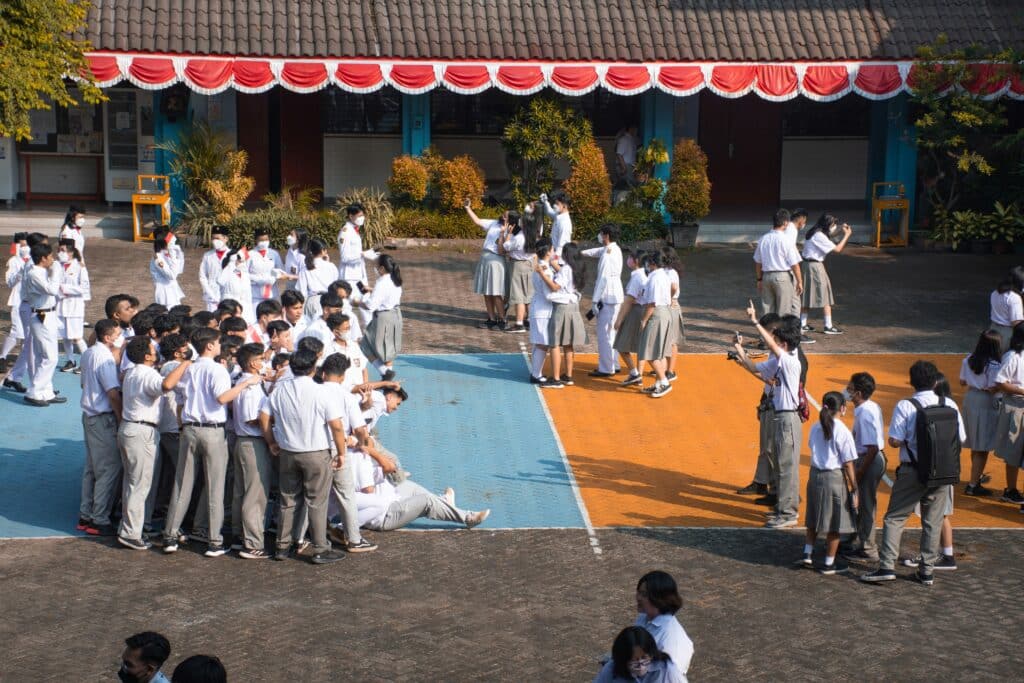
On a Monday morning in Room 204, Ms. Rivera faced the familiar chaos of the post-lunch slump. Twenty-three seventh graders fidgeted, whispered, and stared at their Chromebooks like they’d just run a marathon through algebra. She clapped once, twice—no response. Then, she tried something different: a short rhythmic breathing exercise she’d read about in a neuroscience article. In less than a minute, the class quieted, eyes focused. She smiled. “Let’s try that again tomorrow,” she said.
Stories like Ms. Rivera’s are becoming more common as teachers discover simple, science-backed ways to re-engage distracted students. In a world where attention spans are shrinking—now averaging just 47 seconds before shifting focus, according to a 2023 study from the Technical University of Denmark—student engagement has become the ultimate classroom currency. The key to keeping it? Understanding the brain.
Neuroscience offers teachers a growing toolkit to not just manage attention, but to spark it. Techniques like pattern interruption, movement-based resets, or sensory cues are grounded in how the brain processes novelty, reward, and rhythm. When strategically used, they can reignite focus in less than a minute. These “micro-strategies” don’t require new curriculum or costly tools—just a grasp of how attention circuits work.
The science is clear: when teachers tap into the brain’s natural craving for variety and stimulation, engagement increases dramatically. Brain-imaging studies reveal that short bursts of novelty—like sound changes, quick gestures, or even humor—can trigger dopamine release, which heightens motivation and learning (Harvard Center on the Developing Child, 2023). These techniques act like a “reset button,” allowing students’ prefrontal cortex—the command center for focus—to reboot.
Below is a table summarizing quick neuroscience-backed tricks proven to improve student engagement in under 60 seconds.
Table 1: Brain-Based Engagement Boosters
| Technique | Neuroscience Basis | Classroom Application |
|---|---|---|
| Pattern Interruption | Breaks neural habituation and reactivates focus circuits | Clap rhythm, unexpected question, or brief joke |
| Micro-Movement Reset | Physical movement boosts oxygen and dopamine levels | 30-second stretch or “stand if you agree” poll |
| Rhythmic Breathing | Activates parasympathetic system for calm focus | Lead 3 slow breaths before transitions |
| Sensory Anchor | Engages multiple sensory inputs for recall | Use scent, color cue, or object related to lesson |
| Novelty Spark | Triggers curiosity and attention hormones | Start lesson with a strange fact or quick demo |
In an age of digital distraction, the modern teacher isn’t just an educator—they’re a classroom neuroscientist. As you explore ScholarlySphere’s blogs about student engagement and retention, you’ll find the future of teaching belongs to those who can master not just content, but the chemistry of attention.
The Science of Student Engagement — What the Brain Really Needs

If teaching is an art, neuroscience is the science behind the brushstrokes. Student engagement isn’t just a matter of charisma or clever lesson plans—it’s a neurological process. Every moment of focus, distraction, or motivation in the classroom stems from chemical reactions in the brain. When teachers understand these reactions, they can guide attention like a conductor leading an orchestra.
🧬 The Attention Economy Inside the Brain
Research shows that the brain isn’t built for long stretches of concentration. The prefrontal cortex—responsible for attention and decision-making—tires easily. A 2023 study published in Nature Communications found that sustained attention begins to decline sharply after about 20 minutes, even in adults. For students, that window is even shorter.
But the same research also revealed a bright side: short bursts of novelty, movement, and rhythm can quickly restore attention. That’s why brief, intentional resets—what neuroscientists call attentional refreshes—are so effective. Teachers can think of them as “micro-breaks for the brain.”
Table 2: The Brain’s 3 Major Attention Systems
| Attention System | Function | Classroom Application |
|---|---|---|
| Alerting System | Keeps students ready to receive information | Begin class with music or light exercise to boost readiness |
| Orienting System | Directs focus toward key stimuli | Use color cues, gestures, or quick visuals to signal importance |
| Executive System | Controls sustained focus and task switching | Break tasks into segments and give quick, clear goals |
⚡ Micro-Strategies That Reboot the Brain
Neuroscientists have identified several evidence-based techniques teachers can use to re-engage attention in under a minute:
- Brain-Pattern Shifts: Change the sensory input—move from speaking to drawing, or from visuals to sound. This activates the parietal cortex, resetting sensory focus.
- Short Physical Resets: Light movement (standing, stretching, or walking to a poster) increases oxygen and blood flow to the frontal lobe, improving alertness (University of Illinois, 2023).
- Emotional Anchoring: Humor or quick stories activate the amygdala, which boosts memory retention by tagging information with emotion.
- Reward Signals: A simple “You crushed that answer” releases dopamine, motivating continued participation (National Institutes of Health, 2023).
🧩 The Power of Dopamine: Why Engagement Feels Good
At the chemical level, engagement is all about dopamine. Often labeled the “motivation molecule,” dopamine spikes when students experience novelty, challenge, or success.
- Novelty = Curiosity. Unexpected changes stimulate the hippocampus, creating a sense of curiosity.
- Challenge = Focus. When the task difficulty is just right—not too easy, not too hard—dopamine surges.
- Success = Retention. A small achievement triggers pleasure pathways, reinforcing learning behaviors.
Teachers can build these dopamine “loops” with 60-second tactics like:
- Quick prediction games (“Guess what happens next…”)
- Timed mini-quizzes with instant feedback
- Fast peer challenges (“Find someone who disagrees!”)
🧠 Sensory Engagement: More Than Meets the Eye
The human brain loves multisensory experiences. Studies from the University of California, Irvine (2024) show that lessons combining sound, motion, and color increase information recall by nearly 65% compared to text-only instruction.
Teachers can engage the senses through:
- Visual cues: Color-coded slides or anchor images tied to concepts
- Auditory cues: Sound effects or music transitions to reset focus
- Tactile learning: Passing around an object or texture linked to the lesson
These cues not only make learning more dynamic—they keep the brain’s sensory networks talking to one another, strengthening memory and focus.
Table 3: 60-Second Tactics for Maximum Student Engagement
| Strategy | Time Needed | Cognitive Benefit |
|---|---|---|
| The 20-Second Reset | 0:20 | Restores focus by interrupting fatigue cycles |
| Stretch-and-Switch | 0:45 | Boosts oxygen flow and reactivates frontal cortex |
| Curiosity Spark | 0:30 | Triggers dopamine through novelty |
| Emotional Echo | 0:40 | Strengthens recall by linking emotion and learning |
| Rhythm Cue | 0:60 | Synchronizes attention using predictable beats |
🧭 What Teachers Can Learn from Neuroscientists
Modern neuroscience is reshaping how educators think about focus. Leading research from Harvard Graduate School of Education (2023) emphasizes the link between emotional safety and engagement—students can’t focus if they feel anxious or unseen. This aligns with findings from The Journal of Applied Cognitive Psychology (2022), which revealed that stress hormones like cortisol directly suppress the brain’s learning centers.
In short: calm brains learn better. Teachers who embed moments of emotional regulation—such as brief breathing, humor, or student acknowledgment—help reset the nervous system and boost engagement naturally.
💡 Bullet Summary: Brain-Based Insights for Teachers
- Students’ attention spans last roughly 8–12 minutes before a reset is needed.
- Novelty and movement are the fastest ways to re-engage the brain.
- Dopamine and emotional connection make learning “stick.”
- Physical and sensory engagement improves memory retention by up to 65%.
- Emotional safety is essential for sustained focus.
🧩 Why This Matters for the Future of Education
As education becomes increasingly digital, teachers must balance screens with sensory and emotional engagement. Neuroscientists warn that constant device use may rewire students’ attention pathways—reducing their ability to focus on deep work (Stanford Neuroscience Institute, 2024).
This means the next era of student engagement depends on teachers becoming “brain coaches,” using micro-strategies to help students refocus and self-regulate. When combined with tech, these human-centered approaches create classrooms that feel alive—energized by curiosity, rhythm, and connection.
From Attention to Retention — Turning Brain Science into Practice
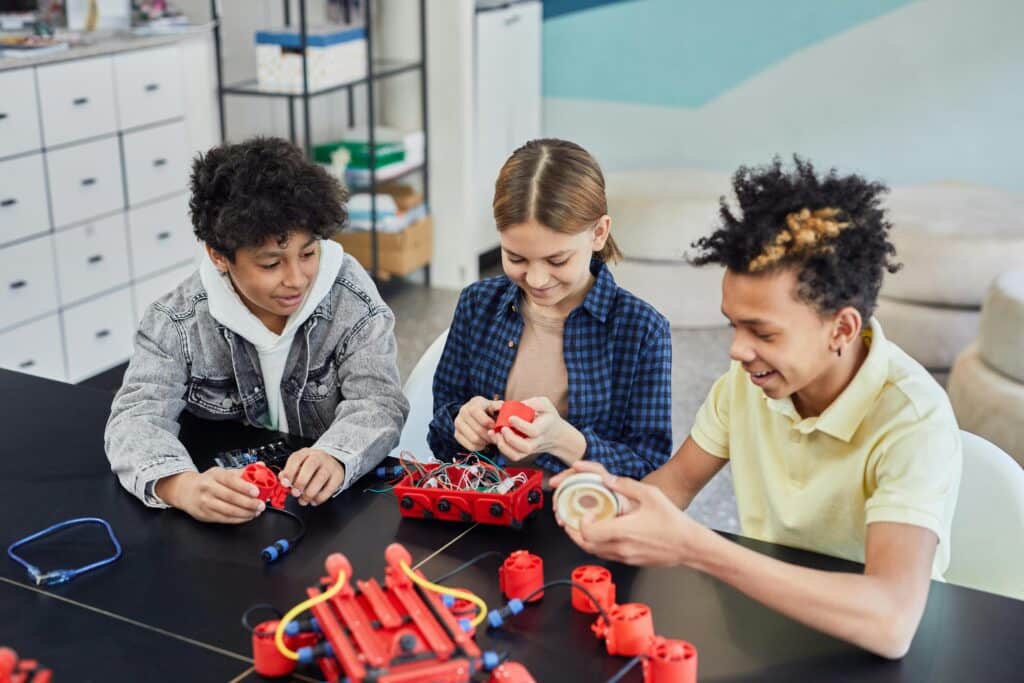
Every teacher knows the quiet satisfaction of a focused classroom—the hum of curiosity, the eyes that follow every word. Neuroscience proves that this moment isn’t magic; it’s measurable. By tapping into how the brain craves rhythm, novelty, and reward, teachers can transform attention from a fragile state into a skill students can strengthen over time.
When educators apply small, consistent techniques, engagement becomes a habit. The key isn’t more time—it’s smarter timing. Attention resets, emotional cues, and sensory diversity act as “mental nutrition” for growing minds. What’s remarkable is that these strategies work in under a minute, proving that change doesn’t have to be slow to be lasting.
Table 4: Converting Engagement into Long-Term Learning
| Strategy Type | Example Technique | Long-Term Effect |
|---|---|---|
| Attention Reset | 20-second stretch, hand signal | Improves stamina for focus tasks |
| Emotional Cue | Gratitude shout-out, humor moment | Builds classroom trust and motivation |
| Sensory Variation | Color markers, quick sound cue | Reinforces memory and concept linking |
| Curiosity Prompt | 30-second riddle or challenge | Sustains interest through surprise |
Quick Takeaways for Teachers
- Students’ brains thrive on micro-surprises and rhythmic shifts.
- Engagement depends more on feeling connected than on hearing information.
- Novelty and motion stimulate dopamine—the foundation of attention.
- Emotional safety and recognition transform short bursts of focus into long-term learning.
- Teachers can use neuroscience as a practical, 60-second toolset—not a theory.
As the science of learning continues to evolve, one truth stands firm: attention is teachable. The classroom of the future may not depend on more technology, but on how well we understand the minds sitting right in front of us.
So, what if the real secret to better education isn’t new tools—but a better grasp of the human brain?
Works Cited
Dubinsky, J. M. (2024). The neuroscience of active learning and direct instruction. ScienceDirect. https://www.sciencedirect.com/science/article/pii/S0149763424002069
Owens, M. T., et al. (2017). Teaching as brain changing: Exploring connections between neuroscience and classroom practice. PMC (NCBI). https://pmc.ncbi.nlm.nih.gov/articles/PMC5459260/
Slattery, E. J., et al. (2022). Popular interventions to enhance sustained attention in education. ScienceDirect. https://www.sciencedirect.com/science/article/pii/S0149763422001221
Mealings, K., et al. (2025). A scoping review of how classroom environments and activities impact listening, learning, and wellbeing. Taylor & Francis Online. https://www.tandfonline.com/doi/full/10.1080/08856257.2025.2536494
Hermida, J. (n.d.). Attention and its importance for education. IBE-UNESCO SOL Portal. https://solportal.ibe-unesco.org/articles/attention-and-its-importance-for-education/
Child Mind Institute. (2023, October 30). Building positive relationships with students: What brain science says. Child Mind. https://childmind.org/article/building-positive-relationships-with-students-what-brain-science-says/
Poulsen, A. T., Kamronn, S., Dmochowski, J., Parra, L. C., & Hansen, L. K. (2016). EEG in the classroom: Synchronized neural recordings during video presentation. arXiv. https://arxiv.org/abs/1604.03019
Gao, N., Rahaman, M. S., Shao, W., Ji, K., & Salim, F. D. (2021). Individual and group-wise classroom seating experience: Effects on student engagement. arXiv. https://arxiv.org/abs/2112.12342
Willis, J. (n.d.). Connecting brain research with the art of teaching. AASA. https://www.aasa.org/resources/resource/connecting-brain-research-with-the-art-of-teaching
Huong, T. N. (2024). The effect of dopamine stimulation activities on English language learners: An empirical research. IJSSHR via ResearchGate. https://www.researchgate.net/publication/380616798_The_Effect_of_Dopamine_Stimulation_Activities_on_English_Language_Learners_An_Empirical_Research