You walk into your classroom Monday morning, and thirty pairs of eyes stare back at you with that familiar “not history again” look. Sound familiar? You’re not alone in the struggle to make historical events come alive for students who live in a world of instant everything.
History in 60 Seconds: Bite-Sized Facts to Engage Your Students is designed specifically for educators like you who want to transform how your classroom experiences the past. You know your students have short attention spans, but you also know they’re capable of amazing insights when the right spark ignites their curiosity.
Here’s what makes this approach work:
• Quick, digestible lessons that fit any schedule
• Stories that connect past events to today’s world
• Practical techniques you can use immediately
Your biggest challenge isn’t covering all the material—it’s making history stick. When you break complex historical periods into engaging, bite-sized pieces, something magical happens. Students start asking questions instead of watching the clock.
This guide will show you how to master quick prehistoric lessons and bring ancient civilizations to life in just sixty seconds. You’ll also discover proven methods for making medieval history accessible and connecting historical events to your students’ modern world.
• Transform dry facts into compelling stories
• Overcome common teaching obstacles
• Build lasting engagement in record time
Your students deserve history lessons that inspire rather than bore them. Ready to see what happens when you give the past a modern twist?
Master the Art of Teaching Prehistoric Times Quickly
Make Stone Age Tools and Art Come Alive in Minutes
Your Stone Age lessons become instantly engaging when you demonstrate how early people adapted to survive harsh conditions. Show students how Paleolithic people lived as nomads, constantly moving to follow food sources and weather patterns.
Emphasize that early humans spent their entire lives in survival mode. They could only carry essential items, making every tool precious and multipurpose. During the Ice Age, these resourceful people created ice bridges to migrate between continents.
Transform your classroom by explaining how people adapted differently based on their environments. Forest dwellers developed different survival strategies than plains inhabitants. This adaptability showcases human ingenuity thousands of years ago.
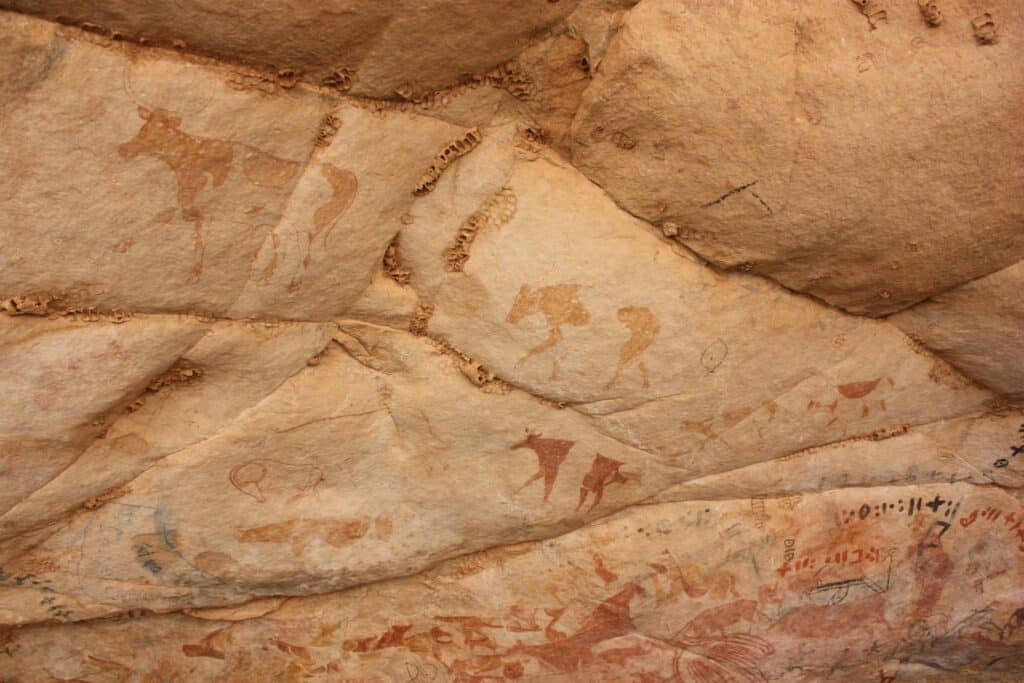
Cave art provides incredible teaching opportunities, particularly sites like Lascaux in France. These artistic achievements occurred at the end of the Paleolithic period, created by modern humans who developed symbolic thinking and creative expression.
Use the Star Carr site in Yorkshire to demonstrate how archaeologists uncover prehistoric life. Waterlogged conditions preserved organic materials, giving us detailed insights into Mesolithic daily life and tool-making techniques.
Connect Early Farming to Modern Agriculture

The Neolithic Era represents one of mankind’s greatest achievements – the agricultural revolution. You can help students understand how learning to grow crops and domesticate animals changed human civilization forever.
Previously nomadic hunters became settled farmers who established permanent villages. This shift occurred because people needed to tend crops and livestock daily, rather than following animal migrations for food.
Farming allowed the first surplus food production in human history. Without this agricultural foundation, no other aspects of complex society could develop. Your students will grasp how farming villages like Jericho and Catalhoyuk grew into larger settlements.
Use Skara Brae in Scotland to show early farming communities. When storm damage revealed stone furniture in 1850, archaeologists discovered sophisticated Neolithic settlements with central hearths and organized living spaces.
Grimes Graves demonstrates how Neolithic people developed specialized industries. These 433 flint mines in England show early humans organizing large-scale extraction operations to supply tool-making materials across regions.
Connect prehistoric farming innovations to modern agricultural techniques. Show students how selective breeding, crop rotation, and food storage began during the Neolithic period, forming foundations for today’s farming methods.
Implementation Steps
- Create Visual Timelines: Design colorful charts showing hominid evolution with simple illustrations and memorable characteristics for each species.
- Use Archaeological Evidence: Present famous sites like Lascaux cave paintings and Skara Brae settlements through virtual tours or detailed photographs.
- Demonstrate Tool Progression: Show examples of stone tools from simple Paleolithic implements to sophisticated Neolithic farming equipment.
- Map Migration Patterns: Use world maps to trace human movement during ice ages, highlighting how environmental changes drove prehistoric migrations.
- Compare Then and Now: Draw direct connections between Neolithic farming innovations and modern agricultural techniques to make content relevant.
- Incorporate Hands-On Activities: Let students handle replica artifacts, create cave art, or simulate archaeological excavations for tactile learning experiences.
Bring Ancient Civilizations to Life in One Minute
Captivate Students with First Cities and Bronze Age Innovations
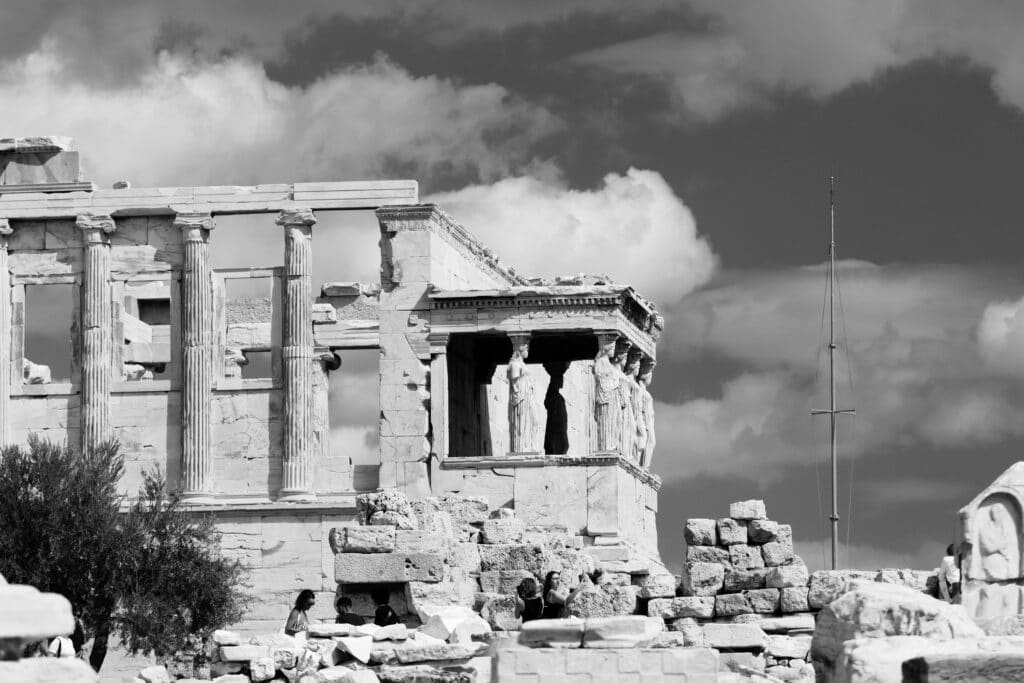
When teaching about the world’s first cities, you’ll want to focus on making these ancient innovations feel tangible and exciting. Start by showing students how Sumer created the world’s first writing system, cuneiform, which revolutionized communication forever.
Your students will be amazed to learn that these early civilizations invented the wheel, developed bronze-making techniques, and created the first organized governments. Here’s what captivates middle schoolers most:
• The discovery that Mesopotamians invented the first schools
• How bronze tools changed farming and warfare completely
• Why city walls became essential for survival
You can make these concepts stick by having students categorize each innovation into broader themes. For example, cuneiform fits into both written language and technology categories, encouraging critical thinking about how innovations overlap.
Consider using visual timelines to show how quickly these changes happened. Students often struggle to grasp that these “firsts” occurred within relatively short time periods, making human progress feel more dramatic and immediate.
Simplify Complex Empires from Egypt to Ancient China
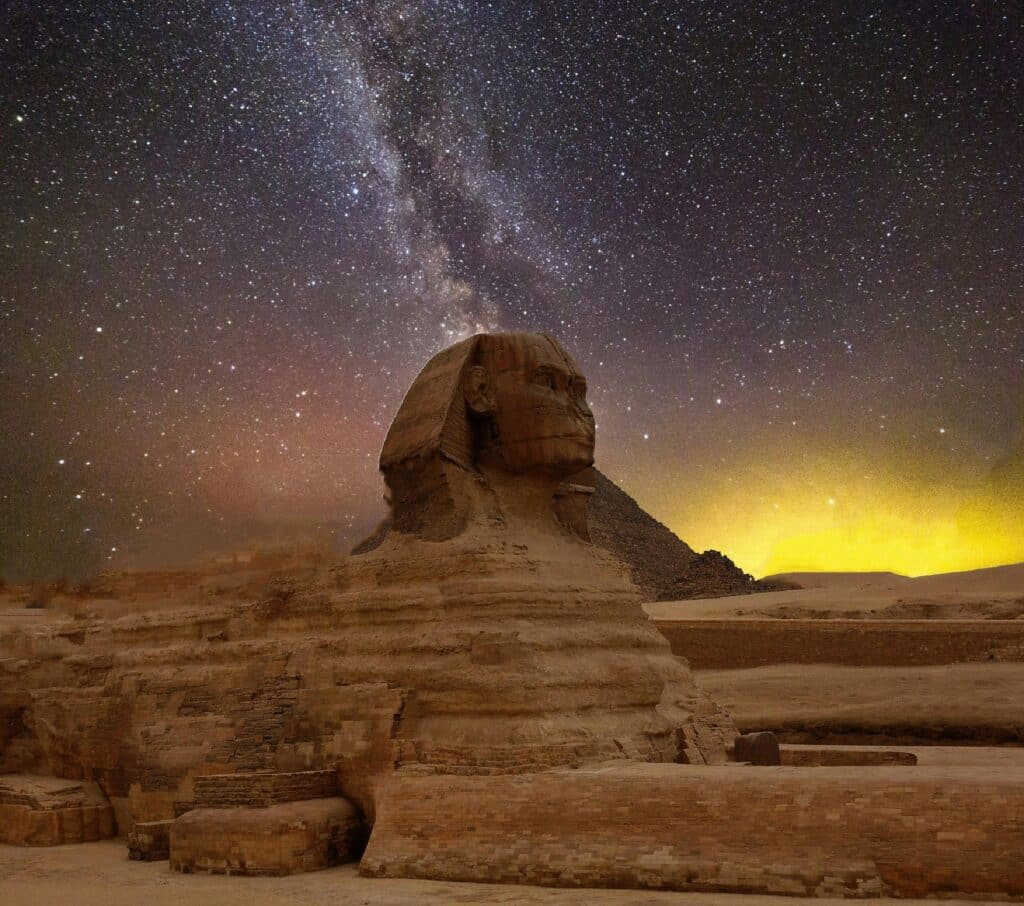
Complex empires can overwhelm your students unless you break them down systematically. The key is using a structured approach that examines each civilization through consistent themes rather than drowning students in endless details.
Focus on seven essential parts of every civilization: government, religion, food supply, social structure, written language, arts, and technology. This framework gives students confidence because they know exactly what to study for each empire.
Here’s how to structure your empire lessons effectively:
• Compare similar innovations across different empires
• Show how geography influenced each civilization’s development
• Highlight unique contributions that still impact us today
When teaching about Egypt, emphasize how the Nile River shaped everything from religion to social structure. For China, focus on how the Great Wall demonstrates both technological achievement and government organization.
Your students will thrive when they can categorize information into these seven parts. They’ll start making connections between civilizations naturally, seeing patterns in how humans organize societies across time and space.
Remember to differentiate based on student reading levels. Assign simpler empires like Akkad to struggling readers, while challenging advanced students with complex civilizations like Babylon’s multiple time periods.
Make Greek Democracy and Roman Expansion Relatable
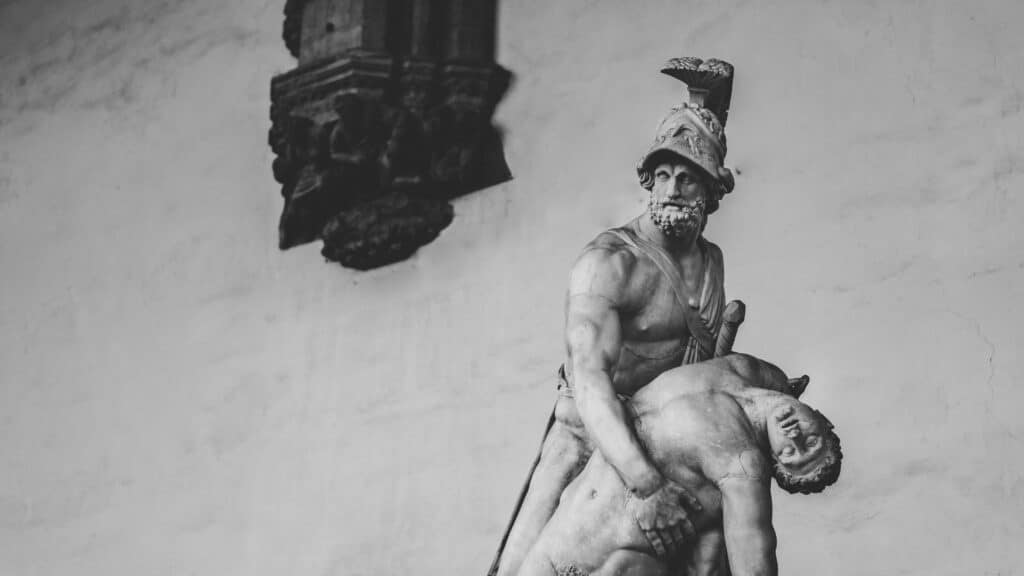
Democracy and expansion concepts become relatable when you connect them to students’ everyday experiences. Instead of memorizing names and dates, help your students understand how these systems still influence their lives today.
Start by comparing Greek democracy to your school’s student government. Students immediately grasp how voting works when they see parallels to class elections and decision-making processes they already know.
For Roman expansion, focus on cause and effect relationships:
• Why Romans needed to expand beyond Italy
• How military success led to cultural changes
• What happened when the empire grew too large
Use debates to make government concepts come alive. Have students argue the effectiveness of different systems – monarchy versus democracy versus republic. They’ll discover that each system had advantages and disadvantages depending on circumstances.
Roman expansion becomes fascinating when you show students how roads, language, and laws spread across Europe. They’ll understand why we still use Roman numerals and Latin phrases today.
Connect these lessons to modern examples they recognize. Point out how the U.S. government borrowed ideas from both Greek democracy and the Roman republic, making ancient history feel immediately relevant.
Key Takeaways
• Use the seven-part civilization framework: government, religion, food supply, social structure, written language, arts, and technology
• Make innovations tangible by connecting them to modern equivalents students understand
• Focus on cause-and-effect relationships rather than memorization of names and dates
• Differentiate assignments based on student reading levels and abilities
• Use debates and comparisons to make abstract concepts concrete and engaging
Implementation Steps
- Create Visual Framework: Design a bubble map showing the seven parts of civilization that students can use for every ancient culture you study.
- Develop Comparison Charts: Build templates that let students compare innovations, government systems, and cultural elements across different civilizations.
- Design Tiered Assignments: Prepare three difficulty levels for each civilization project – basic for struggling readers, standard for grade-level students, advanced for gifted learners.
- Set Up Debate Protocols: Establish clear rules and sentence starters for government system debates, helping students make historical arguments with evidence.
- Build Connection Activities: Create worksheets that explicitly link ancient innovations to modern examples students encounter daily.
Make Medieval History Accessible and Exciting
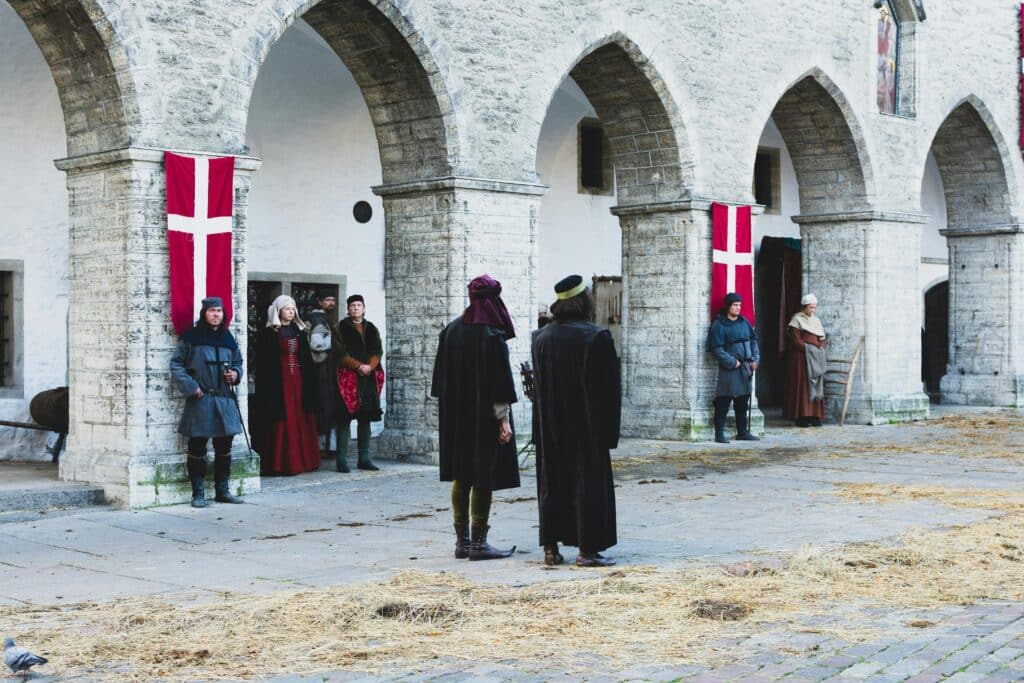
Transform Vikings and Crusades into Compelling Narratives
You can revolutionize how students connect with medieval warfare by turning abstract historical events into vivid stories. Rather than memorizing dates and names, help students experience the human drama behind these pivotal moments.
Create character-driven narratives that showcase individual experiences during major conflicts. You might assign students roles as Viking raiders, crusading knights, or defenders of besieged cities. This approach transforms distant historical figures into relatable characters with motivations and challenges.
Key storytelling strategies include:
• Using primary source excerpts to show authentic voices from the period
• Creating “day in the life” scenarios for different social classes
• Developing cause-and-effect chains that explain why conflicts began
Use simulation activities like “The Crusades Simulation” to immerse students in decision-making processes. These hands-on experiences help students understand the complex political, religious, and economic factors driving medieval conflicts.
Visual storytelling tools work exceptionally well:
• Storyboard activities for mapping crusade journeys
• Character comparison charts showing different perspectives
• Timeline activities that sequence major battles and treaties
Your students will grasp the human cost of medieval warfare when they create their own historical narratives. Encourage them to write diary entries, letters home, or news reports from battlefields.
Help Students Grasp the Mongol Empire’s Global Impact

You need to emphasize scale and connectivity when teaching about the Mongol Empire. Students often struggle to comprehend how one civilization influenced such vast territories across multiple continents.
Start by establishing the geographic scope through interactive mapping activities. Have students trace Mongol trade routes and identify conquered territories. This visual approach helps them understand the empire’s unprecedented reach from Eastern Europe to Southeast Asia.
Effective mapping techniques include:
• Blank map activities where students color different expansion phases
• Trade route tracing to show economic connections
• Population comparison charts between conquered regions
Connect Mongol influence to familiar modern concepts. Show how their communication systems resembled today’s global networks. The Mongol postal system, for instance, enabled rapid information exchange across continents—much like modern internet connectivity.
Modern parallels to highlight:
• Communication networks spanning multiple time zones
• Cultural exchange through trade partnerships
• Military tactics that influenced later warfare strategies
Use role-playing activities where students represent different conquered peoples. This approach helps them understand how local cultures adapted to Mongol rule while maintaining distinct identities.
Your students will appreciate the Mongol Empire’s lasting impact when you connect historical innovations to contemporary global systems.
Connect Medieval Plagues to Modern Pandemic Understanding
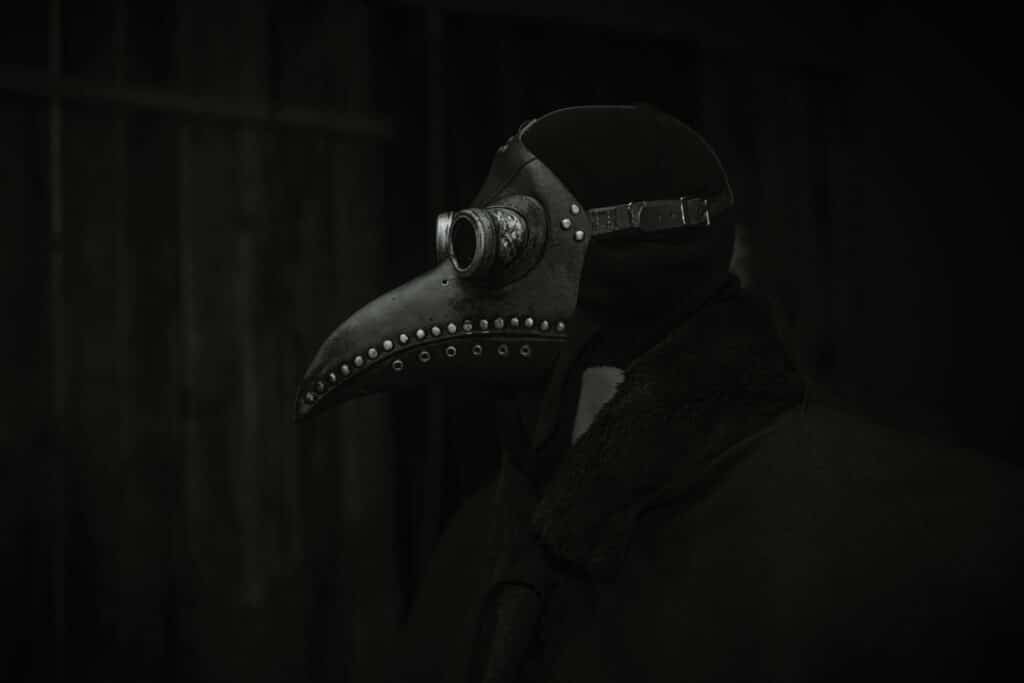
Now that we have covered major conflicts, let’s examine how disease shaped medieval society. You can help students draw powerful connections between historical pandemics and recent global health experiences.
The Black Death provides an excellent case study for understanding pandemic patterns. Students can analyze how the plague spread along trade routes, affected different social classes, and transformed European society permanently.
Essential Black Death connections include:
• Trade route transmission patterns similar to modern air travel spread
• Social distancing measures attempted in medieval cities
• Economic disruption paralleling recent pandemic impacts
Create comparative analysis activities using “The Path of the Black Death” resources. Students can track infection rates, mortality data, and governmental responses. These activities demonstrate how societies throughout history have faced similar public health challenges.
Use primary source documents to show authentic medieval voices describing plague experiences. These firsthand accounts help students understand the human dimension of historical pandemics.
Document analysis activities work best when you:
• Provide guided questions focusing on emotional responses
• Compare medieval and modern medical understanding
• Analyze how communities supported each other during crisis
Your students will develop deeper empathy for historical figures when they recognize shared human experiences across centuries. The medieval response to plague reveals universal patterns of fear, resilience, and adaptation.
Implementation Steps

Week 1: Foundation Building
- Introduce timeline activities using the 500 CE to 1250 CE framework
- Set up medieval vocabulary word walls with castle-themed displays
- Begin character role assignments for major historical figures
Week 2-3: Active Learning
4. Implement simulation games like “The Vassal Game” and crusade activities
5. Create storyboard projects tracking major events and personal narratives
6. Conduct comparative document analysis between historical and modern sources
Week 4: Synthesis
7. Organize student presentations connecting medieval events to contemporary issues
8. Host a medieval trade fair showcasing different aspects of the period
9. Complete timeline updates and reflection activities
Key Takeaways
• Transform abstract historical events into character-driven narratives that students can relate to personally
• Use simulation activities and role-playing to help students experience medieval decision-making processes
• Connect historical pandemics to modern pandemic experiences for deeper understanding
• Implement visual storytelling tools like storyboards and mapping activities for better comprehension
• Create comparative analysis opportunities between medieval and contemporary global systems
• Emphasize the human dimension of historical events through primary source document analysis
Modernize Your Teaching of Recent Historical Events

Simplify the Renaissance and Scientific Revolution
Now that we’ve covered ancient civilizations, you can transform how your students view the Renaissance by starting with the most dramatic moments. Instead of beginning chronologically, open with Galileo’s trial or Leonardo da Vinci’s secret experiments.
This “crime show” approach immediately captures attention and creates curiosity about the broader historical context.
Key engagement strategies:
• Use first-person accounts from Renaissance figures to humanize the period
• Compare different countries’ perspectives on the Scientific Revolution
You can have students read excerpts from Galileo’s own writings about his telescope discoveries. This personal connection helps them understand the human side of scientific breakthroughs rather than just memorizing dates and inventions.
Create multimedia presentations using platforms like Adobe Spark to let students combine images, text, and audio. They can tell the story of Renaissance innovations through interactive timelines that show cause and effect relationships.
Implementation steps:
• Start lessons with dramatic moments like the printing press’s first use
• Use AI chatbots to let students “interview” Leonardo da Vinci about his inventions
• Have students create their own Renaissance-era social media profiles for historical figures
Make Industrial Revolution Relevant to Today’s Technology

Previously, students often struggle to connect 18th-century factories to modern life. You can bridge this gap by drawing direct parallels between steam engines and today’s automation technologies.
Start your Industrial Revolution unit with modern assembly lines or Amazon warehouses, then work backward to show how these concepts originated.
Connection strategies:
• Compare factory working conditions to modern workplace debates
• Analyze how transportation evolution led to today’s logistics systems
Your students can create projects examining how Industrial Revolution innovations directly influenced current technology. Have them trace the evolution from water-powered mills to modern manufacturing processes.
Use virtual reality platforms like HistoryView VR to transport students into 19th-century factories. This immersive experience helps them understand working conditions and technological limitations that drove further innovation.
Modern relevance activities:
• Research how automation today mirrors Industrial Revolution concerns
• Interview family members about technological changes they’ve witnessed
• Create documentaries connecting past industrial innovations to current tech companies
Connect World Wars to Current Global Conflicts

With this in mind, next, we’ll see how World Wars remain highly relevant to understanding today’s international tensions. You can help students recognize patterns by examining how alliances, nationalism, and economic factors from the 20th century still influence current events.
Start with present-day conflicts, then trace their roots back to unresolved World War issues.
Historical pattern recognition:
• Compare WWI alliance systems to modern NATO and international partnerships
• Analyze how WWII economic policies relate to current trade wars
Your students can examine different countries’ textbooks to see how the same wars are described differently. When teaching about Vietnam War perspectives, have them compare American textbooks with Vietnamese sources to understand multiple viewpoints.
Use family artifacts like uniforms, letters, or photographs to make these conflicts personal. Students often become fascinated when they can touch a helmet with a dent or read actual wartime correspondence from relatives.
Primary source activities:
• Collect family stories about wartime experiences
• Compare propaganda techniques from WWI to modern social media influence
• Research how current refugee situations mirror post-war displacement
Key takeaways
• Start with dramatic moments rather than chronological beginnings to capture immediate interest
• Use multimedia tools and virtual reality to make historical periods tangible and relevant
• Connect historical innovations directly to modern technology and current events
• Incorporate family artifacts and personal stories to create emotional connections
• Compare multiple perspectives from different countries to develop critical thinking
• Use AI tools and interactive platforms to let students engage directly with historical figures
Custom Implementation Steps
- Week 1: Introduce dramatic historical moments using the “crime show” approach – start with the most exciting part of each era
- Week 2: Set up virtual reality stations and multimedia creation tools for immersive experiences
- Week 3: Collect family artifacts and stories from students to personalize historical connections
- Week 4: Research current events and trace their historical roots using primary source databases
- Week 5: Create student presentations connecting past innovations to modern technology
- Week 6: Facilitate debates using different countries’ perspectives on the same historical events
- Week 7: Use AI chatbots and interactive tools for “conversations” with historical figures
- Week 8: Develop final projects showing clear connections between historical events and today’s world
Connect Historical Lessons to Today’s World

Link Cold War Tensions to Modern Geopolitics
You can draw powerful connections between Cold War dynamics and today’s Ukraine-Russia conflict. The Russian invasion of Ukraine in 2022 reignited global tensions remarkably similar to 20th-century superpower rivalries.
Present your students with this compelling comparison: Cold War proxy conflicts like Vietnam and Korea mirror today’s Ukraine situation. NATO’s expansion after 1991 echoes the original Iron Curtain concept and buffer state strategies.
Create timeline activities comparing U.S.-Soviet tensions with current Russian-Western relations. Your students will quickly grasp how nuclear deterrence principles still shape modern diplomacy.
Use debate formats to explore whether NATO should have expanded eastward. This helps students understand how historical decisions continue influencing today’s headlines.
Make Climate Change Historical Context Meaningful
Now that we’ve covered geopolitical connections, let’s examine environmental parallels. You can link today’s climate headlines directly to the Dust Bowl and Great Depression era.
Show students how human-environment interactions created both crises. Over-farming in the 1930s parallels today’s industrial emissions – both represent misuse of natural resources.
Compare government responses across time periods. The New Deal’s Civilian Conservation Corps and Soil Conservation Service mirror today’s climate policies and green initiatives.
Have students draft a “New Green Deal” using lessons from 1930s environmental programs. This exercise demonstrates how historical solutions inform modern policy debates.
Analyze environmental disasters side-by-side: Dust Bowl versus California wildfires. Your students will recognize recurring patterns in human responses to environmental challenges.
Show How Past Social Movements Inspire Current Change

With this historical foundation established, you can now connect protest movements across generations. Black Lives Matter, climate marches, and global demonstrations reflect the same grassroots activism seen throughout history.
Compare protest strategies from different eras. Civil Rights sit-ins evolved into today’s social media campaigns, while Vietnam War demonstrations parallel modern climate strikes.
Your students should analyze youth involvement across movements. From Civil Rights activists to climate protesters, young people consistently drive social change.
Create protest movement timelines spanning from Women’s Suffrage through Arab Spring to current demonstrations. This visual approach helps students recognize continuity in activism methods.
Examine how labor strikes of the early 1900s share tactics with contemporary movements. Your students will see how historical organizing principles remain relevant today.
Key Takeaways
• Historical patterns repeat: Modern conflicts often mirror past tensions and solutions
• Environmental lessons persist: Past environmental disasters provide blueprints for addressing current climate challenges
• Social movements evolve: Protest strategies adapt to new technologies while maintaining core organizing principles
• Timeline activities work: Visual comparisons help students grasp historical continuity
• Debate formats engage: Students understand complex issues better through structured discussions
• Government responses cycle: Policy solutions often draw from successful historical precedents
Historical Connections Comparison Table
| Historical Event | Modern Parallel | Key Similarities |
|---|---|---|
| Cold War Tensions | Ukraine-Russia Conflict | Proxy wars, NATO expansion, nuclear deterrence |
| Dust Bowl Crisis | Climate Change | Human-environment interaction, government intervention |
| Civil Rights Movement | Black Lives Matter | Grassroots organizing, youth leadership, media strategy |
| Labor Strikes 1900s | Modern Protests | Collective action, economic pressure, social change |
| Yellow Journalism | Media Misinformation | Bias, propaganda, public manipulation |
Overcome Common History Teaching Challenges

Present Multiple Perspectives Beyond “Winner’s History”
You’ve likely encountered the challenge where your students only hear one side of historical events. Traditional textbooks often present history from the victor’s perspective, leaving out crucial voices and experiences.
Teaching multiple perspectives requires you to move beyond sanitized versions of history. When covering slavery, you shouldn’t just present the economic aspects – include slave autobiographies and first-person accounts. Use excerpts from works like “Incidents in the Life of a Slave Girl” by Linda Brent to show enslaved people’s experiences through their own eyes.
You need to balance presenting harsh realities without overwhelming students. Professional educators understand there’s no formula for this. With some groups, you can go deeper, while others need gentler approaches.
Your role isn’t to be a therapist guiding students through traumatic encounters with the past. Instead, teach facts without constantly forcing moral reactions. Most students reject having moral positions thrust upon them and prefer learning diverse historical narratives naturally.
Common Mistakes When Teaching Perspectives:
• Only presenting winner’s narratives without including marginalized voices
• Overwhelming students with graphic content instead of using thoughtful primary sources
• Forcing moral judgments rather than letting students form their own conclusions
Take Aways:
• Use primary source documents and autobiographies to present authentic voices
• Balance harsh realities with age-appropriate presentation methods
• Focus on facts and let students develop their own understanding
Use Colorful Graphics to Replace Boring Textbook Methods

Now that we’ve covered perspective challenges, let’s address how outdated teaching methods fail to engage students. You’re competing with a generation raised on visual media, yet many history classrooms still rely on text-heavy approaches.
Textbooks are clearly diminishing in influence. Some 32 percent of teachers report never using them because they’re expensive, cumbersome, and need constant updating. Your students find traditional textbook methods boring and disconnected from their learning preferences.
You can replace dry textbook content with engaging visual resources. Use colorful graphics, maps, and timelines to make historical connections clearer. Government websites like the Smithsonian, Library of Congress, and National Archives offer free, updated visual materials that capture student attention better than static text.
However, you must verify your sources carefully. Recent political interference with trusted government sites means you need backup resources and must explain source limitations to students.
Visual storytelling works because students remember unusual details better than broad concepts. They’ll forget that Alexander the Great spread Greek culture, but they’ll remember theorizing about his mysterious death or seeing Charles II of Spain’s disturbing family tree.
Common Mistakes With Visual Teaching:
• Relying solely on outdated textbooks without supplementing with engaging visuals
• Using graphics without verifying current accuracy of government sources
• Overwhelming students with too many visuals instead of strategic selection
Take Aways:
• Replace textbook-heavy lessons with colorful graphics and interactive materials
• Use government museum sites but verify content hasn’t been politically altered
• Focus on memorable visual details that stick with students long-term
Transform Students from History Newcomers to Enthusiasts

Previously, we’ve discussed perspective and visual methods. With this in mind, you face the ultimate challenge: converting disinterested students into history enthusiasts who engage meaningfully with the subject.
Your students often arrive with preconceptions that history is boring or irrelevant. Many have experienced years of dry, fact-heavy instruction that killed their natural curiosity about the past.
You can reignite their interest by focusing on the “fucked up and weird parts of history” that students naturally remember. They love theorizing about historical mysteries and scandals – like Jefferson fathering children through slave rape or Washington possibly having slave teeth in his dentures. These details make history real and memorable.
Success comes from teaching lots of history rather than dwelling on therapeutic approaches. Students reject being constantly guided through “traumatic encounters” with the past. They prefer exploring diverse topics like ancient civilizations, Prohibition, or medieval intrigue alongside traditional curriculum requirements.
You’ll find that students you expect to react strongly to certain topics often show more interest in unexpected subjects. Black students might yawn at yet another slavery unit but light up discussing ancient Andean civilizations.
Common Mistakes in Student Engagement:
• Assuming students need constant emotional support rather than solid historical content
• Focusing only on traumatic topics instead of balancing with fascinating historical mysteries
• Underestimating students’ ability to handle complex historical realities
Take Aways:
• Use intriguing historical details and mysteries to spark natural curiosity
• Teach substantial amounts of diverse historical content rather than dwelling on single topics
• Trust students’ resilience and intelligence when presenting complex historical realities
Teaching history doesn’t have to be overwhelming when you break it down into manageable, 60-second lessons. By transforming complex historical periods—from prehistoric times to modern events—into bite-sized facts, you can capture your students’ attention while making learning both fun and fast. The key is connecting these quick historical snapshots to today’s world, helping students understand that history isn’t just about memorizing dates but about understanding the continuous story of human civilization.
Key Takeaways for Your History Classroom:
• Prehistoric lessons can be taught through Stone Age tools and early human evolution
• Ancient civilizations come alive with colorful graphics and simple explanations
• Medieval history becomes accessible through key events like the Mongol Empire and Black Death
• Modern historical events from the Industrial Revolution to World Wars can be simplified
• Contemporary connections help students see history’s relevance to climate change and current events
• Visual aids and infographics make complex information digestible in just 60 seconds
Remember, as history shows us the story of how humans evolved and spread across the planet, we often only hear one side—the side written by the winners. Your 60-second lessons can help students think critically about multiple perspectives and understand our world more completely.
What historical period do you think would benefit most from the 60-second approach in your classroom?
References
“The Agricultural Revolution.” Khan Academy, https://www.khanacademy.org/humanities/world-history/world-history-beginnings/birth-agriculture-neolithic-revolution/v/origins-of-agriculture.
Cartwright, Mark. “Mongol Empire.” World History Encyclopedia, 13 Dec. 2018, www.worldhistory.org/Mongol_Empire/.
Diamond, Jared. Guns, Germs, and Steel: The Fates of Human Societies. W. W. Norton & Company, 1997.
“The First Humans: Homo Habilis and Homo Erectus.” Smithsonian National Museum of Natural History, https://humanorigins.si.edu/.
Gore, Rick. “The Dawn of Humans: Neanderthals.” National Geographic, Oct. 1996, pp. 2-35.
“Lascaux Cave.” The Metropolitan Museum of Art, https://www.metmuseum.org/essays/lascaux-ca-15000-b-c.
“The Legacy of the Roman Empire.” The British Museum, https://www.britishmuseum.org/collection/galleries/roman-empire.
McNeill, William H. Plagues and Peoples. Anchor Books, 1998.
“Mesopotamia.” HISTORY, A&E Television Networks, 21 Aug. 2018, www.history.com/topics/ancient-middle-east/mesopotamia.
Pomeroy, Sarah B., et al. Ancient Greece: A Political, Social, and Cultural History. Oxford UP, 2018.