Which Platforms Truly Offer Comprehensive Study Guides for University Exams?

You shut your laptop, heart racing, and promise yourself you’ll do better next time.
Last-minute panic taught you something important: the right plan matters more than longer hours.
That night you tried flashcards, watched a five-minute video, skimmed a practice test.
Some pieces helped, others felt like busywork — not true study guides for university exams.
You’re not alone in that scramble.
Lots of students look for a single place that explains, quizzes, and schedules review for them.
What you want is compact clarity: short explanations, worked examples, and practice you can trust.
Good study guides for university exams mix those three things into a clear study path.
Major Study-Guide Platforms You Should Use

Below are the most effective platforms that offer comprehensive study guides for university exams, broken into clear sub-sections with bullet-point detail.
1.1 Quizlet — Fast, Effective Memorization Tools
Key Features for University Students
- Custom flashcards for any course
- Massive library of pre-built study sets
- Spaced-repetition learning
- Test, match, and learning modes
- Mobile app for studying anywhere
Best For
- Biology, psychology, nursing
- Foreign languages
- Intro-level memorization-heavy courses
Why It Helps
Quizlet simplifies difficult university concepts by converting them into chunks of reviewable, test-ready material.
1.2 Chegg Study — Step-by-Step Solutions for Tough Courses

Key Features
- Solutions to textbook problems
- Verified expert explanations
- 24/7 homework help
- Strong support for STEM and business majors
Best For
- Calculus, chemistry, physics
- Accounting, finance, economics
Why It Helps
Chegg Study is ideal when you need to understand how to solve exam-style problems with guided walkthroughs.
MLA Citation:
“Chegg Study.” Chegg, https://www.chegg.com/study.
1.3 Course Hero — Class-Specific Study Guides
Key Features
- Access to notes, essays, and problem sets
- Study guides made by students at your university
- Practice questions for exams
- Instructor-specific documents
Best For
- Humanities and social science majors
- Any course where lecture notes matter most
Why It Helps
Course Hero tailors resources to the exact class you’re taking, which makes exam preparation more targeted.
MLA Citation:
“Course Hero.” Course Hero, https://www.coursehero.com.
1.4 Khan Academy — Free, High-Quality Learning Materials

Key Features
- Video lessons on core subjects
- Practice quizzes
- Mastery-based learning
- Clear explanations great for revising foundational concepts
Best For
- Math, science, economics
- Introductory-level courses
Why It Helps
Khan Academy delivers clear, structured content without cost—useful for reinforcing exam topics.
MLA Citation:
“Khan Academy.” Khan Academy, https://www.khanacademy.org.
1.5 Brainscape — Adaptive Learning Through Confidence Ratings
Key Features
- Smart flashcards with adaptive repetition
- Confidence-based learning system
- Prebuilt decks from professors & experts
- Tracks study analytics
Best For
- Medical terminology
- Law concepts
- Language vocabulary
Why It Helps
Brainscape pushes the info you’re weakest on—an efficient method for exam-focused studying.
MLA Citation:
“Brainscape.” Brainscape, https://www.brainscape.com.
Subject-Specific Study Guide Platforms for University Exams

Some platforms are especially strong for certain majors, disciplines, or exam formats. These tools give university students deeper, more specialized support.
2.1 Wolfram Alpha — Advanced STEM Problem Solving
Key Features
- Step-by-step math and science solutions
- Symbolic computation for calculus, algebra, physics
- Equation solving, graphing, and data analysis
- Supports higher-level university courses
Best For
- Engineering
- Physics
- Mathematics
- Computer science
Why It Helps
Wolfram Alpha breaks down complex equations and problem-solving steps, making it ideal for exam preparation in quantitative majors.
MLA Citation:
“Wolfram Alpha.” Wolfram Alpha, https://www.wolframalpha.com.
2.2 SparkNotes — Literature & Humanities Exam Prep

Key Features
- Chapter summaries & character breakdowns
- Literary themes, motifs, and analysis
- Test-prep questions
- Covers major novels, plays, and philosophical texts
Best For
- English
- Literature
- Philosophy
- Humanities electives
Why It Helps
SparkNotes condenses dense readings into manageable study guides that help with essays, midterms, and final exams.
MLA Citation:
“SparkNotes.” SparkNotes, https://www.sparknotes.com.
2.3 CliffsNotes — Quick Summaries for Reading-Heavy Courses
Key Features
- Summaries for textbooks & novels
- Test reviews and practice quizzes
- Concept explanations for humanities & social science courses
- Clear, quick-reference format
Best For
- History
- Psychology
- Sociology
- Literature survey classes
Why It Helps
CliffsNotes organizes material into quick snapshots—perfect for last-minute review or creating condensed exam notes.
MLA Citation:
“CliffsNotes.” CliffsNotes, https://www.cliffsnotes.com.
2.4 Duolingo — Language Exam Skills & Vocabulary
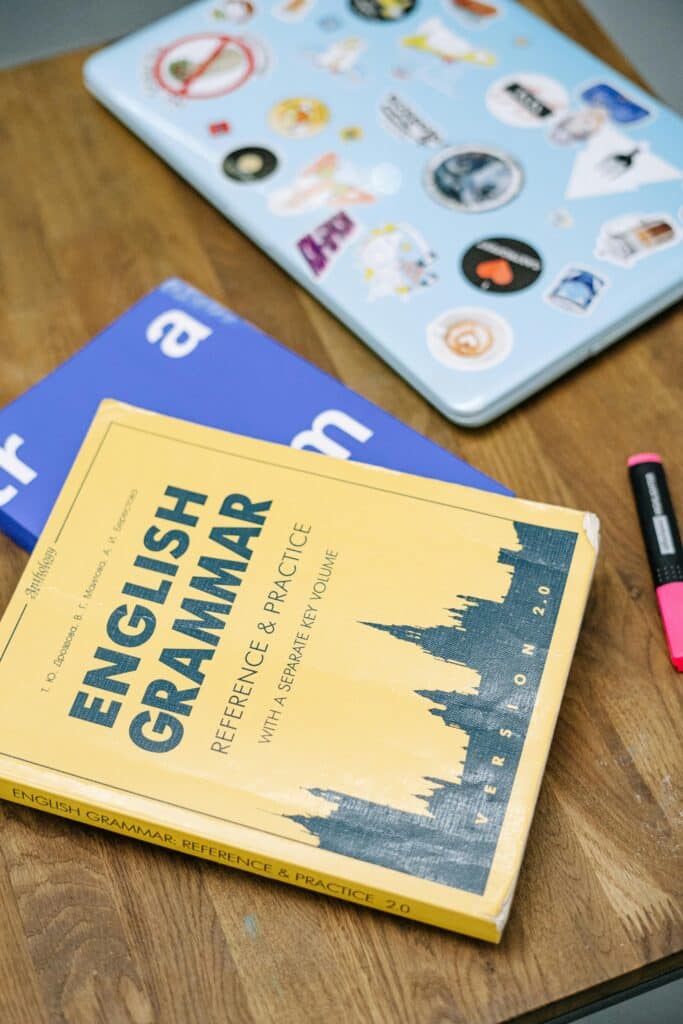
Key Features
- Vocabulary practice
- Grammar exercises
- Reading and listening practice
- Daily review streak system
Best For
- Spanish, French, German
- Language electives
- Intro college language exams
Why It Helps
Duolingo builds exam-ready language skills through gamified practice and daily repetition.
MLA Citation:
“Duolingo.” Duolingo, https://www.duolingo.com.
2.5 Socratic — On-the-Go Concept Explanations
Key Features
- Snap a photo to get explanations
- Solutions for math, chemistry, biology
- Clear concept summaries for quick studying
- Integrates Google search results
Best For
- STEM intro courses
- Quick concept checks before exams
- Reviewing formulas or problem types
Why It Helps
Socratic is perfect for fast clarification when you’re stuck on a problem or need a last-minute concept breakdown.
MLA Citation:
“Socratic.” Socratic, https://socratic.org.
How You Can Use Study Guide Platforms to Improve Exam Results

Using study guides for university exams becomes much easier when you follow a plan that fits your schedule, learning style, and the demands of your courses. This section gives you a step-by-step way to use these platforms so you study smarter without burning out.
Build a Steady Routine You Can Keep
You can start by choosing one or two platforms you trust, instead of juggling too many. When you mix class notes with digital guides, you create a stronger system for remembering information.
Simple ways to build your study routine
- Set short review sessions throughout the week
- Break larger topics into small parts
- Use practice questions at the end of each chapter
- Review tricky concepts at the same time each day
When you study at a steady pace, you give your brain extra chances to store new ideas. This makes exam time feel easier because you’ve been reviewing the whole way through.
Use Active Recall to Strengthen Memory
Active recall means you test yourself instead of only reading. Many study guides for university exams include built-in features that help you practice this skill.
Tools that support active recall
- Flashcards
- Quizzes
- Formula sheets
- Timed practice problems
When you ask your brain to bring back information on its own, you improve your long-term memory. That makes it easier to use what you know during an exam.
Mix Different Study Tools for Better Results

You don’t have to rely on one platform. When you use more than one method, you cover more types of learning.
Helpful ways to mix platforms
- Use flashcards alongside short videos
- Practice problems after reading summaries
- Combine textbook questions with online hints
- Review notes on your phone between classes
Each tool gives you a different angle on the same topic. This makes your understanding deeper and more flexible.
Know When to Switch Strategies
Sometimes you may notice a study method no longer works for you. When this happens, switching platforms or adding new tools can help you learn more clearly.
Signs it’s time to adjust your strategy:
- You reread the same notes without remembering
- You finish readings but can’t explain them
- You keep getting similar practice questions wrong
- You feel stuck in a memorizing loop
Changing your strategy can help you stay motivated while still building strong exam skills.
Focus on What Matters Most Before the Exam
As your exam gets closer, your focus should shift. Instead of covering everything again, you can spend time on your most challenging concepts.
Ways to prepare for exam day:
- Practice high-value problems
- Break down sample essays
- Review summaries of major topics
- Test yourself with timed practice
When you center your time on the skills you need most, you make your study sessions more effective and less stressful.
Final Reflection

You can use all of these platforms, tools, and habits to build a smoother path toward your university exams. The more you adjust your strategy to fit your learning style, the more confident you feel when test day comes. With the right mix of study guides, steady practice, and active recall, how much more prepared could you feel for your next big exam?
References
Vogt, Nicole P., and Amy Smith Muise. “An Online Tutor for Astronomy: The GEAS Self-Review Library.” arXiv, 30 Apr. 2015, https://arxiv.org/abs/1505.00050 Accessed 23 Nov. 2025.
GEAS Project. “An Introduction to the Self-Review Library.” New Mexico State University, https://astronomy.nmsu.edu/geas/oview/srq.shtml Accessed 23 Nov. 2025.
GEAS Project. “Instructions for Using the Self-Review Library.” New Mexico State University, https://astronomy.nmsu.edu/geas/srq/portal_ins.shtml Accessed 23 Nov. 2025.
Khan Academy. About. Khan Academy, https://www.khanacademy.org/about Accessed 23 Nov. 2025.
Khan Academy. “How Is Khan Academy Effective and Different from Other Resources?” Khan Academy Help Center, https://support.khanacademy.org/hc/en-us/articles/202260264-How-is-Khan-Academy-effective-and-different-from-other-resources Accessed 23 Nov. 2025.
National Center for Education Statistics. Student Access to Digital Learning Resources Outside of the Classroom: Executive Summary. NCES, https://nces.ed.gov/pubs2017/2017098/index.asp Accessed 23 Nov. 2025.
Brainscape. How to Study with Online Flashcards. Brainscape Academy, https://www.brainscape.com/academy/how-study-with-online-flashcards/ Accessed 23 Nov. 2025.
Sun, Michael, et al. “Spaced Repetition Flashcards for Teaching Medical Students Psychiatry.” Medical Science Educator, vol. 31, no. 3, 2021, pp. 1125–31. PMC, https://pmc.ncbi.nlm.nih.gov/articles/PMC8368120/ Accessed 23 Nov. 2025.
Laurent, Edward, and Staton Phillips. “Effectiveness of Electronic Flashcards for Undergraduate Medical Students in Musculoskeletal Sciences.” Cureus, Jan. 2025. PMC, https://pmc.ncbi.nlm.nih.gov/articles/PMC11812280/ Accessed 23 Nov. 2025.
Muzaffar, Abdul Wahab, et al. “A Systematic Review of Online Exams Solutions in E-Learning: Techniques, Tools and Global Adoption.” arXiv, Oct. 2020, https://arxiv.org/abs/2010.07086 Accessed 23 Nov. 2025.
Reddy, Siddharth, Igor Labutov, Siddhartha Banerjee, and Thorsten Joachims. “Unbounded Human Learning: Optimal Scheduling for Spaced Repetition.” arXiv, Feb. 2016, https://arxiv.org/abs/1602.07032 Accessed 23 Nov. 2025.
Frontiers in Education. “A Comparison of the Effectiveness of Two Computer-Based Learning Aids.” Frontiers in Education, 2018, https://www.frontiersin.org/articles/10.3389/feduc.2018.00051/full Accessed 23 Nov. 2025.
Chegg. Why Students Use Online Study Tools: Findings from In-Depth Qualitative Research. 2023, https://www.chegg.com/about/wp-content/uploads/2023/03/Why-Students-Use-Online-Study-Tools-Findings-from-In-Depth-Qualitative-Research.pdf Accessed 23 Nov. 2025.
OnlineSchools.org. Online Study Guides. OnlineSchools.org, https://www.onlineschools.org/study-guides/ Accessed 23 Nov. 2025.
Tutorialkart. “Top Chegg Alternatives: Best Academic Help Platforms.” Tutorialkart, https://www.tutorialkart.com/top-chegg-alternatives-best-academic-platforms/ Accessed 23 Nov. 2025.