Academic Perfectionism: Why Straight-A Students Are Struggling More Than C Students in Life

You remember being told in elementary school that getting straight A’s was the golden ticket to success. You were promised that perfect grades would unlock everything—the best colleges, the highest-paying jobs, and a smooth path through life. But what if that promise was backwards?
Meet Sarah, a former valedictorian who spent four years at a Fortune 500 company watching her average-grade colleagues get promoted while she remained stuck in the same role. Or consider Jake, who pulled mostly C’s in college but now runs a thriving business, while his straight-A classmates struggle to adapt when their first startup fails.
The School System Rewards Conformity Over Capability
Grades Measure How Well You Do School, Not Life Skills

The emphasis on standardized testing creates immense pressure to perform well on tests rather than developing critical thinking. Academic perfectionism becomes the goal instead of genuine understanding or real-world application.
• You’re evaluated on your ability to store information, not analyze or apply knowledge
• The one-size-fits-all approach ignores your individual talents and interests
• Teaching to the test kills creativity and fails to prepare you for complex real-world problems
Academic Excellence Poorly Predicts Career Success
Traditional academic markers like grades and degrees function as power structures that sort people into different classes. The system privileges conformity to predetermined standards rather than innovative thinking or problem-solving abilities.
Your unique talents outside traditional academic subjects often go unrecognized and unsupported. This academic perfectionism mindset creates alienation and disengagement from learning that truly matters for future success.
The current system fails to develop the critical thinking, creativity, and adaptability that employers actually value. Real-world challenges require skills that standardized education simply doesn’t measure or cultivate effectively.
Why Average Students Develop Superior Real-World Skills

While straight-A students master predetermined formulas, you develop genuine problem-solving abilities. You learn to navigate uncertainty without clear guidelines, building resilience that academic perfectionism cannot teach.
They develop problem-solving skills without predetermined answers
Average students face constant academic challenges that force creative thinking. Unlike top performers who follow established patterns, you must find unique solutions when traditional methods fail.
This struggle builds authentic problem-solving capabilities that employers desperately need. Research shows that 77% of employers prioritize real-world skills over traditional academic achievements when making hiring decisions.
Key advantages of struggle-based learning:
• Develops creative thinking when standard approaches don’t work
• Builds resilience through repeated problem-solving attempts
• Creates adaptability that academic perfectionism often lacks
Average students practice adaptability when academic structure fails them
When you can’t rely on perfect study habits, you develop flexibility that serves you professionally. Your academic setbacks teach valuable lessons about adaptation that straight-A students never experience.
This adaptability becomes crucial in dynamic work environments where academic perfectionism proves insufficient. You learn to pivot quickly when circumstances change, a skill increasingly valued by modern employers.
Benefits of adaptive thinking:
• Comfort with uncertainty and changing circumstances
• Ability to find alternative solutions under pressure
• Natural resilience that academic perfectionism doesn’t develop
They build communication and social intelligence through struggle
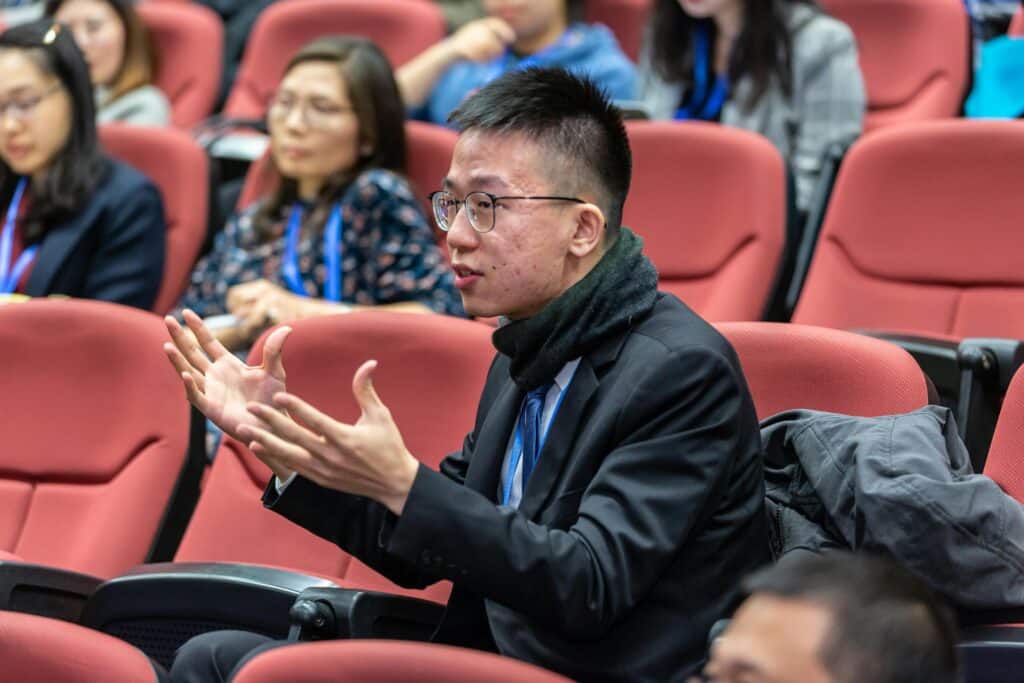
Your academic challenges force you to seek help, collaborate, and communicate effectively. While high achievers work independently, you develop essential social skills through necessity.
These communication abilities prove invaluable in professional settings. Employers consistently report that emotional intelligence and teamwork matter more than perfect grades when building successful teams.
Social skills developed through academic struggle:
• Strong networking abilities from seeking help and support
• Enhanced emotional intelligence from managing academic setbacks
• Superior teamwork skills that academic perfectionism often inhibits
Essential Life Skills That Grades Cannot Measure
Emotional Intelligence and Relationship Building Abilities

Your ability to navigate complex workplace relationships often matters more than your GPA. While academic perfectionism teaches you to follow rigid formulas, emotional intelligence requires adapting to unpredictable human dynamics.
Traditional grading systems fail to measure your capacity for empathy, conflict resolution, or building meaningful professional networks that drive career success.
• Emotional awareness helps you read team dynamics and respond appropriately to colleagues
• Relationship building creates opportunities that transcend what any transcript can offer
• Interpersonal skills determine leadership potential better than test scores
Creative Problem-Solving and Innovative Thinking
When you focus solely on achieving perfect grades, you often sacrifice creative thinking for safe, predictable answers. Academic perfectionism conditions you to seek the “right” response rather than exploring innovative solutions.
Real-world challenges rarely have textbook answers, requiring you to think beyond conventional approaches that traditional education rewards.
• Creative thinking involves risk-taking that grade-focused students typically avoid
• Innovation requires experimentation, which conflicts with perfectionist tendencies
• Problem-solving skills develop through trial and error, not memorization
Leadership Skills and Team Collaboration

Your leadership abilities emerge through real-world experience, not academic achievements. While academic perfectionism emphasizes individual performance, workplace success depends on your ability to inspire and coordinate diverse teams effectively.
Collaborative skills require emotional maturity and adaptability that standardized assessments cannot capture or measure accurately.
• Leadership involves motivating others toward shared goals beyond personal academic success
• Team collaboration requires compromise and flexibility that perfectionist students struggle with
• Effective communication transcends academic writing skills to include persuasion and inspiration
Summary Table
| Aspect | Straight-A Students | C Students |
|---|---|---|
| System Navigation | Excel at compliance | Learn creative problem-solving |
| Skill Development | Master memorization | Build resilience and adaptability |
| Real-World Preparation | Limited by conformity | Practice failure recovery early |
| Career Success | Strong academic performance | Superior practical skills |
Key Points:
• Grades measure school performance, not life success capabilities
• C students develop essential skills like adaptability, communication, and leadership
• Straight-A achievement often requires conformity over creativity and originality
• Average students gain experience with failure and setbacks, building resilience
• Real-world success demands problem-solving abilities that grades cannot measure
• Many successful entrepreneurs were average students who learned people skills
• Academic excellence doesn’t predict career performance beyond the first year
The gap between academic achievement and life success reveals a fundamental truth about human potential. Your grades reflect how well you navigate structured systems, but life rarely provides clear rubrics or predetermined answers.
Success in the real world demands skills that standardized testing cannot measure: emotional intelligence, creative thinking, and the ability to bounce back from failure. While straight-A students master compliance, you might be developing the very traits that drive innovation and leadership.
What skills do you prioritize: academic perfection or real-world adaptability?
Why Straight-A Students Are Struggling More Than C Students in Life.” Unpublished manuscript provided by author, n.d.
References
National Association of Colleges and Employers. “The Attributes Employers Look for on New Grad Resumes — and How to Showcase Them.” NACE, n.d., https://www.naceweb.org/about-us/press/the-attributes-employers-look-for-on-new-grad-resumes-and-how-to-showcase-them
National Association of Colleges and Employers. “Almost Two-Thirds of Employers Use Skills-Based Hiring to Help Identify Job Candidates.” NACE, n.d., https://www.naceweb.org/job-market/trends-and-predictions/almost-two-thirds-of-employers-use-skills-based-hiring-to-help-identify-job-candidates
National Association of Colleges and Employers. “What Are Employers Looking for When Reviewing College Students’ Resumes?” NACE, n.d., https://www.naceweb.org/talent-acquisition/candidate-selection/what-are-employers-looking-for-when-reviewing-college-students-resumes
Van Iddekinge, Chad H., et al. “Experience Doesn’t Predict a New Hire’s Success.” Harvard Business Review, 2019, https://hbr.org/2019/09/experience-doesnt-predict-a-new-hires-success
“Grade Point Average as a Predictor of Work Performance Among Professionals.” PubMed Central (PMC), 2025, https://pmc.ncbi.nlm.nih.gov/articles/PMC12539415/
American Psychological Association. “Perfectionism and the High-Stakes Culture of Success: The Hidden Toll.” APA Monitor, Oct. 2024, https://www.apa.org/monitor/2024/10/antidote-achievement-culture
American Psychological Association. “Perfectionism.” APA Dictionary of Psychology, n.d., https://dictionary.apa.org/perfectionism
Hewitt, Paul L., and Gordon L. Flett. “Perfectionism Is Increasing Over Time.” American Psychological Association (PDF), n.d., https://www.apa.org/pubs/journals/releases/bul-bul0000138.pdf
Korn Ferry. “Power Shifts — Workforce Planning Trends.” Korn Ferry Insights, n.d., https://www.kornferry.com/insights/featured-topics/workforce-management/workforce-planning-trends
Korn Ferry. “Is ‘Caring’ for Workers Taking a Back Seat?” Korn Ferry, n.d., https://www.kornferry.com/insights/this-week-in-leadership/is-caring-for-workers-taking-a-back-seat
“Inflated Applicants: Attribution Errors in Performance Evaluation.” Harvard DASH (working paper), n.d., https://dash.harvard.edu/bitstreams/7312037c-d8b8-6bd4-e053-0100007fdf3b/download
“Skills Trump GPA: Employers Seek Problem-Solving, Teamwork in New-Grad Hires.” The EduLedger, n.d., https://www.theeduledger.com/hiring/article/15736198/skills-trump-gpa-employers-seek-problemsolving-teamwork-in-new-grad-hires