The 5 School Classes That Will be Completely Obsolete For the Future
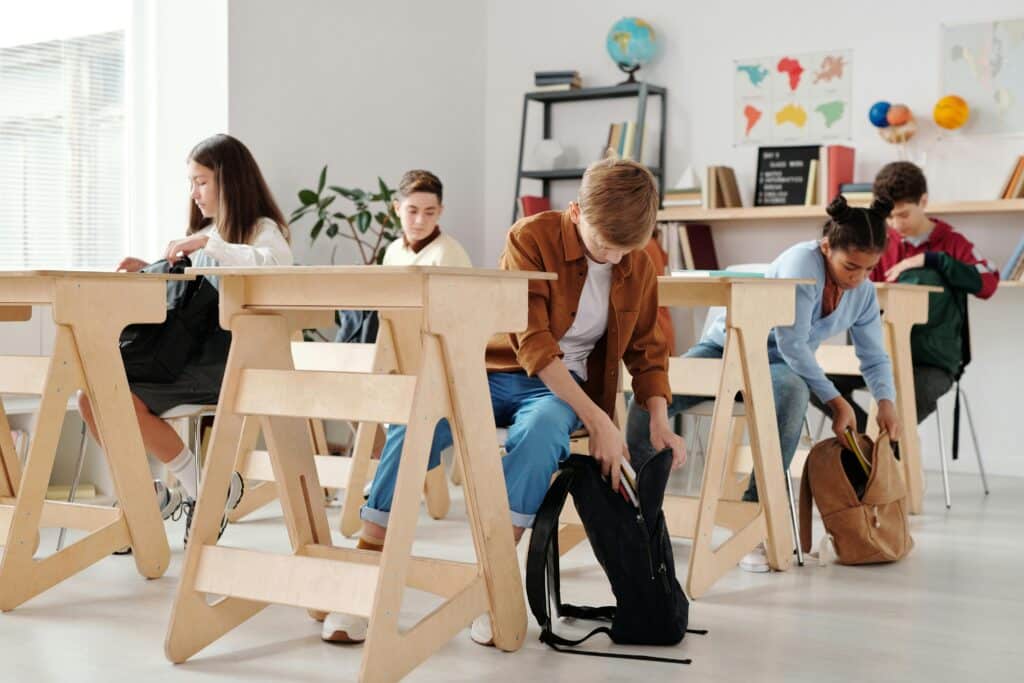
You sink into the stiff chair as the bell rings. The teacher hands out another worksheet and says, “Today we’ll learn the same thing we did last year.”
You look at your phone and wonder if this will help you later.
This moment matters because you — a school student — deserve lessons that prepare you for the changing job market and real tasks you’ll meet after graduation.
Traditional school classes can feel stuck teaching procedures instead of skills students will need.
Employers now expect fast reskilling: on average, companies estimate roughly 40% of workers will need reskilling of six months or less. (World Economic Forum).
At the same time, new tools reshape work: about one-in-six workers say at least some of their job is done with AI. (Pew Research Center).
Why this matters to you:
- You may spend class time on tasks that AI or automation could do.
- You may miss out on career readiness skills employers value.
- You might prefer student-centered learning that ties lessons to real problems.
The 5 School Classes
- 1 Cursive Writing / Handwriting Practice
- 2 Introductory Desktop Publishing and Basic Office Tools
- 3 Calculator-Dependent or Rote Computation
- 4 Rote-Memorization History and Fact-Listing
- 5 Basic “Computer Literacy” as a Standalone Class
1. Cursive Writing / Handwriting Practice as a required school class

Many schools still schedule regular handwriting time.
But handwriting’s role is shifting as digital tools become central to how you communicate and learn. (Education Week).
Reasons this school class may be at risk:
- Digital writing tools handle legibility and editing, reducing need for repeated handwriting drills. (World Economic Forum).
- States that require cursive are a growing minority; policy choices vary. (Education Week).
- Employers increasingly value digital communication and typing speed over neat penmanship. (Pew Research Center).
What this school class could become instead:
- Short, focused units on digital communication and typing fluency.
- Projects that blend handwritten creativity with typed final products.
- Assessments that reward clarity of ideas, not just penmanship.
Suggested changes for you in class:
- Replace long handwriting drills with typing practice tied to writing tasks.
- Use collaborative documents to build real writing skills.
(Statistics and trends above are supported by reporting and research from Education Week and the World Economic Forum).
2. Introductory Desktop Publishing / Basic Office Tools taught as a standalone school class
Once common, courses that teach only how to use a single office program may lose value.
Software changes quickly; knowing one program rarely guarantees future readiness. (McKinsey; BLS).
Why this school class is vulnerable:
- Jobs like desktop publishing have seen shrinking demand as tools consolidate and automation grows. (U.S. Bureau of Labor Statistics).
- Employers now want adaptable technology in schools experiences, not mastery of a single app. (McKinsey Global Institute).
- When instruction focuses on menus instead of transferable design and communication skills, outcomes can feel outdated. (Harvard Graduate School of Education).
How to rework this school class for you:
- Teach design thinking and communication, then let software tools rotate each year.
- Emphasize principles of layout, audience, and editing across platforms.
- Use portfolio projects that show your reasoning, not just your menu knowledge.
Bulleted classroom shifts to try:
- Replace “how-to” lessons with cross-platform design projects.
- Encourage collaborative publication projects using cloud tools.
- Build teacher-led workshops on adaptability and tool-agnostic workflows.
(Workforce projections and tool-shift analysis drawn from BLS and McKinsey research).
3. Calculator-dependent or Rote Computation framed as a main school class

There’s a risk that classes centered on repetitive hand calculation become less central.
Computational tools and data literacy change what math instruction should prioritize. (NCTM; OECD).
Reasons this school class may fade:
- Calculators and software can compute quickly, so the value shifts toward interpreting results. (National Council of Teachers of Mathematics).
- Global education guidance recommends focusing on complex problem solving and reasoning. (OECD).
- Employers value data literacy and algorithmic thinking more than manual computation speed. (World Economic Forum).
What should replace it for you:
- Focus on understanding models, error bounds, and when computations matter.
- Projects that teach you how to ask quantitative questions and interpret outputs.
- Use real-world datasets so you learn to clean, visualize, and reason with numbers.
Practical classroom bullets:
- Swap repetitive worksheets for data projects with real datasets.
- Teach when to trust tools and how to check results.
- Blend coding basics with math to build academic skills for the future.
(Recommendations reflect NCTM guidance and OECD education goals).
4. Rote-Memorization History / Fact-Listing taught as the main school class
Memorizing dates and lists alone may be less useful than skills for interpreting evidence.
Historical thinking and inquiry-style learning are increasingly recommended by education researchers. (UNESCO; Brookings).
Why this school class might be replaced:
- Employers and higher education prize critical analysis and source evaluation over recall. (UNESCO).
- The digital age makes facts instantly searchable; interpreting sources takes more skill. (Brookings Institution).
- Curriculum designers suggest shifting toward inquiry-based projects that mimic real research. (Harvard GSE).
How you could experience a modern version:
- Replace long lists of facts with projects analyzing primary sources.
- Teach you to weigh conflicting accounts and present evidence-based conclusions.
- Use multimedia timelines where you evaluate cause, continuity, and change.
Bulleted classroom approaches:
- Move from memorization to source-evaluation labs.
- Include debates and structured evidence reports.
- Build interdisciplinary units linking history with economics and civics.
(These shifts are grounded in UNESCO and Brookings analyses of future-ready education).
5. Basic “Computer Literacy” as a single, static school class

A one-term course that simply shows menus and file saving is getting riskier as a standalone offering.
Instead, digital skills should be woven across subjects. (Harvard GSE; World Economic Forum).
Why this school class may be rethought:
- Rapid AI and tool improvements mean specific how-to lessons age fast. (Pew Research Center; Harvard GSE).
- Employers prize adaptability, data sense, and ethical technology use over basic navigation skills. (McKinsey; UNESCO).
- Integrating digital practice across classes builds deeper competence than isolating it. (OECD).
What better models look like for you:
- Embed coding, data analysis, and digital citizenship in science, art, and English.
- Teach ethical AI use and evaluation of online sources.
- Assess transferable tech skills, not menu recall.
Classroom bullets to adopt:
- Replace one-off tech labs with cross-curricular digital tasks.
- Include AI literacy modules that show how tools change workflows.
- Teach problem solving with tools, with attention to bias and limitations.
(Analysis aligns with Harvard GSE, Pew, McKinsey, and OECD recommendations).
Replacing obsolete school classes with future-focused practice
Across each of these five areas, the research suggests a common pattern.
Education should favor transferable skills, not single-tool proficiency. (World Economic Forum; OECD).
Core replacements you should see:
- Project-based learning that mirrors workplace problems. (Brookings Institution).
- Emphasis on skills students will need: communication, data sense, adaptability. (World Economic Forum).
- Integrated digital literacy and ethical AI education. (Harvard GSE).
Quick bullets for school leaders and teachers:
- Audit school classes for transferable outcomes.
- Use portfolios that show reasoning, not menu steps.
- Train teachers to teach tool-agnostic thinking.
(These synthesis points draw on the World Economic Forum, OECD, Brookings, and Harvard GSE).
Scholarlysphere and classroom renewal
If you look for curated resources and research summaries, Scholarlysphere offers syntheses that can help teachers redesign school classes around skills and projects.
You may find concise evidence summaries that connect classroom practice to workforce trends.
Quick comparison table
Old class model — What to replace it with
Cursive practice — Typing + digital communication projects.
Desktop app drills — Design thinking + cross-platform portfolios.
Rote computation — Data literacy + model interpretation.
Fact-only history — Inquiry projects + source evaluation.
One-off tech class — Integrated AI and digital ethics.
References
World Economic Forum. “The Future of Jobs Report 2023.” World Economic Forum, 2023. https://www.weforum.org/publications/the-future-of-jobs-report-2023/ Accessed 5 Jan. 2026
Organisation for Economic Co-operation and Development. The Future of Education and Skills: Education 2030. OECD Publishing, 2018. https://www.oecd.org/content/dam/oecd/en/publications/reports/2018/06/the-future-of-education-and-skills_5424dd26/54ac7020-en.pdf Accessed 5 Jan. 2026
UNESCO. Reimagining Our Futures: A New Social Contract for Education. UNESCO, 2021. https://unevoc.unesco.org/pub/futures_of_education_report_eng.pdf Accessed 5 Jan. 2026
Brookings Institution. “Big ideas to redesign K–12 for the automation age.” Brookings, 2020. https://www.brookings.edu/articles/big-ideas-to-redesign-k-12-for-the-automation-age/ Accessed 5 Jan. 2026
McKinsey Global Institute. “Automation and the future of work.” McKinsey & Company, 2021. https://www.mckinsey.com/featured-insights/future-of-work Accessed 5 Jan. 2026
Pew Research Center. “Workers’ Exposure to AI in Their Jobs.” Pew Research Center, 25 Feb. 2025. https://www.pewresearch.org/social-trends/2025/02/25/workers-exposure-to-ai/ Accessed 5 Jan. 2026
National Center for Education Statistics. The Condition of Education 2023. U.S. Dept. of Education, Institute of Education Sciences, 2023. https://nces.ed.gov/pubs2023/2023144.pdf Accessed 5 Jan. 2026
National Center for Education Statistics. “Career and Technical Education (CTE) Statistics.” NCES, 2024. https://nces.ed.gov/programs/coe/indicator/tob Accessed 5 Jan. 2026
U.S. Bureau of Labor Statistics. “Desktop Publishers.” Occupational Outlook Handbook, U.S. Bureau of Labor Statistics, 2024. https://www.bls.gov/ooh/office-and-administrative-support/desktop-publishers.htm Accessed 5 Jan. 2026
Harvard Graduate School of Education. “Artificial Intelligence in Education.” Harvard GSE. https://www.gse.harvard.edu/ideas/themes/artificial-intelligence-education Accessed 5 Jan. 2026
National Council of Teachers of Mathematics. “Calculator Use.” NCTM. https://www.nctm.org/research-and-advocacy/research-brief-and-clips/calculator-use/ Accessed 5 Jan. 2026
Education Week. Brooke Schultz. “The Number of States That Require Schools to Teach Cursive Is Growing.” Education Week, Nov. 2024. https://www.edweek.org/policy-politics/the-number-of-states-that-require-schools-to-teach-cursive-is-growing/2024/11 Accessed 5 Jan. 2026