How to Get a 5 on the AP Research Exam: Essential Strategies

Getting a 5 on the AP Research exam isn’t about being a genius, it’s about working smart. With a focused project and a clear research gap, and a 4,000–5,000 word paper you’ll show your intelligence.
Don’t just hope for a 5 on the AP Research exam, work towards it with these many helpful tips.
Key Takeaways
- Stick to a focused project and a real schedule—don’t get lost in side ideas.
- Connect your research to what’s already out there, but make your own mark.
- Drill your presentation and defense until your answers sound sharp, not rehearsed.
Understanding the AP Research Exam Structure
The AP Research exam isn’t the easiest test. You’ll write a research paper and give a presentation, both of which count toward your final score. If you want a 5 on the AP Research exam, you need to nail both parts.
Components of the Assessment
There’s just one performance task, but it’s got two big pieces: your academic paper and your presentation with oral defense. The paper is the heavyweight—it’s 75% of your score. The presentation and defense are the other 25%.
You design your own research question and investigate it through a 4,000–5,000 word paper. The College Board grades the paper, while your teacher grades your presentation using an official rubric.
- Academic paper: 75% of your score
- Presentation & Oral Defense: 25% of your score
- Paper length: 4,000–5,000 words, original question
- Teachers use College Board rubrics for scoring
Document your methods, data, and ethics. The paper isn’t supposed to be a quick project; it needs to show deep inquiry and connect your literature review to your findings.
Academic Paper Overview

Your paper should show original research, not just a summary of others’ work. Start with a sharp research question, review the literature, explain your method, and detail your results.
Use visuals like tables or charts only if they clarify your results—don’t just throw them in for decoration.
- Title and abstract
- Intro with research question and context
- Literature review that links prior work to your question
- Methods that others can repeat
- Results and analysis
- Discussion tying results back to literature and limits
- References and appendices
Cite everything properly. If you work with human subjects, follow the rules. The scorers want to see clear logic, solid methods, and a strong argument from evidence to conclusion. That’s the backbone of a 5 on the AP Research exam.
Presentation and Oral Defense Format
Your presentation, including the Q&A, takes about 15–20 minutes. The teacher uses a rubric that matches up with your paper’s goals. You’ve got to show you understand your research from start to finish.
- Present your core question, method, main findings, and why it matters in 8–12 minutes
- Use 2–4 slides or visuals—no walls of text
- Keep your speaking tight and on time
- Expect 3–4 questions from the panel about your reasoning, your limits, and what it all means
- Give direct answers, cite your own methods and data, and admit weaknesses honestly
- Show you can connect your talk to your written report
If you want the official rubrics, check out the AP Research page on College Board’s site. Knowing what they’re looking for is half the battle for a 5 on the AP Research exam.
| Section | Weight | Key Focus |
|---|---|---|
| Academic Paper | 75% | Clear question, method, analysis |
| Presentation & Defense | 25% | Clarity, confidence, reasoning |
The Academic Paper
If you want a 5 on the AP Research exam, you’ll need to know how to build a clear research question. Don’t just fill space, make every word matter.
Research Question Development
Pick a problem you can actually solve in one paper. Don’t settle for something vague—get specific. Instead of “education and technology,” ask, “How does daily use of classroom tablets affect 4th-grade reading scores in District X over one school year?”
List out your variables, your population, and the time frame. That’s what makes your methods defensible and your project manageable.
- Write a one-sentence rationale for your question
- Keep a log of alternative questions and why you ditched them
- Defend your choices—reviewers want to see your thought process
Literature Review and Gap Identification
Dig into recent peer-reviewed articles, books, and solid reports. Take notes on citation, main claim, method, and limitations. Use a spreadsheet or a reference manager to keep your sources sorted.
Don’t just summarize—synthesize. Group studies by theme, spot consistent results, and call out repeated weaknesses. If everyone uses cross-sectional data but nobody’s tried longitudinal, say so.
- State the gap in one sentence
- Explain how your study fills it
- Describe what new understanding you expect
This direct link between the gap and your aim is a big deal for a 5 on the AP Research exam.
| Step | Purpose | Tips |
|---|---|---|
| Research Question | Narrow focus | Be specific, measurable |
| Literature Review | Find the gap | Synthesize, not summarize |
| Gap Statement | Justify your study | Make it explicit |
Paper Structure and Organization

Stick to a standard format: Title, Abstract, Introduction, Literature Review, Methods, Results, Discussion, Conclusion, and References. Use subheadings inside your methods and results to guide readers.
Keep your word count between 4,000 and 5,000. Spread it roughly: 20–25% intro/literature, 20% methods, 20–25% results, and the rest for discussion/conclusion. Tweak as needed for your topic.
- Use labeled tables for descriptive stats
- Keep figures simple and clear
- Refer to visuals directly in your text
- Follow College Board formatting in your Digital Portfolio
Revisions and Feedback
Plan for several rounds of revision: self-edit, advisor review, peer review, and a final polish. Make a checklist based on the AP scoring rubric. Focus on clarity, method alignment, evidence, and ethical reporting.
Ask your advisor to critique your methods, and have peers check for logic and flow. Track every comment and how you fixed it. Save early drafts—you might need to show your progress during the presentation or oral defense.
- Run a final style and citation check
- Use a reference manager for consistency
- Submit everything to the AP Digital Portfolio before the deadline
Missing deadlines is an easy way to lose your shot at a 5 on the AP Research exam. Don’t let that be you.
| Revision Step | Who Reviews | Focus |
|---|---|---|
| Self-edit | You | Clarity, structure |
| Advisor review | Teacher/mentor | Methods, alignment |
| Peer review | Classmate | Logic, flow |
| Final polish | You | Style, citations |
Excelling in the Presentation and Oral Defense
For a 5 on the AP Research exam, you have to treat your presentation and oral defense like a top priority. Be clear, show your best evidence, and be ready for difficult questions.
Presentation Preparation
Start with a plan: aim for 12–14 minutes of talking so you don’t rush or drag. Open with your research question and why it matters, all in two sentences. Use 6–8 slides—one for each main section, and keep them clean.
Design slides for real people, not robots. Use big labels, one graph per slide, and skip the walls of text. For stats, translate them into plain English. For qualitative work, use a couple of short quotes and a simple theme map.
- Practice with a timer—at least three times
- Break your talk into timed sections
- Test your tech and print a backup copy
- Make sure your presentation shows your thinking, not just your results
Oral Defense Strategies

Expect three questions that dig into your methods, understanding, and reflection. Listen, take a breath, then answer. Start with a claim, give one piece of evidence, and mention a limit or next step.
Use real examples: name the tool, the sample size, and how you checked reliability. If they ask about bias, describe exactly how you tried to reduce it. If you don’t know the answer, admit it and suggest what you’d do next.
- Keep answers short—30–90 seconds
- Offer to elaborate if needed
- Practice common questions with friends or your teacher
- Show reflection and cite your paper when it helps
Rubrics and Scoring Insights
Study the College Board’s scoring guidance for the presentation and oral defense. Examiners care about clarity, method alignment, interpretation, and reflection. Only the first 20 minutes count, so don’t ramble.
Map the rubric to your slides: show where you address methods, evidence, and limitations. Use the rubric’s language—words like “validity” or “triangulation”—but explain them in your own words.
- Have your teacher use the rubric for practice feedback
- Fix your two biggest rubric weaknesses before your final run
- Signal clearly when you address rubric points during your talk
| Presentation Section | Time | Focus |
|---|---|---|
| Intro | 2 min | Question, significance |
| Methods | 3–4 min | Design, procedures |
| Results | 4–5 min | Findings, visuals |
| Implications | 2–3 min | Meaning, limits |
| Closing | 1 min | Wrap-up, next steps |
Effective Study and Practice Techniques
Getting a 5 on the AP Research exam isn’t just about working hard; it’s about working smart. You need strategies that actually help you make progress.
Spend your time on guided practice, concrete feedback, and real examples of high-scoring work. Grab official tools, compare your drafts with actual submissions, and build a review routine that targets methodology, evidence, and presentation.
Utilizing AP Classroom Resources
AP Classroom isn’t just a hoop to jump through—it’s a map. Track the course and exam tasks the College Board expects, and work through unit questions and formative tasks on a real schedule.
Download released rubrics and scoring guidelines from AP Classroom. Match rubric items to your paper and portfolio so you spot gaps as you draft, not after.
Try the AP Classroom digital tools for practice responses. Save scored examples for later, and use the platform’s feedback to see what AP readers actually care about.
- Track progress with AP Classroom tasks
- Align every draft to rubric elements
- Save scored examples for revision guidance
Reviewing Sample Papers and Presentations
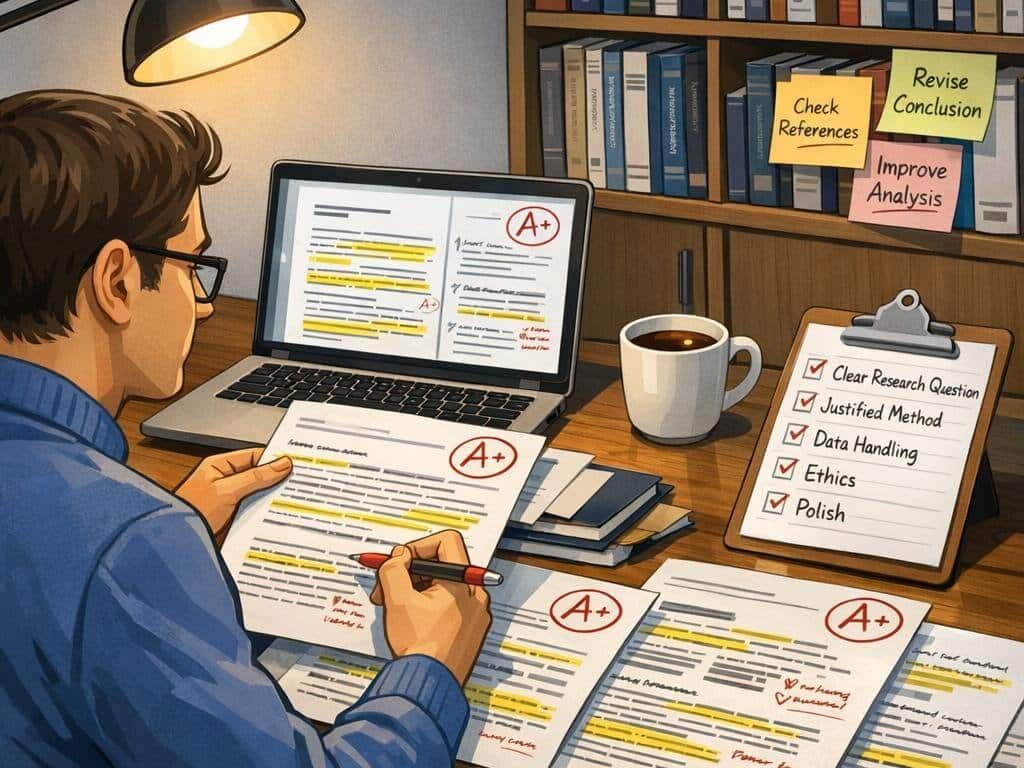
Read high-scoring papers start to finish, not just the intros. See how research questions narrow and methods actually support claims.
Compare your work—line by line—to these strong examples. Jot down a checklist: clear research question, justified method, data handling, ethics, and polish. Mark where your draft falls short and set one specific goal for each revision session.
Watch old presentations or teacher demos. Notice their pacing and slide content, and how they admit limitations. Then, try recording yourself and see what needs fixing.
- Analyze structure and methods in top papers
- Use checklists from strong examples
- Practice presentations with real models
| Resource | How to Use |
|---|---|
| AP Classroom | Track tasks, use rubrics, save examples |
| Sample Papers | Checklist creation, draft comparison |
| Presentations | Model pacing and delivery |
Self-Assessment and Peer Review
Score yourself with the official rubrics. Break the rubric into bite-sized, actionable points and rate each on a 1–4 scale. Track your scores in a simple table to spot trends over time.
Ask peers to review with a focused list: is your research question specific? Can someone else replicate your method? Does your data really back up your claims?
When you get feedback, sort comments into “fix now,” “think about later,” or “style choice.” Tackle the urgent stuff first, then circle back. Submit revised work to your AP digital portfolio so your progress is clear and you’re ready for that 5 on the AP Research exam.
- Self-score with rubric checkpoints
- Peer reviews with targeted questions
- Prioritize feedback for quick wins
Achieving the Top AP Score
Want that 5 on the AP Research exam? It’s not just about working; it’s about understanding how you get scored.

Understanding the AP Score Scale
Your AP Research score mostly comes from your academic paper and your presentation. The College Board uses a holistic rubric for the paper and an analytical one for the presentation and oral defense.
The written paper carries the most weight, so your literature review, method, and argument should all connect back to the research gap you’re addressing. Use the rubric’s language—claims, evidence, limitations—when you write.
Ask your teacher for past rubrics and sample scores. Grade some sample papers yourself to see how tiny mistakes can drop you from a 5 on the AP Research exam to a 4. Keep a checklist tied to each rubric row and update it with every revision.
- Paper counts for most of your score
- Rubric language matters in your writing
- Practice grading to spot hidden pitfalls
Long-Term Planning and Time Management
Start with a timeline that splits the year into literature review, data collection, analysis, and several rounds of revision. Set weekly word or task goals and schedule check-ins with your advisor.

Treat the paper and presentation as parallel projects—don’t wait until the end. Use checkpoints: first draft, advisor feedback, peer review, and final polish. Build in extra time for unexpected rework.
Block out regular 60–90 minute writing sessions. Short, steady work beats a last-minute scramble every time. Use a task list and document comments to keep your advisor in the loop. This way, you avoid rushed sections that can hurt your shot at a 5 on the AP Research exam.
- Break project into phases
- Set specific, weekly goals
- Plan for feedback and revision rounds
| Planning Step | Why It Matters |
|---|---|
| Timeline | Keeps you on track for each stage |
| Checkpoints | Builds in time for real revision |
| Consistent Writing | Prevents last-minute panic |
Building Confidence and Avoiding Pitfalls
Honestly, nobody feels fully ready for the AP Research oral defense. But if you practice your presentation, anticipate tough questions, and review your data, you’ll sound way more confident.
Don’t let small errors—like missing citations or unclear graphs—drag down your score. Every detail counts when you’re aiming for a 5 on the AP Research exam.
- Practice oral defense with mock questions
- Double-check citations and visuals
- Review feedback before submitting
| Common Pitfall | How to Avoid |
|---|---|
| Unclear research question | Revise and get peer feedback |
| Weak method section | Align with rubric and examples |
| Last-minute revisions | Follow your timeline |
Common Mistakes to Avoid

Don’t leave a gap between your research question and your analysis. If you skip clear links between your literature review, methods, and findings, readers will notice—and you’ll lose points on your shot at a 5 on the ap research exam.
Always state your assumptions and limitations up front. Don’t expect anyone to just “get it” from context; that’s wishful thinking.
Sloppy citation or messy formatting? It’s a fast track to distracting graders. You don’t want to risk your 5 on the ap research exam over a missing reference, do you?
Stick to a consistent style and keep your references list clean. Citation managers can save you from missing or incorrect sources, and honestly, they’re a lifesaver.
Don’t overreach. If your project’s too broad or you try to juggle too many methods, your analysis will probably end up weak. Focus on a manageable question and stick to one solid analytic approach.
Skipping practice runs for your presentation is a big mistake. Teacher-scored POD errors—like stumbling over panel questions—can cost you points that your paper alone won’t make up for. If you want that 5 on the ap research exam, rehearse until you’re confident.
| Mistake | Impact | How to Fix |
|---|---|---|
| Unclear links between sections | Lowers clarity, costs points | Explicitly connect question, method, and analysis |
| Sloppy citations | Distracts graders, reduces professionalism | Use citation managers, double-check formatting |
| Too broad a scope | Weak analysis, unfocused project | Pick one question and analytic approach |
| No presentation practice | Loses easy points | Rehearse, anticipate panel questions |
Practice your presentation to avoid losing points
Connect your research question and analysis directly
Keep citations and formatting polished
Focus your scope for stronger analysis
Conclusion

Succeeding in the AP Research exam It takes more than just knowing your topic. You’ve got to check your work with real rubrics and actually use feedback; otherwise, you’re just guessing.
So, what’s the one change you’ll make in your next study session?
References
College Board – AP Central. “AP Research Assessment.” AP Central – College Board, https://apcentral.collegeboard.org/courses/ap-research/exam
College Board – AP Central. AP® Research Course and Exam Description (CED). College Board, 2024, https://apcentral.collegeboard.org/media/pdf/ap-research-course-and-exam-description.pdf
College Board – AP Central. “AP® Research Academic Paper — 2025 Scoring Guidelines.” AP Central – College Board, https://apcentral.collegeboard.org/media/pdf/ap25-sg-research-academic-paper.pdf
College Board – AP Central. “AP Research: Student Samples and Commentaries (2025).” AP Central – College Board, https://apcentral.collegeboard.org/media/pdf/ap25-apc-research-sample-a.pdf
College Board – AP Students. “Submit AP Research Work in the AP Digital Portfolio.” AP Students – College Board, https://apstudents.collegeboard.org/digital-portfolios/submit-ap-research-work
College Board – AP Central. “AP Research Assessment Timeline.” AP Students – College Board, https://apstudents.collegeboard.org/courses/ap-research/assessment/timeline
Purdue Online Writing Lab. “Writing a Research Paper.” Purdue OWL, Purdue University, https://owl.purdue.edu/owl/general_writing/common_writing_assignments/research_papers/index.html