
Understanding Active Learning: What It Is and How It Benefits Education
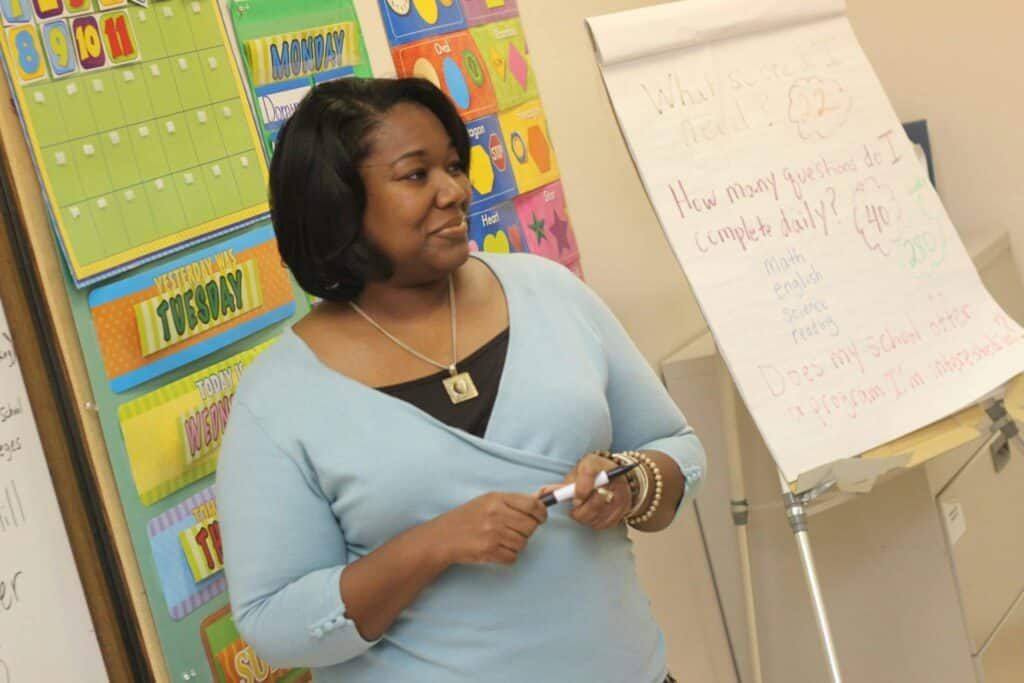
Your third-grade teacher asked everyone to sit quietly and listen while she explained fractions for thirty minutes straight. Half the class zoned out, a few students doodled, and you probably forgot most of it by lunchtime. Compare that to your high school chemistry lab where you mixed solutions, watched reactions bubble up, and figured out why certain combinations created different colors. Which lesson stuck with you longer?
Active learning transforms education by getting you actively involved in the learning process instead of passively absorbing information. This teaching approach helps educators, administrators, and students create more engaging classrooms that boost academic success and build stronger learning communities.
What Active Learning Is and How It Works
Active learning flips the traditional classroom model. Instead of sitting through long lectures, you participate in discussions, solve problems, and work through complex questions. You practice skills in real-time and explain concepts in your own words.
Key benefits that research consistently shows:
• Better grades and lower failure rates – Students are 1.5 times less likely to fail courses with active learning
• Stronger critical thinking and problem-solving abilities that transfer beyond the classroom
• Increased motivation and engagement through hands-on, collaborative experiences
We’ll explore the research-backed benefits that make active learning so effective, examine how multiple learning pathways help different students succeed, and discover how these methods create stronger classroom communities where everyone thrives.
What Active Learning Is and How It Works

Active learning represents a fundamental shift from traditional teaching methods where you passively receive information from an instructor. Instead, this approach asks you to engage directly in the learning process through thinking, discussing, investigating, and creating during class time.
Unlike conventional lectures where only some students participate, active learning ensures all students have opportunities to engage with course material. You’ll practice skills, solve problems, and explain ideas in your own words through various activities.
Student-Centered Engagement Through Thinking and Discussion
Active learning transforms your classroom experience by placing you at the center of the learning process. Rather than sitting quietly while an instructor delivers content, you actively participate in activities centered around writing, talking, and reflecting.
Your engagement happens through various formats:
- Small group discussions where you share perspectives with peers
- Large class activities that involve the entire learning community
- Individual reflection exercises that help you process new information
During these activities, you work collaboratively with classmates while your instructor facilitates learning. This approach ensures every student contributes to classroom discussions, creating multiple opportunities for you to practice and demonstrate understanding.
Active learning strategies can be as simple as discussing questions with someone sitting next to you or as complex as participating in role plays and structured team-based learning exercises.
Problem-Solving and Decision-Making Activities

Your learning deepens when you tackle real problems and make decisions during class time. These active learningexperiences help you apply new knowledge immediately rather than waiting until homework or exams.
You’ll encounter various problem-solving formats:
- Case studies that challenge you to analyze complex situations
- Decision-making scenarios where you propose solutions to real-world problems
- Hands-on activities that let you practice skills in authentic contexts
These activities give you multiple pathways for learning by connecting new information with your existing knowledge. When you work through problems collaboratively, you strengthen neural pathways and encode information more effectively in your memory.
Active learning through problem-solving also increases your motivation by creating personal connections with course material, making abstract concepts more meaningful and relevant to your academic goals.
Immediate Feedback from Instructors and Peers
Timely feedback forms a critical component of successful active learning experiences. You receive responses to your work from both instructors and fellow students throughout class activities.
Your instructors provide feedback by:
- Moving around the classroom to answer questions and observe your thinking process
- Offering explanations of correct and incorrect answers after activities
- Using your work to inform future lesson planning and content delivery
Peer feedback enriches your learning experience through think-pair-share discussions and collaborative work. When you explain concepts to classmates or receive their perspectives, you gain deeper understanding of course material and correct misconceptions quickly.
This immediate feedback loop helps you identify knowledge gaps before they become larger problems. Active learningenvironments create accountability for both individual and group work, ensuring you stay engaged and receive the support needed for academic success.
Research-Backed Benefits for Student Success

Now that we’ve covered what active learning is, let’s examine the compelling research demonstrating how active learningtransforms your educational experience. Multiple comprehensive studies reveal significant advantages for students who engage in active learning compared to traditional teaching methods.
Improved Critical Thinking and Retention Skills
Your critical thinking abilities develop more effectively through active learning approaches. Research consistently shows that active learning enhances your capacity to analyze, evaluate, and synthesize information while improving long-term retention of new concepts.
Key benefits include:
• Enhanced analytical skills through hands-on problem-solving activities and collaborative discussions
• Improved information transfer abilities, allowing you to apply knowledge across different contexts and situations
• Stronger memory consolidation through engaging, interactive learning experiences
Higher Course Grades and Reduced Failure Rates

Your academic performance improves significantly when you participate in active learning environments. Freeman et al.’s comprehensive meta-analysis of 225 studies demonstrated that active learning substantially increases course grades over traditional didactic methods, particularly in smaller classes.
The data reveals striking differences in your success rates. Students in courses without active learning were 1.5 times more likely to fail than those experiencing active learning approaches, highlighting the profound impact on academic outcomes.
Academic improvements include:
• Significantly higher course grades compared to traditional lecture-based instruction methods
• Reduced failure rates across science, engineering, and mathematics courses
• Enhanced performance particularly evident in smaller class settings of 50 students or fewer
Enhanced Motivation and Personal Development
Your motivation levels increase substantially through active learning experiences. The National Survey of Student Engagement, analyzing hundreds of thousands of students from over 1600 institutions, consistently demonstrates that hands-on, integrative approaches lead to higher achievement and active learning benefits.
Research reveals a powerful connection between your emotional engagement and learning outcomes. Active learningpositively influences your motivation, which in turn enhances attention and memory consolidation, creating a beneficial cycle for your educational development.
Personal development outcomes:
• Increased intrinsic motivation through engaging, collaborative learning experiences
• Improved interpersonal skills developed through group activities and peer interactions
• Enhanced overall student achievement and personal growth across diverse educational settings
Multiple Learning Pathways for Better Understanding

Now that we have covered the research-backed benefits, let’s explore how active learning creates diverse pathways for deeper comprehension. You gain multiple avenues for processing information through various engagement strategies.
Processing Information Through Writing and Discussion
When you engage in writing and discussion activities, you process course material through multiple cognitive channels. These methods give you opportunities to think critically and explain ideas in your own words.
Key benefits of writing and discussion:
• Writing helps you organize thoughts and clarify understanding of complex concepts
• Discussion allows you to hear diverse perspectives and test your ideas against peers
• Both activities require you to actively construct meaning rather than passively receive information
Connecting New Knowledge with Prior Learning

Your brain naturally seeks to connect new information with what you already know. Active learning strategies specifically design activities that help you build these meaningful bridges between existing and emerging knowledge.
This connection process strengthens your understanding by organizing information within established frameworks. You encode new concepts more effectively when they relate to your previous experiences and academic background.
How connections enhance learning:
• Prior knowledge serves as foundation for integrating new concepts and skills
• Personal experiences provide context that makes abstract ideas more concrete and memorable
• Environmental contexts from home, academic, and social settings shape how you engage with material
Strengthening Memory Through Practical Application
Applying new knowledge in practical contexts helps you encode information into long-term memory. You strengthen neural pathways when you actively use concepts rather than simply memorizing them for tests.
Active learning transforms abstract theories into concrete understanding through hands-on practice. You solve problems, make decisions, and propose solutions that demonstrate real comprehension beyond surface-level recall.
Memory strengthening through application:
• Problem-solving activities require you to manipulate concepts in meaningful ways
• Decision-making exercises help you evaluate options using newly learned principles
• Practical application creates personal connections that increase your motivation to learn and remember
Summary Table
| Aspect | Key Finding |
|---|---|
| Student Outcomes | Active learning improves critical thinking, retention, and motivation |
| Course Performance | Students 1.5x less likely to fail with active learning methods |
| Learning Pathways | Multiple engagement methods enhance memory encoding and understanding |
| Research Evidence | 225+ studies confirm significant academic improvements across STEM fields |
Key Takeaways
• Active learning transforms passive students into engaged participants through thinking, discussing, and problem-solving activities.
• Research consistently shows improved course grades, reduced failure rates, and enhanced critical thinking skills.
• Multiple learning pathways help you process information through writing, discussion, and hands-on application.
• Timely feedback from instructors and peers accelerates your understanding and corrects misconceptions quickly.
• Collaborative activities build classroom community while developing essential interpersonal skills for future success.
• Your motivation increases when you make personal connections with course material through active participation.
Active learning isn’t just an educational trend—it’s a research-backed approach that dramatically improves your academic success. When you engage actively with course material, you’re not just memorizing facts; you’re building lasting understanding through multiple pathways.
Ready to transform your learning experience? Ask your instructors about incorporating more active learning strategies, or seek out courses that emphasize hands-on engagement and collaborative problem-solving.
References
Bonwell, Charles C., and James A. Eison. Active Learning: Creating Excitement in the Classroom. ASHE-ERIC Higher Education Report No. 1, George Washington University, 1991.
https://eric.ed.gov/?id=ED336049
Freeman, Scott, et al. “Active Learning Increases Student Performance in Science, Engineering, and Mathematics.” Proceedings of the National Academy of Sciences, vol. 111, no. 23, 2014, pp. 8410–8415.
https://www.pnas.org/doi/10.1073/pnas.1319030111
National Survey of Student Engagement. Engagement Insights: Survey Findings on the Quality of Undergraduate Education. Indiana University School of Education, Center for Postsecondary Research, 2023.
https://nsse.indiana.edu
Prince, Michael. “Does Active Learning Work? A Review of the Research.” Journal of Engineering Education, vol. 93, no. 3, 2004, pp. 223–231.
https://onlinelibrary.wiley.com/doi/10.1002/j.2168-9830.2004.tb00809.x


Pingback: Awe-Inspiring Active Learning Techniques for Transformative Education
Pingback: Study methods for Success: A Brave Student’s Guide