
Understanding the Different Types of School Classes: Complete Guide
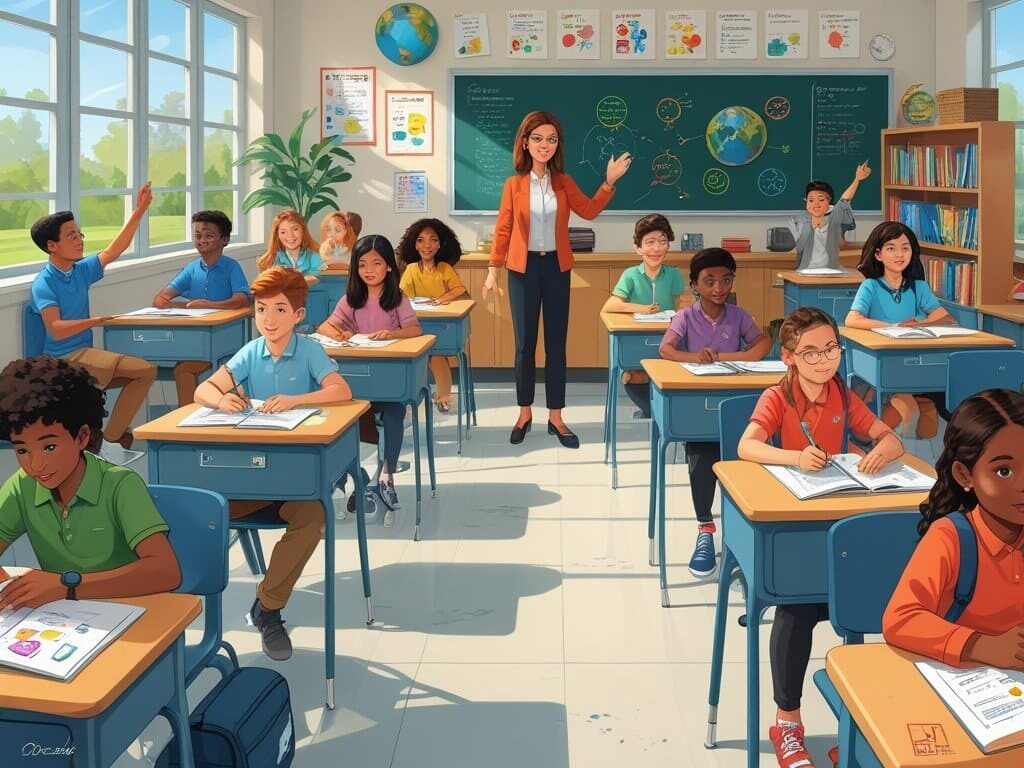
Picture yourself in the hallway, schedule in hand, staring at a list of classes. Each one could nudge you closer to your type of academic success. It’s wild how much those choices matter, right?
Core academic classes lay the groundwork. But electives and specialized courses let you chase passions or just try something new.
Some classes are faster, harder, and look better on transcripts; think honors, AP, or dual enrollment. Not only do they look good on your transcript, but they can even snag you college credit if you play your cards right.
You’ll want to know what each class brings to the table before you pick your schedule. The right mix can really shape your academic success.
Key Takeaways
- Core classes teach essential skills for college and work.
- Electives help you explore interests and build hands-on skills.
- Advanced options mean tougher work and possible college credit.
| Class Type | Main Benefit |
|---|---|
| Core | Prepares you for college/work basics |
| Elective | Lets you try new skills and interests |
| Advanced | Boosts transcript and college readiness |
Core Academic Classes

Core classes build the backbone of your education. Colleges and employers expect you to take the basics: math, science, English, and social studies.
Each offers regular, honors, or AP/IB. That choice impacts your GPA and how ready you’ll feel for college.
- Core classes = foundation for future study
- Pick advanced levels for extra challenge
English and Literature Classes
English classes focus on reading, writing, and speaking. You’ll dive into American and world literature, plus all sorts of genres.
At advanced levels, you might tackle English Language and Composition or English Literature and Composition. That means more essays, deeper analysis, and a lot of practice with thesis statements and evidence.
Creative writing and journalism electives let you experiment with short stories, poetry, or even multimedia. Those skills come in handy for AP exams and college papers.
- Essay writing and analysis are key
- Creative options build your portfolio
| Course | Focus Area |
|---|---|
| English Lit | Reading, analysis, essays |
| Creative Writing | Stories, poetry, expression |
| Journalism | Reporting, multimedia |
Mathematics Course Options
Math usually starts with Algebra 1, then Geometry and Algebra 2, before you hit Pre-Calculus and Calculus.
If you’re into data, you might try statistics or probability. AP Calculus and AP Stats can earn you college credit if you score well.
- Algebra: equations & functions
- Geometry: proofs, shapes
- Pre-Calc & Calc: advanced math, limits, derivatives
Statistics classes teach you to analyze data and solve real-world problems. Calculus is all about rates of change—think physics or engineering prep.
Your choices here can open doors to STEM majors or help with those standardized tests.
Science Subjects
Science classes usually start with Biology, Chemistry, and Physics. Each one has its own flavor—biology is about living things, chemistry deals with atoms and reactions, and physics explains how the world moves.
Electives like Environmental Science, Astronomy, or Forensic Science add hands-on labs and real-world problem solving. You’ll get to collect data and maybe even do a little detective work.
- Biology: cells, genetics, ecosystems
- Chemistry: atoms, reactions, labs
- Physics: motion, energy, forces
| Science Course | Main Topics |
|---|---|
| Biology | Cells, genetics, ecology |
| Chemistry | Atoms, reactions, labs |
| Physics | Motion, energy, forces |
Advanced students can take AP or dual-enrollment science classes. Those labs and projects look great on college applications.
Social Studies Curriculum
Social studies covers World History, European History, U.S. Government, economics, and psychology. You learn how people, countries, and systems interact over time.
World and European history classes dive into revolutions and global changes. U.S. Government covers the Constitution and how our institutions work.
- World/Euro History: big-picture eras
- Government: civics, policy
- Economics: markets, inflation
Economics splits into micro and macro—think personal finance versus big-picture trends. Psychology introduces you to human behavior and research.
| Course | Focus |
|---|---|
| World History | Global events, eras |
| U.S. Gov | Constitution, civics |
| Economics | Markets, policy |
Electives and Specialized Subjects

Electives let you chase what matters to you the most. Maybe it’s mastering a new language, picking up real-world skills, or diving into arts or tech. These classes make school less routine and more personalized.
- Explore interests outside core subjects
- Build real-world skills
World Languages
Language classes open doors—sometimes literally. Spanish is everywhere in the U.S., and you’ll find lots of levels to choose from.
French, German, and Italian are common, too, often with AP or IB options. Chinese is practical for business, while Latin builds your vocabulary (and maybe your SAT score?).
- Spanish: practical, widely used
- Chinese: business, communication
- Latin: vocabulary, grammar
American Sign Language brings you into Deaf culture and is super useful in health and education. Look for classes with conversation labs, cultural projects, or even study abroad.
| Language | Why Take It? |
|---|---|
| Spanish | Daily use, AP credit |
| Chinese | Business, travel |
| Latin | Roots, SAT prep |
| ASL | Health, social services |
Business and Career-Oriented Courses
Business electives give you skills you’ll actually use. Accounting and personal finance teach you how to budget, handle taxes, and manage money.
Marketing and business management show you how to pitch ideas and work with a team. Business law covers contracts and the basics of running a company. Some schools even let you run a student store or create a business plan from scratch.
- Accounting: budgets, taxes
- Marketing: ads, teamwork
- Business Law: contracts, basics
Many programs offer internships or job-shadowing. These experiences help you figure out if a business career fits—and look great on your résumé.
| Course | Practical Skill |
|---|---|
| Personal Finance | Budgeting, taxes |
| Marketing | Strategy, advertising |
| Business Law | Contracts, liability |
Computer Science and Technology

Computer classes are everywhere now. You’ll learn coding, design, and how to solve problems using tech.
App and web development teach you to build stuff people actually use—think HTML/CSS, JavaScript, and frameworks. Game development is perfect if you’re into design and storytelling.
- App/web dev: real-world projects
- Game dev: design, scripting
- Graphic/audio: creative tech
Graphic design and audio production let you play with Adobe tools or sound editing. Some classes end with a portfolio or a big competition—great for showing off your skills.
Look for AP Computer Science if you want college-level prep. Schools sometimes team up with local tech companies or offer certifications, which is pretty cool.
| Tech Course | Focus |
|---|---|
| Web Dev | HTML, CSS, JavaScript |
| Game Dev | Engines, scripting |
| Graphic Design | Adobe, portfolios |
Fine Arts and Creative Programs
Fine arts classes let you flex your creativity. Visual arts and graphic design cover drawing, painting, and digital work. Photography classes help you build a portfolio for art school.
Performing arts—music, dance, theater—let you perform and learn technique. Music classes teach you to read music and play in groups. Theater splits between acting and behind-the-scenes work like lighting and sound.
- Visual arts: draw, paint, design
- Music: theory, ensemble
- Theater: performance, tech
Audio production supports both music and theater with recording and mixing. Some schools have classes that end in a recital or gallery show, which is honestly a great way to get noticed.
| Art Course | Key Experience |
|---|---|
| Visual Arts | Portfolio, exhibits |
| Music | Recitals, ensemble |
| Theater Tech | Lighting, sound, sets |
Advanced, Honors, and College-Level Courses
These courses up your gpa rigor. You’ll see a faster pace, deeper concepts, and college-style grading. They can boost your GPA and maybe even get you out of some college classes (college credit) later.
- Advanced courses = more challenge
- Possible college credit
Advanced Placement (AP) Classes
AP classes use college-level material from the College Board. You’ll find AP Calculus, AP Bio, AP Chem, AP Physics, AP Stats, AP English (both kinds), AP Computer Science, AP Human Geography, AP Environmental Science, AP Art History, AP Music Theory, AP Macro/Microeconomics, and a bunch more.
Each class ends with a big standardized exam. Score high (usually a 3–5) and you might get college credit or skip intro classes.
- AP = college material, fast pace
- Standardized exams at the end
AP Capstone (AP Seminar and AP Research) focuses on research and presentation skills. These classes build critical thinking and independent research chops—stuff colleges love.
| AP Course | Potential Credit |
|---|---|
| AP Calculus | Math, STEM majors |
| AP English | Writing, analysis |
| AP Science | Lab, research |
International Baccalaureate (IB) Programs
IB is global, with two tracks: the full Diploma Programme and stand-alone IB classes. The full program mixes six subjects, a 4,000-word essay, Theory of Knowledge, and a service project. Colleges worldwide know and respect IB.
IB classes focus on international perspectives, critical thinking, and oral presentations. Higher Level (HL) classes go deeper than Standard Level (SL). Some colleges give credit for high IB scores.
- IB = global focus, projects
- Consistent assessment, not just one test
| IB Track | Key Element |
|---|---|
| Diploma Programme | Six subjects, essay, service |
| HL Course | More hours, depth |
| SL Course | Standard study |
Honors Classes

Honors classes sit between regular and AP/IB. They move faster, dig deeper, and expect you to work more independently. You’ll see harder assignments and sometimes weighted grades for your GPA.
These classes are great if you want a challenge but aren’t quite ready for the full AP or IB load. They’re also a solid stepping stone toward advanced courses in later years.
- Honors = more depth, faster pace
- Weighted GPA at many schools
So, with all these options, which mix of classes would actually help you grow and keep you excited to learn?
Dual Enrollment and College Credit
Picture this: you’re a high schooler, but suddenly you’re sitting in a college classroom—maybe on campus, maybe online. That’s dual enrollment, and honestly, it feels a bit surreal at first.
**Dual enrollment** lets you tackle actual college courses while still in high school. You can earn both high school and college credit—if you hit the grade requirements set by the college.
- Earn credit twice: high school and college
- Courses may be in-person or online
- Must meet college’s standards
Most students choose **general education classes**: think college English, calculus, statistics, or intro science. Your grades land right on a real college transcript, for better or worse.
If you ace those classes, you might save time and money later on. But—and this is important—**not every college accepts every dual-enrollment credit**. So, it’s smart to check transfer rules before you dive in.
| Benefit | Consideration |
|---|---|
| Earn college credit early | Transfer policies vary |
| Save money on tuition | College transcript is permanent |
- General ed classes transfer best
- Always double-check with your future college
You’ll need to communicate with both your high school and the college. Dual enrollment classes expect more independence, stricter attendance, and assessments that feel a lot more like what you’ll see in college.
- More independence required
- College-style grading and expectations
Which class difficulty is right for you?
References
College Board. “Advanced Placement Program (AP).” College Board, n.d.
https://apstudents.collegeboard.org
College Board. “AP Capstone.” AP Central, College Board, n.d.
https://apcentral.collegeboard.org/courses/ap-capstone
International Baccalaureate Organization. “Diploma Programme.” International Baccalaureate, n.d.
https://www.ibo.org
Khan Academy. “Free practice, lessons, and resources for math, science, and test prep.” Khan Academy, n.d.
https://www.khanacademy.org
U.S. Department of Education. “Information for Students and Parents.” U.S. Department of Education, n.d.
https://www.ed.gov


I don’t even know how I ended up here, but I thought this post was great. I don’t know who you are but definitely you are going to a famous blogger if you are not already 😉 Cheers!
What i do not understood is actually how you’re no longer really much more well-preferred than you may be now. You’re very intelligent. You know thus significantly in terms of this subject, made me personally believe it from a lot of numerous angles. Its like men and women aren’t interested unless it’s something to do with Girl gaga! Your individual stuffs great. At all times deal with it up!