
Mastering Neatness: Tips and Techniques for Improving Your Handwriting
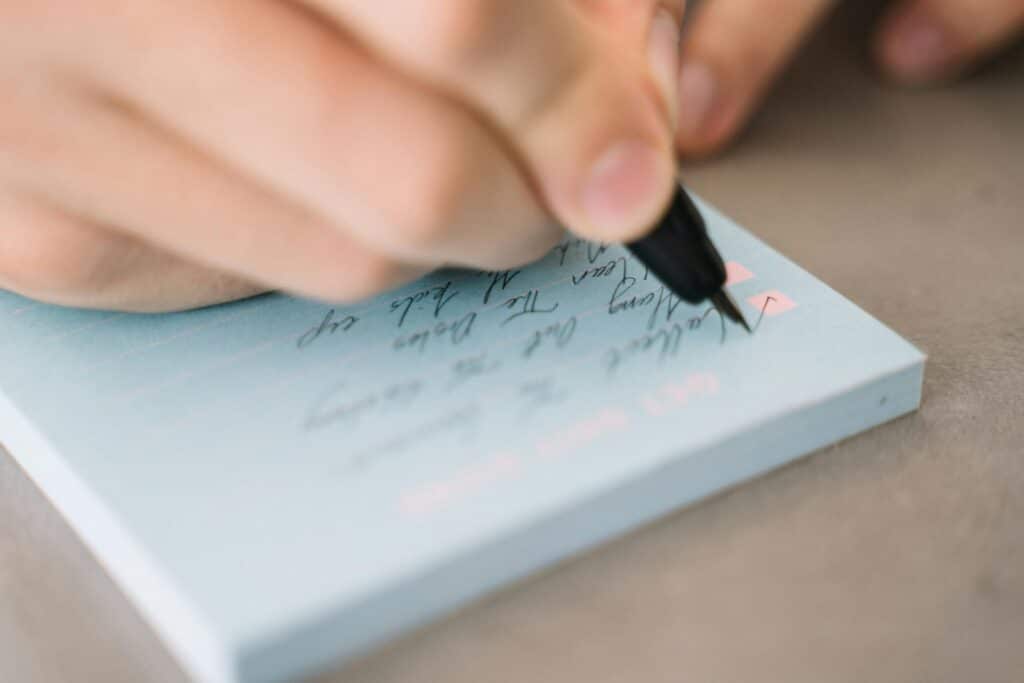
Boosting the clarity of your handwriting is not as hard as you think it is.
Don’t fight old muscle memory; just introduce new, simple routines. Work on consistent letter shapes and a relaxed writing grip.
Key Takeaways
- Build small, repeatable habits to improve handwriting.
- Use comfortable tools and steady speed for better control.
- Practice focused drills to keep improvements lasting.
Foundations for Neater Handwriting
Neat handwriting isn’t magic. A few small changes can make a huge difference; think about posture, paper,and letter formation.
Understanding Neat Handwriting
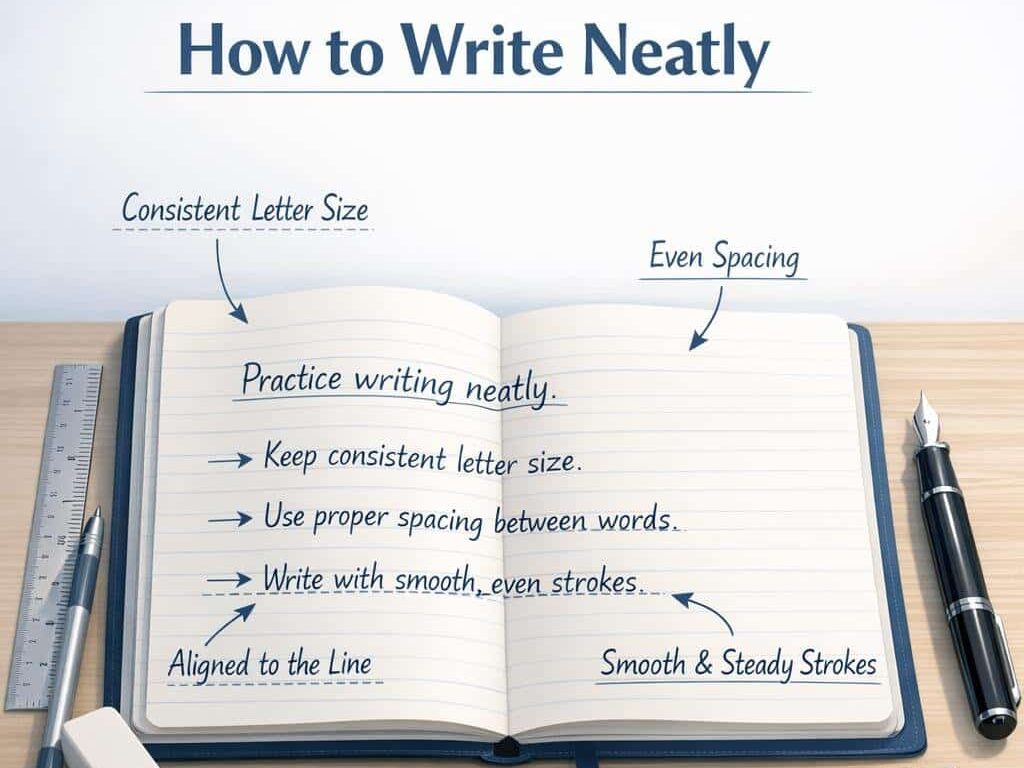
Neat handwriting starts with consistent letter shapes and even spacing. Try to keep every letter the same height and width.
Lined paper helps, or just slip a lined sheet under plain paper for a guide. Watch for trouble spots: the tops of t’s, the loops in g’s, and the tails on j’s and p’s. Practice drills—repeat a letter 10–20 times, then combine into pairs or simple words. Each week, compare your samples to spot progress. Begin with a simple style; save more complex styles for later.
Writing Posture and Paper Position
Sit up, feet flat, back straight. Angle your paper a bit: righties rotate counter-clockwise, lefties go clockwise.
Rest your forearm on the table for longer lines, use your fingers for details. A soft pad under your paper can help lines feel smoother. Good posture and setup make spacing easier and keep your lines steady.
| Key Foundations | Quick Tips |
|---|---|
| Letter consistency | Use lined paper, repeat drills |
| Posture & paper angle | Sit tall, angle paper to suit |
| Grip & control | Relax grip, rest forearm |
Choosing the Right Writing Tools

The right tools matter more than you’d think. Gel pens like Pilot G2s glide nicely and give crisp lines. Smooth, thick paper—Rhodia or Clairefontaine—keeps ink from feathering and helps your strokes look clean.
If you’re a pencil person, go for a sharp HB for good darkness and control. Try out different pen tip sizes—0.5 mm for precision, 0.7 mm if you like your writing bold. If ink smudges or skips, just swap your pen or paper. Lined notebooks or printable templates help train your spacing until you can write evenly without guides.
Relaxing and Adjusting Your Pen or Pencil Grip
A death grip on your pen ruins everything. Hold the pen lightly between thumb and index, with the middle finger as backup. Leave a centimeter or two between the tip and your fingers.
If your wrist aches after five minutes, loosen up. Soft rubber grips can help. If your letters start tilting wild, check your grip again. Slow down and practice with a gentle hand—eventually, your strokes will smooth out and your letters will look cleaner.
- Consistent letter shapes and spacing are crucial.
- Good posture and paper angle make a difference.
- The right pen and paper combo helps control.
- A relaxed grip reduces fatigue and shaky lines.
Proven Techniques to Improve and Maintain Neat Handwriting
What you need is steady, short practice. The right tools and a few techniques that improve writing can make your progress faster and more efficient.
Effective Practice Methods and Handwriting Exercises
Short, frequent sessions beat marathon writing. Aim for 8–12 minutes a day: warm-up strokes, a letter family, then a quick timed write.
Try these drills:
- Vertical lines, ovals, and waves for control.
- Copy two- or three-letter chunks, then full words.
- Fast, one-minute bursts to train speed and keep shapes clean.
Start easy—lined or cursive worksheets with clear guides. As you get better, fade the guides and try writing freehand. Pick one weekly goal, like spacing or slant, and keep hour samples.
Letter Formation and Consistent Letter Spacing
Stick with one letter model for a while—print or cursive, whatever feels right. Keep a sample in sight as you write. Focus on how each letter starts and the order of strokes. Repeat until it’s second nature.
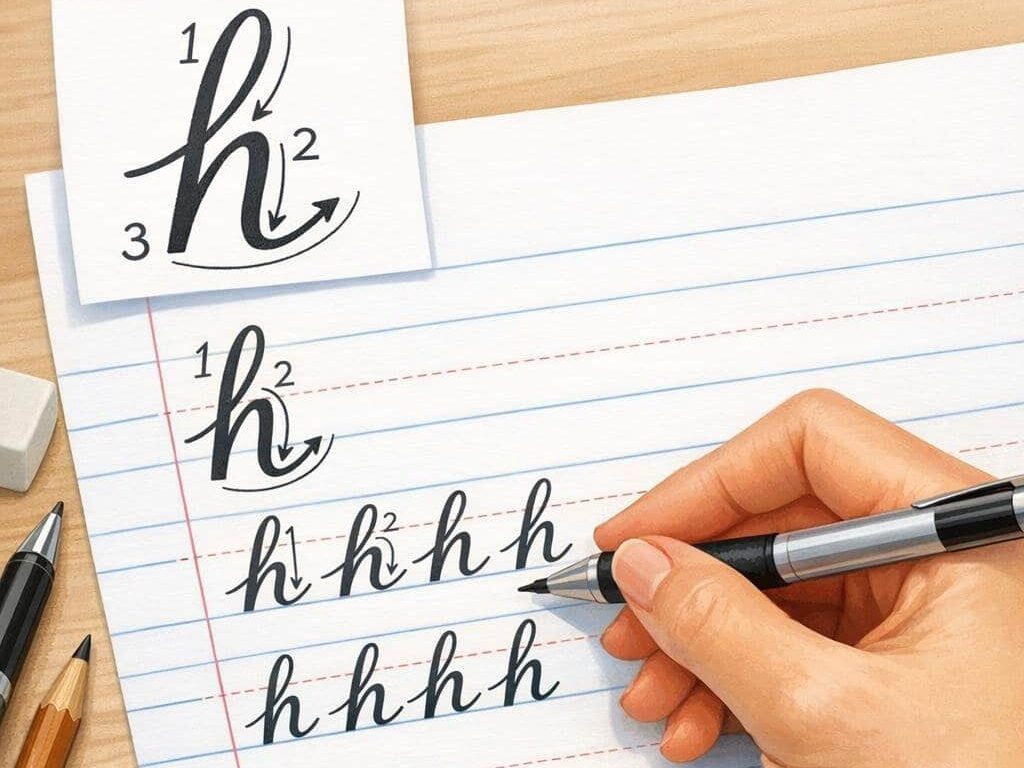
Spacing’s a big deal. Aim for a hairline gap between letters and one letter-width between words. Use dotted guides or a ruler if you need to. Keep descenders (g, j, p, q, y) dropping straight below.
Worksheets and printable guides help keep everything lined up. Each week, look back at your samples and circle what’s improved.
| Practice Focus | Tips |
|---|---|
| Short sessions | 8–12 minutes daily |
| Drills & exercises | Lines, ovals, waves, chunks |
| Spacing & alignment | Guides, ruler, regular checks |
Developing a Personal but Legible Handwriting Style
Personal style is great, but keep it readable. Start with a basic, consistent model. Change just one thing at a time.
Test your tweaks in a practice notebook. Keep a “style card” with your chosen letter shapes. Try cursive drills if you like connected writing, or stick with print if that’s your thing. If someone has to squint to read your words, dial back the quirks.
Calligraphy examples can inspire you, but don’t let style kill clarity. These techniques for improving your handwriting let you find your own vibe without losing legibility.
- Short daily practice builds muscle memory.
- One letter model at a time keeps things simple.
- Spacing and alignment need regular attention.
- Personal style works best when it’s still easy to read.
Maintaining Progress with Practice

Honestly, the only way to make those techniques for improving your handwriting stick? Weave handwriting into your real life. Scribble your grocery list, jot down a journal thought, or send an old-school handwritten note instead of firing off a text.
Try squeezing in two tiny writing practices every day. One should be quick. The other, slow and careful, like a gratitude sentence you actually want to remember.
- Carry a pocket handwriting pad or mini worksheet everywhere.
- Challenge yourself with a one-minute quickwrite daily—see if your speed and flow improve.
- Date your writing samples, stash them, and flip through weekly so you can spot progress (or, let’s be honest, backsliding).
| Habit | Purpose |
|---|---|
| Quick daily writing | Builds speed and consistency |
| Weekly review | Keeps goals visible |
| Portable worksheets | Makes practice easier anytime |
Stuck at a plateau—or, worse, dealing with hand pain? Don’t just push through. Reach out to an occupational therapist who really gets fine motor skills; there’s no shame in getting help.
For more techniques for improving your handwriting, or if you want printable pages to keep you going, check out resources like this practical handwriting improvement article: https://www.collegenp.com/article/improve-handwriting-10-practical-evidence-based-ways.
Conclusion
Improving your handwriting isnt hard. it’s about making progress with writing techniques that you can implement into your schedule. The best results come from staying consistent.
What’s one small change you’ll try first to kick off your own techniques for improving your handwriting?
References
American Occupational Therapy Association American Occupational Therapy Association “Intervention Ideas: Handwriting Children & Youth 5–21” AOTA https://www.aota.org/practice/practice-essentials/evidencebased-practiceknowledge-translation/evidence-informed-intervention-ideas-handwriting-children-youth-5-21
Virginia W. Berninger, Katherine B. Vaughan, Robert D. Abbott, Sylvia P. Abbott, Laura W. Rogan, Allison Brooks, Elizabeth Reed, and Steve Graham “Treatment of Handwriting Problems in Beginning Writers: Transfer from Handwriting to Composition” Journal of Educational Psychology vol. 89 no. 4 1997 652–666 https://doi.org/10.1037/0022-0663.89.4.652
Case-Smith, Janette, Laura Weaver, and Terry Holland Janette Case-Smith “Effects of a Classroom-Embedded Occupational Therapist–Teacher Handwriting Program for First-Grade Students” American Journal of Occupational Therapy vol. 68 2014 690–698 https://doi.org/10.5014/ajot.2014.011585
CollegeNP “Improve Handwriting: 10 Practical Evidence-Based Ways” CollegeNP https://www.collegenp.com/article/improve-handwriting-10-practical-evidence-based-ways
Courtney Engel, Kristin Lillie, Sarah Zurawski, and Brittany G. Travers “Curriculum-Based Handwriting Programs: A Systematic Review With Effect Sizes” American Journal of Occupational Therapy 2018 https://www.ncbi.nlm.nih.gov/pmc/articles/PMC5915229/
Kerry P. Feder and A. Majnemer “Handwriting Development, Competency, and Intervention” Developmental Medicine and Child Neurology vol. 49 2007 312–317 https://doi.org/10.1111/j.1469-8749.2007.00312.x
Howe, T. H., K. L. Roston, C. F. Sheu, and J. Hinojosa T. H. Howe “Assessing Handwriting Intervention Effectiveness in Elementary School Students: A Two-Group Controlled Study” American Journal of Occupational Therapy vol. 67 2013 19–26 https://doi.org/10.5014/ajot.2013.005470
Hoy, M. M. P., M. Y. Egan, and K. P. Feder “A Systematic Review of Interventions to Improve Handwriting” Canadian Journal of Occupational Therapy vol. 78 no. 1 2011 13–25 https://doi.org/10.2182/cjot.2011.78.1.3

Pingback: 8 Signs of Learning Disabilities And How Parents Can Help
I’m not sure where you are getting your information, but good topic. I needs to spend some time learning more or understanding more. Thanks for excellent info I was looking for this information for my mission.