
Active Learning: The Technique Changing Student Learning Today
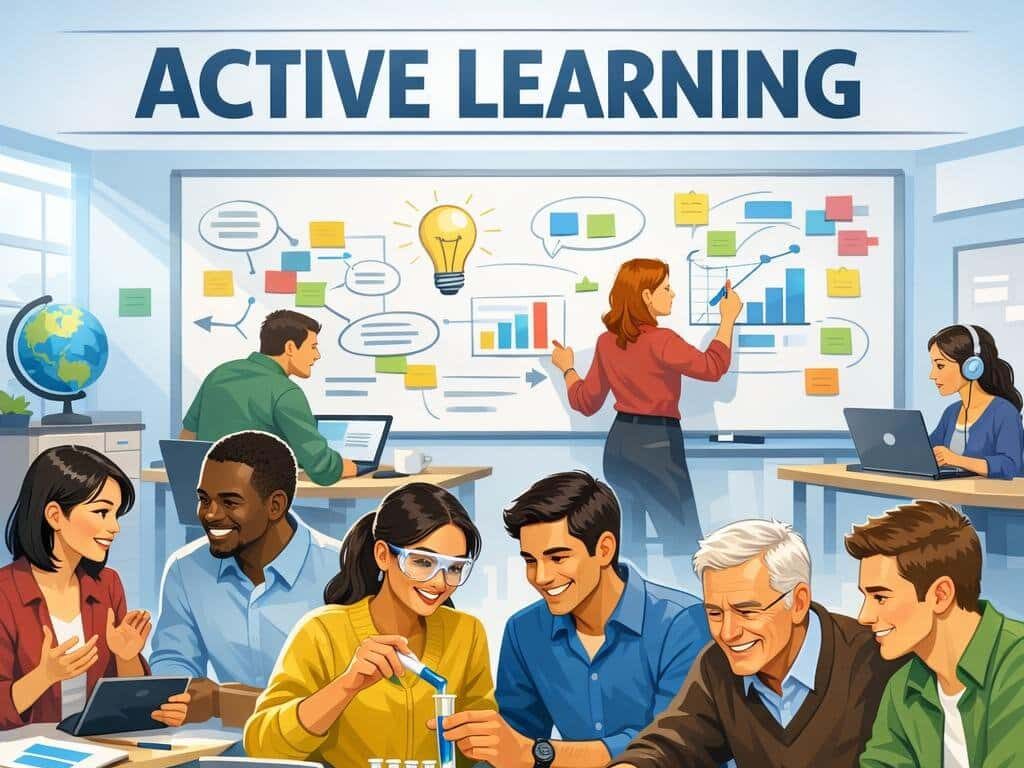
You want lessons that actually stick and class time that feels worth your energy. Active learning gets you moving, short tasks, group work, real-world problems.
We’ll talk about planning activities that match your goals and how to implement active learning into your life.
Key Takeaways
- Active learning means you do, not just listen, to remember more.
- Small, repeatable strategies make class time more engaging.
- Thoughtful planning helps overcome roadblocks and boosts success.
What Is Active Learning and Why Does It Matter?
Active learning means you get in the mix with the material, not just sit back. You build thinking skills, remember more, and find lessons more useful for real life.
Definition and Core Principles
Active learning asks you to jump in—solve problems, talk through ideas, or jot down reflections. You’re connecting new ideas to what you already know. That’s how you actually build knowledge, not just memorize facts for a test.
Some core principles:
- Tasks that make you think, not just scribble notes.
- Practice plus feedback—fix mistakes, deepen understanding.
- Focus on analysis, evaluation, and creation, not just recall.
- Reflect on how you learn and tweak your approach.
When you practice skills actively, you start applying concepts in new situations. Teachers guide and design activities, but you’re in the driver’s seat making meaning.
Comparison to Traditional Teaching
Traditional teaching? Mostly lectures—you listen, maybe take notes. With active instruction, the teacher still explains, but you work on tasks that use those ideas right away.
Here’s what changes:
- Lectures = mostly listening. Active classes = discuss, solve, create.
- Traditional tests focus on recall. Active learning pushes critical thinking and real-world application.
- Active methods boost engagement and help you retain info better, whether it’s STEM or humanities.
You’ll see more quick checks, peer chats, and time to reflect on your learning. That’s how you build better study habitsand real metacognition, not just surface-level cramming.
| Traditional | Active Learning |
|---|---|
| Lecture-focused | Task-focused |
| Recall-based tests | Application-based tasks |
| Passive note-taking | Discussion & reflection |
Key Active Learning Strategies and Techniques
Active learning makes you practice skills, explain ideas, test what you know.
Collaborative Learning Approaches
Set up small groups and give everyone a role. Try jigsaw: each person masters one chunk, then teaches it. It’s accountability and peer teaching all at once.
Think-Pair-Share is quick—pose a question, let students think, pair up, then share with the class. Participation goes up and you spot who’s getting it.
For bigger stuff, assign projects with milestones and individual checks. Peer review and rotating roles (recorder, timekeeper) keep things moving and fair.
- Jigsaw builds peer teaching and ownership.
- Think-Pair-Share gets everyone talking.
- Project-based learning makes skills stick.
- Roles prevent freeloading and boost equity.
Classroom Assessment Techniques
Minute papers and exit tickets: two minutes, main point, one question. These quick checks steer your next class and highlight confusion.

Peer instruction with clickers or polls—pose a question, vote, discuss, revote. It’s instant feedback and students explain to each other, which is huge for learning.
Concept maps and quick sketches show how ideas link up. Short quizzes and low-stakes tests give feedback without the stress. Exam wrappers after tests make students reflect on what worked and what didn’t.
- Quick checks guide teaching and catch mistakes early.
- Peer instruction builds understanding through talk.
- Concept maps reveal real connections.
- Low-stakes quizzes reduce anxiety.
| Strategy | Main Benefit |
|---|---|
| Minute Papers | Spot confusion fast |
| Peer Instruction | Clarifies thinking via discussion |
| Concept Maps | Visualizes connections |
Inquiry-Based and Problem-Based Methods
Start with a real problem or question—let students dig in. Problem-based learning means students tackle a messy, real-world case over days or weeks. You guide, but they do the research and defend their solutions.
Inquiry-based labs or projects get students designing experiments or mini-investigations. Reflective journals and drafts help them refine their process and conclusions.
Simulations and case studies let students test choices in a safe setting. Afterward, debrief and connect actions to theory. Peer teaching after these tasks cements what they’ve learned and builds confidence.
- Real problems drive curiosity.
- Students research and defend solutions.
- Simulations make theory tangible.
- Peer teaching deepens understanding.
Benefits, Challenges, and Impact on Student Outcomes
Active learning can help with grades, spark participation, and build skills you’ll use after school.
Learning Gains and Student Performance
Active learning often bumps up test scores and cuts failure rates when you swap out some lecture time for short activities. Research shows students in active classrooms remember more and can use what they know in new ways.
Short in-class tasks, quizzes, and peer review help you track progress and give feedback. These methods also help close the achievement gap for diverse learners.
Big classes, packed syllabi, and grading time can slow you down, though. Plan activities that hit your goals so you keep rigor without losing coverage.
- Test scores rise with active learning.
- Students transfer skills to new problems.
- Frequent feedback supports all learners.
- Barriers: class size, time, grading.
Fostering Critical Thinking and Communication Skills
Active learning pushes you to analyze, evaluate, and create—not just memorize. Tasks like debates, case analysis, and peer teaching force you to apply concepts and defend your thinking.
Group work and presentations build communication skills and create a learning community. That practice makes you more confident explaining tough ideas.
Scaffold tasks with rubrics and model reasoning. Peer feedback helps you figure out how to learn better and keeps you motivated.
- Critical thinking shows up in real tasks.
- Group work builds speaking and writing skills.
- Rubrics and feedback support growth.
| Benefit | Challenge |
|---|---|
| Higher test scores | Large classes |
| Stronger skills | Time constraints |
| Better communication | Student resistance |
Designing and Implementing Active Learning in Modern Classrooms
Focus on clear goals, quick routine checkd, and flexible setups that fit your activities.
Active Learning in Different Environments
Pick the setup that fits: an active learning classroom with movable tables, a flipped class where students watch lectures at home, or a blended model mixing online and in-person work. For in-person, arrange furniture for small teams and give each team a specific task.
Use timed rotations, one-minute papers, and peer instruction to keep things moving. Design assessments to be frequent and low-stakes—short quizzes and polls help you spot confusion fast.
For big classes, use structured groups and roles. Track participation with rubrics and tweak your approach based on what actually works, not just what you planned.
- Choose the right classroom setup for your goals.
- Frequent, low-stakes checks catch issues early.
- Clear roles keep group work fair.
- Adjust based on real feedback, not just gut feeling.
| Environment | Key Features |
|---|---|
| Active Classroom | Movable tables, group tasks |
| Flipped | Lectures at home, practice in class |
| Blended | Mix of online and in-person work |
Making Active Learning Stick
Start small—one new technique at a time. Explain why you’re changing things so students buy in. Collect feedback and be ready to adjust.

Active learning isn’t about flashy tech or endless group work. It’s about students doing the real thinking, not just watching you do it.
- Start with one new strategy.
- Be transparent about your goals.
- Gather feedback and tweak as you go.
| Step | Tip |
|---|---|
| Start Small | Try one new method first |
| Explain Why | Share the benefits with students |
| Iterate | Adjust based on feedback |
Leveraging Technology and Online Platforms
Pick tools that actually fit your teaching goals. Don’t just grab the latest gadget—think about what helps students engage in active learning. Try an eLearning platform like Canvas to organize pre-class videos, readings, and quizzes for a flipped classroom.
Run live polls and encourage peer instruction with Top Hat, so you get instant feedback during class. Use discussion boards for group planning and quick peer review cycles. These small tweaks can really boost active learning if you do them right.
Set up Canvas modules that walk students through readings, hands-on practice, and a short quiz. Automate those low-stakes checks—then you can spend more time on coaching and less on grading. For fully online classes, mix recorded lectures, live workshops, and small-group breakout activities to keep active learning front and center.
Keep your tech choices simple and reliable. Give clear instructions, maybe a quick demo, and always have a backup plan in case a tool fails. Track usage and performance data to tweak your course and show what’s working for active learning.
- Match tech tools to your specific teaching goals
- Use platforms like Canvas for flipped classroom structure
- Automate checks so you can coach more
- Gather data to improve active learning
| Tool | Purpose | Active Learning Benefit |
|---|---|---|
| Canvas | Organize modules, quizzes, and readings | Guides students through self-paced practice |
| Top Hat | Live polls, peer instruction | Instant feedback, peer discussion |
| Discussion Boards | Group planning, peer review | Boosts collaboration and reflection |
Conclusion

Active learning helps students actually learn, not just cram and forget. When you build in quick tasks, group work, and real feedback, students start thinking for themselves and connecting ideas.
Isn’t it worth asking—what’s one small step you could try next week?
References
Scott Freeman, et al. “Active Learning Increases Student Performance in Science, Engineering, and Mathematics.” Proceedings of the National Academy of Sciences, vol. 111, no. 23, 2014, pp. 8410–8415, https://www.pnas.org/doi/10.1073/pnas.1319030111
E. J. Theobald, et al. “Active Learning Narrows Achievement Gaps for Underrepresented Students in Undergraduate Science, Technology, Engineering, and Math.” Proceedings of the National Academy of Sciences, 2020, https://www.pnas.org/doi/10.1073/pnas.1916903117
Charles C. Bonwell, and James A. Eison. Active Learning: Creating Excitement in the Classroom. ASHE-ERIC Higher Education Report No. 1, 1991, https://files.eric.ed.gov/fulltext/ED336049.pdf
M. Prince. “Does Active Learning Work? A Review of the Research.” Journal of Engineering Education, 2004, https://engr.ncsu.edu/wp-content/uploads/drive/1smSpn4AiHSh8z7a0MHDBwhb_JhcoLQmI/2004-Prince_AL.pdf
R. R. Hake. “Interactive-Engagement Versus Traditional Methods: A Six-Thousand-Student Survey of Mechanics Test Data for Introductory Physics Courses.” American Journal of Physics, vol. 66, 1998, pp. 64–74, http://dx.doi.org/10.1119/1.18809
C. H. Crouch, and E. Mazur. “Peer Instruction: Ten Years of Experience and Results.” American Journal of Physics, vol. 69, no. 9, 2001, pp. 970–977, https://web.mit.edu/jbelcher/www/TEALref/Crouch_Mazur.pdf
National Research Council. How People Learn: Brain, Mind, Experience, and School. National Academies Press, 2000 (expanded ed.), https://www.nap.edu/read/9853/chapter/1


Pingback: Dynamic Classroom Strategies for a Happy Learning Environment
Pingback: Learning about Brain Insights: Unlocking the Ecstatic Joy