A Guide to Budgeting for College: Smart Student Success

Ever wonder where your money actually goes? This guide lays out steps to build a budget that fits your semester income, cuts textbook and food costs, and shields you from spending more than you make.
Budgeting for college doesn’t have to feel like another burden. Renting books and picking flexible campus jobs can boost your savings and help you with classes.
Key Takeaways
- Set a semester budget that matches your pay schedule and lifestyle.
- Use cost-cutting tricks and apps for books, food, and housing.
- Build an emergency fund and avoid common credit and spending mistakes.
Understanding College Expenses and Income
Knowing where your money comes from and where it goes is the start. That’s how you decide what to spend, what to skip, and how much to set aside.
Identifying All Sources of College Income
Make a list of every way you expect to get money this year. That means:
- Financial aid (grants, subsidized loans from your award letter).
- Scholarships (departmental, private, or school-based).
- Work income (on-campus jobs, work-study, part-time gigs).
- Family support (regular help or one-time gifts).
- Savings and investments (529 plans, custodial accounts).
- Refunds (financial aid left after charges).
Check your award letter for amounts and dates. Some money comes in a lump at the start of the semester, not in steady paychecks. That timing changes how you approach budgeting for college.
| Income Source | Timing |
|---|---|
| Financial Aid | Semester lump sum |
| Scholarships | Varies (semester or annual) |
| Work Income | Weekly/Biweekly |
| Family Support | Irregular or monthly |
Breaking Down Tuition, Fees, and Living Costs
Start with costs you can’t skip—tuition and required fees. These usually show up on your school bill and might be due right away.

Figure out if housing and meal plans are bundled with tuition or billed separately. List recurring living costs: rent, utilities, groceries, phone, transport, and insurance. Don’t forget one-off costs like textbooks or lab fees.
- Use a spreadsheet to track cost, due date, and if aid covers it.
- Treat financial aid refunds like a paycheck—cover essentials first.
- If tuition jumps, look at payment plans before using credit cards.
Planning for Variable and Irregular Expenses
Some costs bounce around: textbooks, medical bills, travel, and social events. Estimate what you’ll spend each month based on last semester or what others in your program pay.
Set up a “variable expense” line in your budget for these. Aim for a $300–$500 emergency fund to dodge credit card debt when things go sideways. Automatic transfers to savings after each paycheck help a lot.
- Save ahead for big items (laptop, moving for an internship).
- Re-check income timing before big purchases.
- Earmark refund money for semester needs right away.
| Expense Type | Strategy |
|---|---|
| Textbooks | Estimate, buy used or rent |
| Medical/Travel | Set aside monthly |
| Emergencies | Automatic savings transfer |
How to Create a College Budget
Setting clear money goals, listing all your expenses, and checking in weekly will help you not be caught off guard. Budgeting for college is way easier with the right tools.
Setting Financial Goals and Priorities
Decide what you have to pay first—tuition, rent, groceries, loan payments. Put those on your “must-pay” list. Then add short-term goals like paying off a card or saving $500 for books.
Set a long-term goal, maybe a $1,000 emergency fund. Assign dollar amounts and deadlines for each goal. Track everything in one spot so you see when you need to cut back or pick up extra work.
- Rank wants below needs.
- Delay wants until essentials and savings are covered.
- Adjust goals as your situation changes.
Organizing Budget Categories for Students
Sort your budget into three buckets: fixed, variable, and savings/debt. Fixed covers rent, tuition, insurance, and subscriptions. Variable is groceries, gas, supplies, and fun stuff. Savings/debt is for your emergency fund and loan payments.
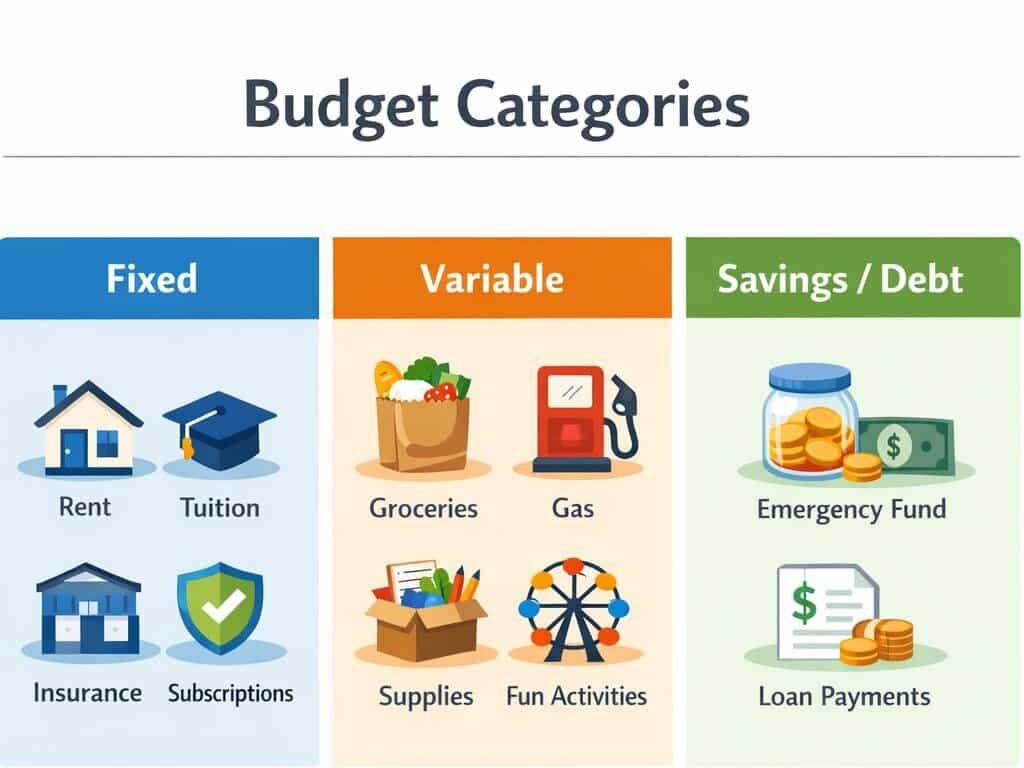
Use a simple spreadsheet: Category | Item | Monthly Amount | Due Date. The 50-30-20 rule works for a lot of people—50% needs, 30% wants, 20% savings/debt—but tweak it for your life. Budgeting for college often means more for tuition, less for rent if you live at home.
| Category | Examples |
|---|---|
| Fixed | Rent, tuition, insurance |
| Variable | Groceries, gas, socializing |
| Savings/Debt | Emergency fund, loan payments |
Monthly Budgeting: Tracking and Adjusting
Write down every income source—jobs, family help, scholarships, financial aid. Average irregular income to keep your budget steady. Track every expense for a month to get a real picture.
Compare income and expenses every week. If you’re short, cut a variable expense or shift money from wants to needs. Adjust your plan monthly as bills or savings targets change.
- Use apps or Google Sheets for real-time tracking.
- Catch leaks early to keep your budget balanced.
- Find templates and tools at Forbes’ budgeting guide.
Top Budgeting Methods and Tools for Students
Budgeting for college is a lot easier with a method and a tool you’ll actually use.
The 50/30/20 Rule Explained
The 50/30/20 rule splits your income: 50% for needs, 30% for wants, 20% for savings and debt. Needs are rent, groceries, utilities, and loan payments. Wants are streaming, eating out, and extras. Savings and debt include your emergency fund and loan overpayments.
Use this rule if your income is steady. It’s a quick way to check if you’re on track. If your rent or tuition goes up, cut wants or shift some needs into savings for a bit.
- Track each category monthly.
- Apps and spreadsheets make this easy.
- Adjust percentages as your situation changes.
Exploring Zero-Based and Envelope Budgeting
Zero-based budgeting means every dollar has a job—bills, groceries, savings, even small splurges. You plan out all your income until your balance hits zero. This keeps you from spending money just because it’s there.

The envelope system gives each category its own cash envelope. When it’s empty, you stop spending. Digital versions like Goodbudget do this without the paper envelopes. Both methods need weekly check-ins and quick changes if something comes up.
| Method | Best For |
|---|---|
| 50/30/20 Rule | Steady income, simple tracking |
| Zero-Based | Variable income, tight budgets |
| Envelope System | Impulse control, cash spenders |
Best Apps and Tools for College Budgeting
Choose an app you’ll actually open. Mint is free, syncs accounts, and sends alerts. YNAB (You Need A Budget) is great for zero-based budgeting if you want to be really hands-on.
Goodbudget works like digital envelopes and is easy to share with roommates. PocketGuard and Monarch help set spending limits and track bills. If you want total control, Google Sheets or Excel does the job for free.
- List your accounts and check app security.
- Compare costs and try free trials.
- Test one app for a month—and keep a backup spreadsheet.
Saving Money and Cutting Costs in College
Budgeting for college means tracking your spending, using student deals, and cooking meals that last a few days.
Smart Strategies to Save on Everyday Expenses
Track your cash flow every month. List income, fixed bills, and variable spending in a spreadsheet or app. Check it weekly—those small, sneaky purchases add up faster than you think.
Cut fixed costs first. Move to a cheaper phone plan, find no-fee banking, and ask about cheaper housing or utilities. Set up automatic bill pay to avoid late fees and overdrafts.
- Limit eating out to once a week.
- Bring a reusable water bottle.
- Buy generic toiletries and household items.
- Sell or swap used textbooks and old tech.
- Work a part-time job to cover groceries or other steady expenses.
| Expense Area | Quick Savings Tips |
|---|---|
| Food | Cook in batches, use meal plans |
| Books | Rent, buy used, or swap |
| Utilities | Share with roommates, conserve energy |
| Transport | Use campus shuttles or bike |
Making the Most of Student Discounts and Resources
Always ask if there’s a student discount—on software, streaming, restaurants, or public transit. A lot of places don’t advertise them, but they’re available if you ask.

Use campus resources: free tutoring, gym, printing, and career services. Budgeting for college gets easier when you make the most of what you’ve already paid for with your student fees.
- Sign up for student rewards apps.
- Use free campus events for entertainment.
- Share subscriptions with friends or roommates.
Reducing Housing and Transportation Costs
Room with friends or choose on-campus housing to save on rent and utilities. If you’re off campus, split costs and set up a roommate agreement for bills.
Skip the car if you can—parking, gas, and insurance add up. Use campus shuttles, bike, or walk when possible. If you need to drive, carpool to split costs.
- Negotiate rent or look for sublets in the off-season.
- Use public transit passes for students.
- Budget for occasional rideshares instead of owning a car.
| Housing/Transport | How to Save |
|---|---|
| Rent | Roommates, sublets, negotiate |
| Utilities | Split evenly, conserve |
| Transport | Campus shuttle, bike, carpool |
How to Cook at Home and Save on Food
Pick three easy meals you actually like and rotate them for two weeks. Make a grocery list from those and buy in bulk—stuff like rice, beans, pasta, eggs, and frozen veggies.

Bulk buying drops your cost per meal and means you’re less likely to cave for takeout. It’s not glamorous, but it works.
- Master a couple one-pan or sheet-pan recipes for quick cleanup.
- Cook on Sundays, portion meals, and stash them for the week.
- Meal-prepping saves cash and stops last-minute food panic.
Use campus dining halls or free food events when it fits, but don’t let freebies replace actual groceries. Compare prices at campus stores versus regular supermarkets.
Buy or rent a basic cookware set and a small spice kit—yes, the upfront cost stings, but you’ll make it back fast.
Building Savings and Staying Financially Prepared
Let’s talk about how to actually build some savings and get ready for whatever college expenses you get.
You’ll find actual steps for building a cash cushion, saving automatically, and picking accounts that help your money grow. These moves can slash your stress and help you avoid debt when life gets weird.
Starting and Growing an Emergency Fund
Set a first goal—$500 is a solid start. Stick that cash somewhere safe and accessible, like a savings account linked to your checking.
This fund is only for real emergencies: medical bills, car trouble, or if your laptop gets stolen. Not for pizza or concert tickets, even if it’s tempting.
- Save in small, regular chunks—$25 a week adds up.
- If you get a windfall (tax refund, birthday money), toss some into your fund.
- Track your progress visually; it helps you keep going.
After you hit $500, bump your target to cover 1–3 months of must-pay expenses. Keep this stash separate from your regular spending to avoid “accidental” withdrawals.
| Step | Why |
|---|---|
| Set a clear goal | Makes saving less vague |
| Save regularly | Builds the habit |
| Track progress | Motivates you |
Pay Yourself First: Building Habitual Savings
Automate savings transfers the day you get paid. Even small amounts count—just make it nonnegotiable, like rent or your phone bill.

Start with what’s doable, even if it’s just 5% of your income. Bump it up if you get a raise or drop a subscription you don’t use.
- Checklist: set transfer date, confirm automation, check balances weekly.
- Automation kills decision fatigue and lets compound interest do its thing.
- If you’re juggling student loans, split extra cash between loans and savings.
After three months of sticking with it, give yourself a small reward. Motivation matters more than people admit.
| Action | Result |
|---|---|
| Automate transfers | Consistent savings |
| Increase over time | Grows your fund faster |
| Reward milestones | Keeps you on track |
Setting Up High-Yield and Specialized Accounts
Shift your emergency savings to a high-yield account—no reason to leave free interest on the table. Look for options with no monthly fees and easy transfers.
If you’ve got earned income, open a Roth IRA for long-term goals. Contributions grow tax-free, and you can use low-cost index funds to keep it simple.
- Use separate accounts for each goal: emergencies, travel, and retirement.
- Label accounts clearly in your banking app so you don’t mix things up.
- Compound interest is your friend—even tiny amounts add up.
Check out this college budgeting guide for more practical tips.
| Account Type | Main Benefit |
|---|---|
| High-yield savings | Faster growth |
| Roth IRA | Tax-free growth |
| Separate sub-accounts | Better organization |
Avoiding Common Budgeting Pitfalls and Planning for the Future
Budgeting for college can get messy fast if you’re not careful, but there are ways to dodge some of the traps.
You’ll see how to sidestep common budgeting for college mistakes, manage loans, and build credit so you can actually save for stuff that matters. These are moves you can start right now—track spending, chase scholarships, set payment plans, and use credit smartly.
Recognizing Common Budgeting Mistakes
A lot of students miss daily expenses and forget about random costs like textbooks or move-in fees. Track every dollar for a month with a basic app or spreadsheet.
Add a 10–20% buffer to stuff like groceries, transport, and utilities. That way, you’re not blindsided by the little things.
- Don’t plan to the penny—round up and give yourself wiggle room.
- Limit impulse buys by waiting 24 hours before big purchases.
- If you get a refund, split it up: half to bills, some to savings, the rest for you.
- Apply for scholarships early and often to cut down on loans.
| Mistake | How to Fix |
|---|---|
| Forgetting irregular costs | Add a buffer to your budget |
| Impulse buying | Use the 24-hour rule |
| Not tracking spending | Log every expense for 30 days |
Managing and Paying Off Student Loans
Know your loan balances, interest rates, and when payments start. Pay off high-interest loans first while making minimums on the rest.

Paying extra on one loan at a time knocks out interest faster. Use autopay to avoid missed payments and see if you qualify for income-driven plans or deferment.
- Only refinance after graduation if your income and credit are solid.
- Keep all your loan paperwork and payment history in one place.
- If you’re struggling, reach out to your servicer right away for hardship options.
| Step | Impact |
|---|---|
| Pay high-interest loans first | Saves money over time |
| Use autopay | Avoids missed payments |
| Contact servicer if stuck | Finds hardship solutions |
Budgeting for College: Key Takeaways
Budgeting for college isn’t just about pinching pennies—it’s about building habits that last way beyond graduation. If you can make student discounts, meal prep, and savings automation part of your routine, you’ll be way ahead of the curve.
It’s not always perfect. Some months you’ll overspend, or forget to check for a deal, or just get tired of rice and beans. That’s normal. The trick is to keep at it and adjust as you go.
| Strategy | Benefit |
|---|---|
| Use student discounts | Reduces big expenses |
| Cook at home | Saves money, builds skills |
| Automate savings | Builds a financial cushion |
| Track spending | Prevents surprises |
Budgeting for college takes some trial and error, but every small win adds up. The real question is—what will you do with the freedom that comes from handling your money well?
Building Credit and Financial Health for Life
Start building credit with a secured card or a student credit card that actually reports to bureaus. Buy a couple of small things on credit, then pay the full statement every month—don’t let interest creep in.

Try to keep your credit utilization under 30% of your total limit. That’s one of those little rules that’s easy to forget, but it matters.
Once a year, pull your credit report and look for mistakes or weird fraud stuff. You never know what you’ll find until you check.
Set up an automated bill payment for at least one essential expense. That’s a simple way to start building a solid payment history.
It’s tempting to overspend, but living within your means is crucial, especially when budgeting for college. Set a monthly cap for “wants,” and if your income changes, tweak it.
- Open a secured or student credit card that reports to bureaus
- Pay statements in full each month—skip the interest trap
- Keep credit usage under 30% of your limit
- Automate at least one bill for reliability
- Check your credit report every year for errors
| Step | Why It Matters |
|---|---|
| Use a student credit card | Builds credit history early |
| Automate a bill | Shows lenders you’re reliable |
| Annual credit check | Helps spot mistakes or fraud |
These habits might sound tedious, but they’ll pay off. Better credit can open doors to good loans, apartments, and even jobs.
When you’re budgeting for college, does it ever feel like credit is just another headache—or is it the first step to real freedom?
Conclusion

Budgeting for college isn’t about never having fun, it’s about making your money last and covering what matters smartly.
Budgeting for college is a skill. Isn’t it worth finding out how much less stressful college life could be if you actually knew where your money was going?
References
Ascent Funding. “Smart Money Moves: The Ultimate Guide to Budgeting for College Students.” Ascent Funding, https://www.ascentfunding.com/blog/smart-money-moves-the-ultimate-guide-to-budgeting-for-college-students/
Zack Friedman. “How to Budget in College.” Forbes Advisor, https://www.forbes.com/advisor/education/student-resources/how-to-budget-in-college/
Federal Student Aid. “Financial Aid for College or Career School.” U.S. Department of Education, https://studentaid.gov/understand-aid/types
Consumer Financial Protection Bureau. “Your Money, Your Goals: A Financial Toolkit for Students.” Consumer Financial Protection Bureau, https://www.consumerfinance.gov/consumer-tools/educator-tools/your-money-your-goals/
U.S. Bureau of Labor Statistics. “Consumer Expenditures—Students and Young Adults.” U.S. Bureau of Labor Statistics, https://www.bls.gov/cex/
College Board Research. “Trends in College Pricing and Student Aid.” College Board Research, https://research.collegeboard.org/trends/college-pricing