
Effective Goal Setting for Academic Success: Short-Term and Long-Term Strategies — Practical Steps, Tools, and Timelines for Students
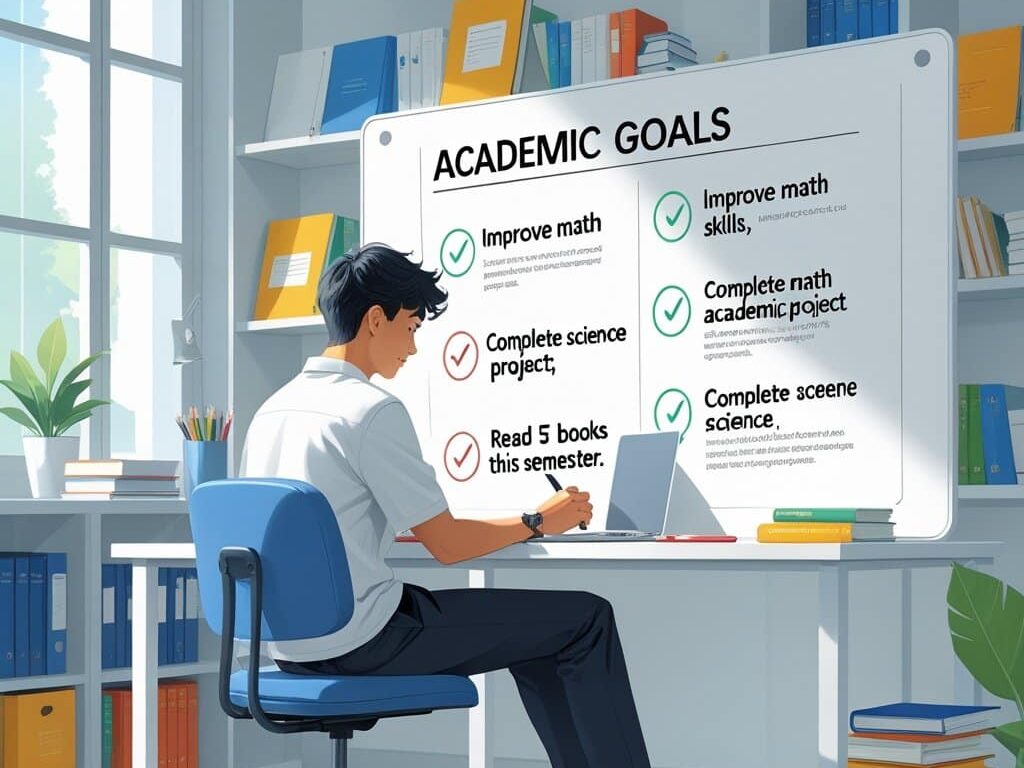
You can shape how your school year goes with clear short-term steps and big long-term goals that work together to boost your grades and improve your time management. Simple specific targets can help you measure and track so you know exactly what to do each week and whether you’re actually getting anywhere.
This post will give you tools you can use today. You’ll find out how to write goals that fit your needs, break big goals into weekly steps, and keep seeing progress with simple tracking methods.
Key Takeaways
- Set clear, measurable goals that connect daily tasks to bigger academic aims.
- Break long-term plans into short-term actions and track them weekly.
- Review progress regularly and adjust goals to stay on course.
The Role of Effective Goal Setting in Academic Achievement
Effective goals give you clear targets, a plan to reach them, and ways to check progress. They help you choose what to study, set deadlines for , and build habits that support your grades and skills.
Why Goal Setting Matters for Students
Goal setting for students helps you turn vague wishes into concrete steps. When you set a specific academic goal—like raising your math grade from a C to a B by the end of the term—you can list the exact actions: study 30 minutes daily, complete every homework, and attend weekly office hours.
Those clear actions make it easier to start and keep going. Goals also help you manage time.
- Short-term goals break big projects into daily tasks.
- Long-term goals guide what classes to take and skills to build for future plans.
Benefits of Academic Goal Setting
Setting academic goals improves your focus and makes studying more efficient. You spend less time deciding what to do and more time doing the right tasks.
Writing goals in a planner, sharing them with a teacher, or pairing up with a study partner helps you stay motivated. When you track progress—like test scores or completed assignments—you get feedback that shows real improvement.
- Better time management and less stress from last-minute work.
- Clearer choices about extracurriculars or course load.
Connecting Goals to Motivation and Focus

Goals sharpen your motivation by linking daily actions to bigger reasons you care about. If your long-term aim is college admission, short-term goals like improving your GPA or completing a strong project feel meaningful.
To stay focused, use specific cues and routines. Set a study time, choose one task to start with, and remove distractions like phone alerts.
- Checklists and short timers (25–50 minutes) help keep effort steady.
- Review your goals and progress to renew motivation and keep things aligned.
| Goal Setting Benefit | How It Helps |
|---|---|
| Motivation | Links daily effort to meaningful outcomes |
| Focus | Reduces distractions and wasted time |
| Accountability | Encourages steady progress and feedback |
Applying SMART Goals for Academic Success
Let’s talk about how to make clear, usable goals that fit into your study plans and deadlines. This part will show you how to frame goals so you can track progress and finish tasks on time.
Understanding the SMART Framework
The SMART framework gives you five checkpoints to shape useful goals: Specific, Measurable, Achievable, Relevant, and Time-bound. Use each checkpoint like a filter to turn a vague wish into a clear plan you can act on.
Start by writing one sentence that states exactly what you want. Then add a number or evidence so you can measure it.
- Check if the goal fits your current course load and resources.
- Ask whether the goal moves you toward your main academic aims.
- Pick a realistic deadline.
Defining Specific, Measurable, and Achievable Goals
Specific goals tell you what to do and remove guesswork. Instead of “study more,” write “review two biology chapters and complete the chapter quiz.”
Measurable goals let you see progress. Use numbers like pages, practice problems, or percentage targets (for example, “complete 30 practice problems and reach 85% correct”).
- Track progress in a planner or app.
- Break bigger aims into smaller steps.
- If a goal seems out of reach, lower the target or extend the timeline.
Setting Relevant and Time-Bound Objectives

Relevant goals connect directly to your priorities, like improving GPA, mastering a skill, or preparing for a test. Ask: “Will this goal help my course grade, future classes, or career plan?”
Time-bound goals force action by adding a deadline. Use specific dates: “Finish lab report draft by March 10” works better than “finish soon.”
- Add milestones for long projects.
- Combine relevance and time limits to set realistic goals.
| SMART Element | Example |
|---|---|
| Specific | Read 3 chapters this week |
| Measurable | Score 85% on quiz |
| Achievable | Fits current skills and time |
| Relevant | Improves course grade |
| Time-bound | Deadline: Friday |
Short-Term and Long-Term Goal Setting Strategies
Set clear targets you can check often and that can be mapped to bigger milestones that take months or years. Use specific action plans, study plans, and people who keep you on track.
Balancing Immediate and Future Goals
Decide which tasks matter this week and which skills matter this year. For example, aim to finish a chapter quiz by Friday (short-term) and raise your semester GPA by 0.5 (long-term).
Tie daily study sessions to the larger goal: 45 minutes of active review each day builds the knowledge you need for final exams. Prioritize by impact and deadline.
- Put highest-impact short-term goals on your calendar.
- Reassess monthly to shift time from low-value tasks.
- Track quiz scores, hours studied, and practice tests.
Breaking Down Goals and Creating Milestones

Start with a clear long-term goal, then split it into mid-term and short-term pieces. Example: pass next semester’s organic chemistry course (long-term) → master lab techniques by month three (mid-term) → complete weekly lab prep and five practice problems per session (short-term).
Create an action plan for each milestone. List specific tasks, deadlines, and resources: readings, flashcards, practice tests, or tutoring sessions.
- Use checklists to mark completed tasks and adjust timelines.
- Track milestones and actions with a simple table.
| Milestone | Short Actions | Deadline |
|---|---|---|
| Master topics A–C by month 2 | Read 3 chapters/week; 3 practice quizzes; 2 tutoring sessions | Week 8 |
Building Accountability and Support Systems
Pick accountability partners who will check your progress weekly. That can be an accountability partner, a study group, or an academic advisor who reviews your action plans and helps set realistic benchmarks.
Use structured meetings and specific asks. Tell your study group you’ll report hours studied and quiz scores every Monday.
- Ask your academic advisor to approve your semester study plan.
- Log your tasks in a planner or app and share progress screenshots.
- Celebrate small wins and revise action plans when you miss targets.
Tracking Progress and Adjusting for Success
Let’s get into how to measure your progress, fix problems that slow you down, reward wins to keep going, and change goals when needed. Use simple tools and clear steps so you can see real improvement and stay on track.
Monitoring and Measuring Progress
Pick a few clear measures you can check often. Use grades, completed assignments, study hours, or practice test scores to track progress.
Record these in a digital planner, spreadsheet, or notebook so you can compare week-to-week. Set a regular check-in time, like every Sunday evening.
- Note what you did, what worked, and one number that shows progress.
- Use visual tools: a progress bar, checklist, or a simple graph.
- If a measure stays flat for two checks, plan a change.
| Tracking Tool | What It Shows |
|---|---|
| Planner/App | Daily and weekly goal completion |
| Progress Bar | Visual snapshot of achievements |
| Weekly Check-In | Trends and areas for change |
Overcoming Obstacles and Problem Solving
Sometimes, everything just grinds to a halt. When that happens, figure out what’s going wrong right away.
Did you guess the time wrong? Maybe the material’s just brutal, or you got distracted. Jot down the snag and one fix that might help.
Try out quick changes for a couple weeks. Swap up your study time, chop sessions to 25 minutes, or grab a different resource. Run through problem-solving steps: spot the issue, brainstorm fixes, pick one, and give it a shot.
Keep tabs on what happens in your planner. If you keep running into the same wall, reach out for help.
- Identify the exact obstacle before changing strategies
- Experiment with different approaches for two weeks
- Ask for feedback if problems keep repeating
| Obstacle | Possible Fix |
|---|---|
| Underestimating time | Break tasks into smaller chunks |
| Distractions | Change study environment |
Celebrating Achievements and Maintaining Momentum

Don’t let small wins slip by unnoticed. Mark them to keep your motivation alive.
Finished a tough unit? Nailed a test improvement? Or maybe you just stuck with your plan for a whole week—give yourself some credit. Grab a favorite snack, take a walk, or just enjoy a break.
Write down these wins in your planner or start a “victories” list. On those days when you’re dragging, flip back and see how far you’ve come. It’s surprising how much that helps with mastering student time management.
- Celebrate even minor progress to build confidence
- Connect rewards directly to goals
- Keep a running list of your achievements
| Achievement | Reward |
|---|---|
| Completed study plan for a week | Extra hour of free time |
| Improved test score | Favorite dessert |
Adapting Goals and Strategies Over Time
Every month, and after big exams, take a look at your goals. Stack up your tracked progress against what you wanted to hit.
If you keep missing the mark twice in a row, it’s time to tweak something. Maybe lower your page count from 50 to 40 if your quality’s slipping, or keep the goal but try a new approach.
Switch textbooks, bring in a tutor, or block out focus time with a digital planner—just make the change clear and measurable. Write down what you changed and why so you can look back later.
- Adjust goals if you’re consistently missing targets
- Make every change specific and trackable
- Review what actually works over time
| When to Adapt | Possible Adjustment |
|---|---|
| Missed goal twice | Lower target or switch strategy |
| Quality drops | Reduce workload, add support |
Conclusion
Let’s be honest, mastering student time management isn’t just a checklist; it’s a moving target. Both short-term and long-term goals can help you stay focused and make your goals achievable.
Short-term targets hand you quick motivation that feel pretty good. Long-term goals? They shape the big picture and remind you how far you’ve come, even if it’s just a little progress.
Try to keep your goals specific and measurable. If you can’t tell when you’ve succeeded, what’s the point? The SMART method—Specific, Measurable, Achievable, Relevant, and Time-bound—makes mastering student time management a whole lot less confusing.
Every now and then, take a look at your goals and tweak them. Schedules and priorities shift, right? There’s no shame in making adjustments as you go along your mastering student time management journey.
| Goal Type | Benefit |
|---|---|
| Short-term | Quick wins, keeps you on track |
| Long-term | Guides big plans, shows real progress |
References
Bandura, Albert. Self-Efficacy: The Exercise of Control. W. H. Freeman, 1997.
Credé, Marcus, et al. “Class Attendance in College: A Meta-Analytic Review of the Relationship of Class Attendance with Grades and Student Characteristics.” Review of Educational Research, vol. 80, no. 2, 2010, pp. 272–295. https://doi.org/10.3102/0034654310362998.
Doran, George T. “There’s a S.M.A.R.T. Way to Write Management’s Goals and Objectives.” Management Review, vol. 70, no. 11, 1981, pp. 35–36.
Duckworth, Angela L., et al. “Grit: Perseverance and Passion for Long-Term Goals.” Journal of Personality and Social Psychology, vol. 92, no. 6, 2007, pp. 1087–1101. https://doi.org/10.1037/0022-3514.92.6.1087.
Locke, Edwin A., and Gary P. Latham. “Building a Practically Useful Theory of Goal Setting and Task Motivation.” American Psychologist, vol. 57, no. 9, 2002, pp. 705–717. https://doi.org/10.1037/0003-066X.57.9.705.
Schunk, Dale H. Learning Theories: An Educational Perspective. 6th ed., Pearson Education, 2012.
Zimmerman, Barry J. “Becoming a Self-Regulated Learner: An Overview.” Theory Into Practice, vol. 41, no. 2, 2002, pp. 64–70. https://doi.org/10.1207/s15430421tip4102_2.


Pingback: Mastering Reading Proficiency: Tips and Tricks for Faster and Deeper Understanding
Pingback: Tips and Tricks for Building Confidence in Students
Pingback: Support System for Students: Tips for Building Strong Connections
Pingback: Sat prep Success: Your Ultimate Guide to Unjustified Results