
Effective Ways for Students to Interact with Their Teachers
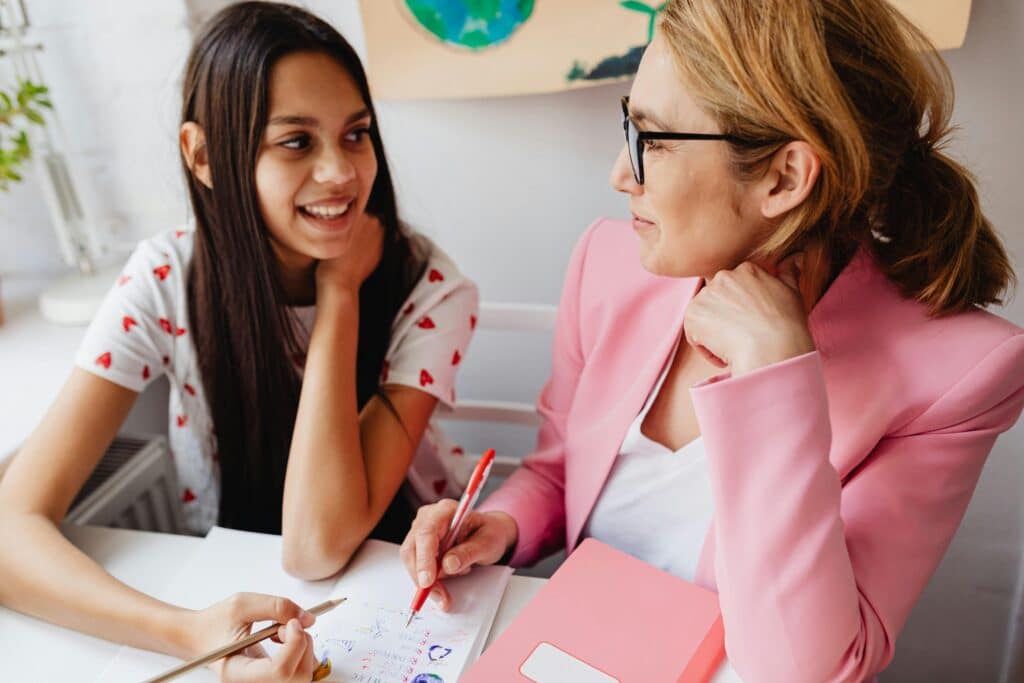
Sarah sits in the back row, watching her classmates ask questions while she stays silent. Sound familiar? Building strong relationships with your teachers doesn’t have to feel intimidating or awkward.
This guide is designed for students wanting to know How students can interact with their teachers and those who want to improve their classroom experience and academic success through better teacher interactions. You’ll discover how to make the most of office hours, engage meaningfully during class, and communicate professionally through digital channels.
Transform Your Academic Experience Through Strategic Communication
When you connect with your teachers, you unlock opportunities for personalized feedback, mentorship, and academic growth that can shape your entire educational journey.
Key areas we’ll explore:
• Office hours optimization – Turn brief meetings into powerful learning sessions
• Classroom participation strategies – Contribute confidently without overthinking
• Digital communication best practices – Email and message like a professional
Ready to bridge the gap between you and your instructors? Let’s dive into these effective ways for students to interact with their teachers.
Maximize Office Hours and One-on-One Meetings
Prepare Specific Questions Before Meeting with Teachers

Your success in teacher meetings depends on thoughtful preparation beforehand. Write down specific questions about concepts you’re struggling with rather than asking vague questions like “I don’t understand anything.” Focus on particular problems or assignments that challenge you most.
Create a prioritized list of topics you want to discuss. This strategic approach shows respect for your teacher’s time while demonstrating genuine engagement with course material. How students can interact with their teachers effectively starts with showing you’ve invested effort in understanding the subject matter before seeking help.
• Prepare 3-5 specific questions about challenging concepts or assignments
• Write down exact problem areas rather than general confusion
• Review recent coursework to identify precise areas needing clarification
Schedule Appointments in Advance for Complex Topics
Don’t wait until the last minute to request meetings about difficult subjects. Teachers appreciate advance notice, especially for complex topics requiring extended discussion time. Email your teacher at least 48-72 hours before you need to meet.
When scheduling, briefly explain what you’d like to discuss. This allows your teacher to prepare relevant materials and allocate appropriate time for your conversation. Many teachers have limited office hours, so early scheduling ensures you get the attention you need.
• Email teachers 2-3 days ahead for complex topic discussions
• Briefly explain your meeting purpose when requesting appointments
• Respect teachers’ scheduling constraints and available office hours
Bring Relevant Materials and Assignments for Discussion

Always arrive at teacher meetings with your textbook, notes, and specific assignments you’re discussing. Having materials ready shows preparation and allows for productive, focused conversations. Your teacher can reference exact problems or passages you’re questioning.
Organize your materials before the meeting so you can quickly locate relevant information. This preparation maximizes your limited meeting time and demonstrates serious commitment to learning. How students can interact with their teachers most effectively involves showing up ready to engage meaningfully with course content.
• Bring textbooks, notes, and relevant assignments to every meeting
• Organize materials beforehand for quick reference during discussions
• Have specific examples ready to illustrate your questions or concerns
Follow Up After Meetings
Send a brief thank-you email after productive meetings with your teachers. Summarize key points discussed and confirm any action steps you agreed to take. This follow-up reinforces your commitment while ensuring you understood everything correctly.
Use these follow-up communications to ask any additional questions that arose after reflection. Teachers often appreciate students who think deeply about their conversations and return with thoughtful follow-up questions.
• Send thank-you emails summarizing meeting outcomes within 24 hours
• Confirm action steps and deadlines discussed during meetings
• Ask follow-up questions that develop from post-meeting reflection
Participate Actively in Classroom Environments
Volunteer to Answer Questions and Share Insights
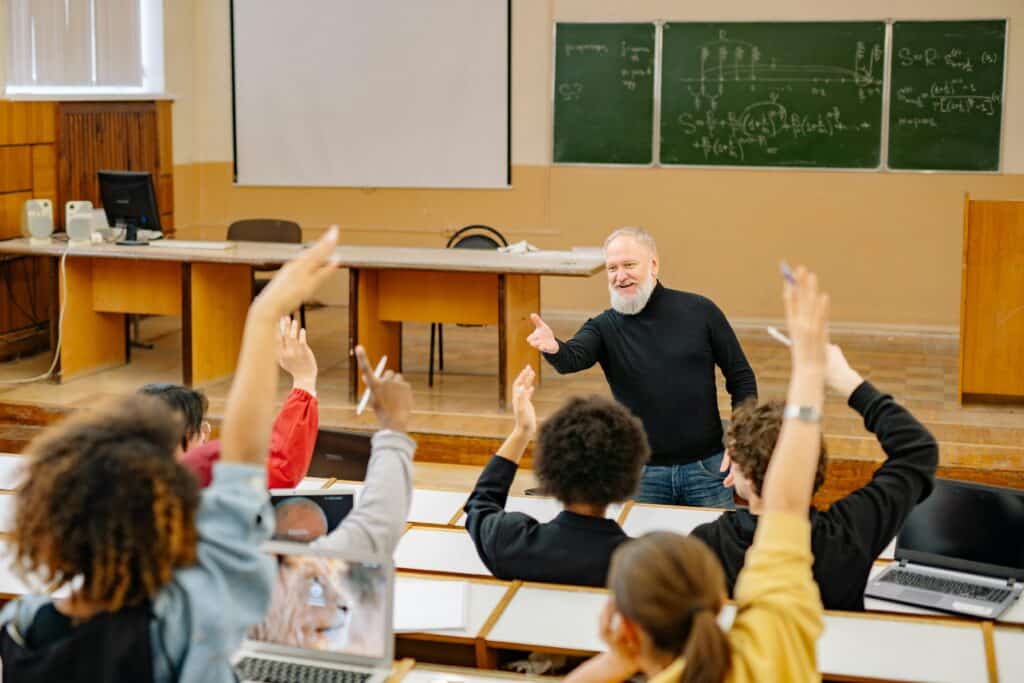
Raising your hand shows initiative and creates positive impressions with instructors. When you volunteer answers, you demonstrate engagement and help build classroom momentum. Even incorrect responses can spark valuable discussions and show your willingness to participate. This active involvement is one of the key how students can interact with their teachers strategies that builds rapport.
• Share your unique perspectives and experiences related to course material
• Ask follow-up questions that show you’re thinking critically about the topic
• Volunteer for challenging problems that others might avoid
Contribute Meaningfully to Group Discussions
Your voice matters in classroom conversations, and thoughtful contributions enhance everyone’s learning experience. Prepare talking points before class by reviewing readings and notes. Listen actively to classmates and build upon their ideas rather than simply waiting for your turn to speak.
• Reference specific examples from readings or personal experience to support your points
• Acknowledge and respond constructively to different viewpoints
• Help facilitate discussions by encouraging quieter classmates to share their thoughts
Offer to Help with Classroom Activities and Demonstrations

Teachers appreciate students who step up during hands-on activities and presentations. Volunteering for demonstrations shows confidence and helps instructors manage classroom dynamics effectively. This collaborative approach represents excellent how students can interact with their teachers opportunities that extend beyond traditional Q&A sessions.
• Assist with technology setup, distributing materials, or organizing group activities
• Volunteer to present findings from group work or research projects
• Offer to help classmates who might be struggling with concepts or activities
Show Genuine Interest in Subject Matter
Your enthusiasm for course content is contagious and motivates teachers to invest more energy in their instruction. Ask questions that go beyond basic requirements and explore connections between different topics. Share relevant articles, videos, or experiences that relate to class discussions.
• Stay after class to discuss interesting points or ask for additional resources
• Connect current events or personal experiences to course material during discussions
• Express curiosity about advanced topics or real-world applications of what you’re learning
Utilize Digital Communication Effectively
Send Professional Emails with Clear Subject Lines

Your email communication sets the tone for your academic relationships. Craft subject lines that immediately convey your purpose, like “Question about Assignment 3” or “Request for Meeting.” This simple practice shows respect for your teacher’s time and helps them prioritize responses effectively.
• Use specific, descriptive subject lines that summarize your email’s purpose
• Include your full name and class section in your signature
• Keep emails concise while maintaining a respectful, professional tone
Understanding how students can interact with their teachers through digital channels requires attention to email etiquette. Start with proper greetings, state your purpose clearly, and always thank them for their time before closing your message.
Respond Promptly to Teacher Messages and Announcements
Quick responses demonstrate your engagement and commitment to your education. Check your school email daily and acknowledge important announcements within 24-48 hours. Even a simple “Thank you for the update” shows you’re actively participating in class communications.
• Set up email notifications to stay informed about class updates
• Respond within two business days, even if just to acknowledge receipt
• Ask clarifying questions when announcements are unclear rather than assuming
Your responsiveness directly impacts your academic success and builds trust with instructors. When teachers see you’re actively engaged in digital communications, they’re more likely to provide additional support and opportunities for your academic growth.
Demonstrate Academic Responsibility and Initiative
Submit assignments on time and follow instructions carefully

Your punctuality and attention to detail speak volumes about your character. When you consistently meet deadlines and follow guidelines precisely, you demonstrate respect for your teacher’s time and effort.
Teachers notice students who take assignment requirements seriously. How students can interact with their teachersimproves significantly when you show reliability through timely submissions and careful instruction adherence.
• Complete assignments before deadlines to avoid last-minute stress
• Read rubrics thoroughly and ask clarifying questions early
• Double-check formatting requirements and submission guidelines
Seek feedback proactively to improve performance
Don’t wait for grades to understand your progress. Approach your teachers during office hours or after class to discuss your work and ask specific questions about improvement areas.
Active feedback-seeking shows genuine commitment to learning. Teachers appreciate students who want to grow academically rather than just receive grades.
• Schedule regular check-ins to discuss your academic progress
• Ask specific questions about strengths and weaknesses in your work
• Request examples of excellent work to understand expectations better
Take ownership of mistakes and ask for guidance
Admitting errors demonstrates maturity and opens doors for meaningful learning conversations. When you acknowledge mistakes honestly, teachers become more willing to provide extra support and guidance.
Your willingness to learn from setbacks impresses educators. How students can interact with their teachers becomes more productive when you view mistakes as learning opportunities rather than failures.
• Accept responsibility for errors without making excuses
• Ask teachers for strategies to avoid similar mistakes in future
• Follow up on corrections to ensure you understand the concepts
Conclusion

| Strategy | Key Benefit |
|---|---|
| Office Hours | Personalized guidance and clarification |
| Active Participation | Enhanced learning and visibility |
| Digital Communication | Convenient, documented exchanges |
| Academic Responsibility | Builds trust and credibility |
Building strong teacher relationships requires your active effort across multiple touchpoints. You can transform your academic experience by making office hours a priority, speaking up in class discussions, and sending thoughtful emails when you need help.
The most successful students take ownership of their learning journey. Start implementing these strategies today, and watch how meaningful connections with your teachers open doors to better grades, stronger recommendations, and valuable mentorship opportunities.
Ready to strengthen your teacher relationships this semester?
References
Cacciatore, Gianna. “Teacher-Student Relationships Matter.” Usable Knowledge, Harvard Graduate School of Education, 17 Mar. 2021, https://www.gse.harvard.edu/ideas/usable-knowledge/21/03/teacher-student-relationships-matter
Dweck, Carol S. Mindset: The New Psychology of Success. Ballantine Books, 2006, https://www.penguinrandomhouse.com/books/44330/mindset-by-carol-s-dweck-phd/
Freeman, Scott, et al. “Active Learning Increases Student Performance in Science, Engineering, and Mathematics.” Proceedings of the National Academy of Sciences, vol. 111, no. 23, 2014, pp. 8410–8415, https://doi.org/10.1073/pnas.1319030111
Hattie, John, and Helen Timperley. “The Power of Feedback.” Review of Educational Research, vol. 77, no. 1, Mar. 2007, pp. 81–112, https://doi.org/10.3102/003465430298487
“Email Etiquette.” Purdue Online Writing Lab (OWL), https://owl.purdue.edu/owl/general_writing/academic_writing/email_etiquette.html
“How to Approach Office Hours.” College of Literature, Science, and the Arts, University of Michigan, https://lsa.umich.edu/content/dam/csp-assets/success-resources/success-resources-2021/How%20to%20approach%20Office%20Hours.pdf
“Office Hours and How to Use Them.” Study Skills, College of Literature, Science, and the Arts, University of Michigan, 1 Sept. 2022, https://sites.lsa.umich.edu/study-skills/2022/09/01/office-hours-and-how-to-use-them/
“Learning and Teaching During Office Hours.” Center for Research on Learning and Teaching (CRLT), University of Michigan, https://crlt.umich.edu/gsis/p4_5
“Effective Office Hours.” OnlineTeaching.Umich.edu, University of Michigan, 20 Apr. 2020, https://onlineteaching.umich.edu/articles/effective-office-hours/
“Emailing Professors.” Learning Center, University of North Carolina at Chapel Hill, https://learningcenter.unc.edu/tips-and-tools/emailing-professors/
“Emailing a Professor.” Purdue University Academic Advising, 19 July 2022, https://www.purdue.edu/advisors/students/professor.php
Plotinsky, Miriam. “3 Strategies to Increase Student Participation.” Edutopia, 8 Feb. 2024, https://www.edutopia.org/article/student-participation-strategies/
“Teaching Students to Ask Their Own Questions: Best Practices.” Harvard Graduate School of Education, https://www.gse.harvard.edu/professional-education/program/teaching-students-ask-their-own-questions-best-practices-question
Lee, Laura. “How to Increase Participation by Asking Better Questions.” Edutopia, 24 Oct. 2019, https://www.edutopia.org/article/how-increase-participation-asking-better-questions/
“Asking Effective Questions.” Chicago Center for Teaching, University of Chicago, https://teaching.uchicago.edu/node/47

Pingback: Building Strong Teacher Student Relationships for Success