Introduction – Why Memory Games Matter for Students

Have you ever walked into class and completely forgotten what your teacher just explained? Or maybe you studied for hours but couldn’t remember the facts during the test. Don’t worry—this happens to almost every student. One way to make studying easier and more fun is through memory games. These games are designed to train your brain, improve focus, and boost recall abilities, which are essential skills for school.
Memory games are not just about playing for fun—they actually help your brain stay sharp. According to a study published by Frontiers in Psychology (2022), students who played memory training games for 20 minutes a day improved their recall abilities by 15% compared to students who didn’t play (source). This means that spending just a little time each day on these games can make a real difference in how much you remember for schoolwork, homework, or exams.
Besides improving memory, these games can also help students manage stress. Studying can feel overwhelming at times, and memory games add a fun and interactive break that keeps your mind active without feeling bored. Blogs and articles about education often recommend including memory games in your study routine because they combine learning and play in a way that actually works.
Benefits of Memory Games for Students:
- Improve focus and concentration
- Boost short-term and long-term memory
- Make studying more fun and less stressful
- Help remember facts, formulas, and instructions
Quick Table: How Memory Games Help the Brain
| Game Type | Memory Skill Trained | Example Game |
|---|---|---|
| Card matching games | Visual memory | Memory Match |
| Puzzle games | Problem-solving memory | Sudoku, Jigsaw Puzzles |
| Sequence games | Sequential recall | Simon Says, Pattern Games |
| Word and number games | Verbal and numerical memory | Word Search, Math Puzzles |
Using memory games doesn’t mean you’ll stop learning the traditional way. Instead, they work alongside reading, note-taking, and classroom practice. Students who add memory games to their daily routine often notice they can remember lists, dates, and important information much faster. By making learning interactive, these games turn studying from a chore into something enjoyable.
Whether it’s matching cards, solving puzzles, or playing word games, memory games are an easy tool to help students become stronger learners. Even a few minutes a day can make your brain sharper and your schoolwork easier to manage. Isn’t it amazing that playing games can actually help you study smarter?
Memory Games That Help Students Study Smarter

🧠 1. Classic Card Matching Games
Overview:
Card matching games, such as the traditional “Concentration” game, involve flipping cards to find pairs. This activity enhances visual memory and concentration.
Research Insight:
A study published in Glokalde found that students who engaged in matching pair card games showed improved academic performance compared to those who did not participate in such activities. The games foster critical thinking and attention to detail, which are essential for academic success. GLOKALde
Why It Works:
These games train the brain to remember and recognize patterns, which is crucial for subjects like math and science.
Example:
- Game: Concentration
- Skills Developed: Visual memory, pattern recognition, attention to detail
🎮 2. Video Games for Cognitive Enhancement
Overview:
Certain video games are designed to improve cognitive functions such as memory, attention, and problem-solving skills.
Research Insight:
A study by the National Institutes of Health revealed that children who played video games for three or more hours per day performed better on cognitive tasks involving impulse control and working memory compared to children who had never played video games. Functional MRI brain imaging analyses found that children who played video games for three or more hours per day showed higher brain activity in regions associated with attention and memory. National Institutes of Health (NIH)
Why It Works:
These games challenge the brain, requiring players to remember rules, sequences, and strategies, thereby enhancing cognitive abilities.
Example:
- Game: Brain Age
- Skills Developed: Working memory, problem-solving, processing speed
🧩 3. Puzzle Games

Overview:
Puzzle games like Sudoku and jigsaw puzzles engage the brain in problem-solving and pattern recognition.
Research Insight:
Engaging in regular puzzle-solving activities has been associated with improved memory and cognitive function in older adults. These activities stimulate the brain by requiring players to think critically and remember patterns, which can translate to better memory retention. PMC
Why It Works:
These games stimulate the brain by requiring players to think critically and remember patterns, which can translate to better memory retention.
Example:
- Game: Sudoku
- Skills Developed: Logical reasoning, pattern recognition, short-term memory
🧠 4. Brain-Training Apps
Overview:
Apps like Elevate and Lumosity offer a variety of games aimed at improving memory, focus, and other cognitive skills.
Research Insight:
A study from Northeastern University found that individuals who engaged with brain-training apps showed improvements in working memory and cognitive flexibility. The research also illustrates that people with low working memory can improve their skills with the appropriate training. Northeastern Global News
Why It Works:
These apps provide structured exercises that target specific cognitive skills, allowing for personalized training.
Example:
- App: Elevate
- Skills Developed: Working memory, attention, problem-solving
🧠 5. Crossword Puzzles
Overview:
Crossword puzzles challenge the brain to recall vocabulary and information, enhancing verbal memory.
Research Insight:
A study published in NEJM Evidence found that crossword puzzles were more effective than digital brain games in slowing memory loss among older adults. Engaging in crossword puzzles requires players to retrieve information from memory, strengthening neural connections related to word recall. Duke University School of Medicine
Why It Works:
Crosswords require players to retrieve information from memory, strengthening neural connections related to word recall.
Example:
- Game: Daily Crossword
- Skills Developed: Vocabulary recall, verbal memory, cognitive flexibility
🧠 6. Trivia Games
Overview:
Trivia games test knowledge across various subjects, promoting long-term memory retention.
Research Insight:
Engaging in trivia games has been linked to improved memory and cognitive function, as they encourage the retrieval of stored information. These games reinforce learning by prompting players to recall facts and information, aiding in memory consolidation. Connections Academy
Why It Works:
These games reinforce learning by prompting players to recall facts and information, aiding in memory consolidation.
Example:
- Game: Trivial Pursuit
- Skills Developed: Long-term memory, knowledge recall, cognitive flexibility
🧠 7. Word Search and Anagram Games
Overview:
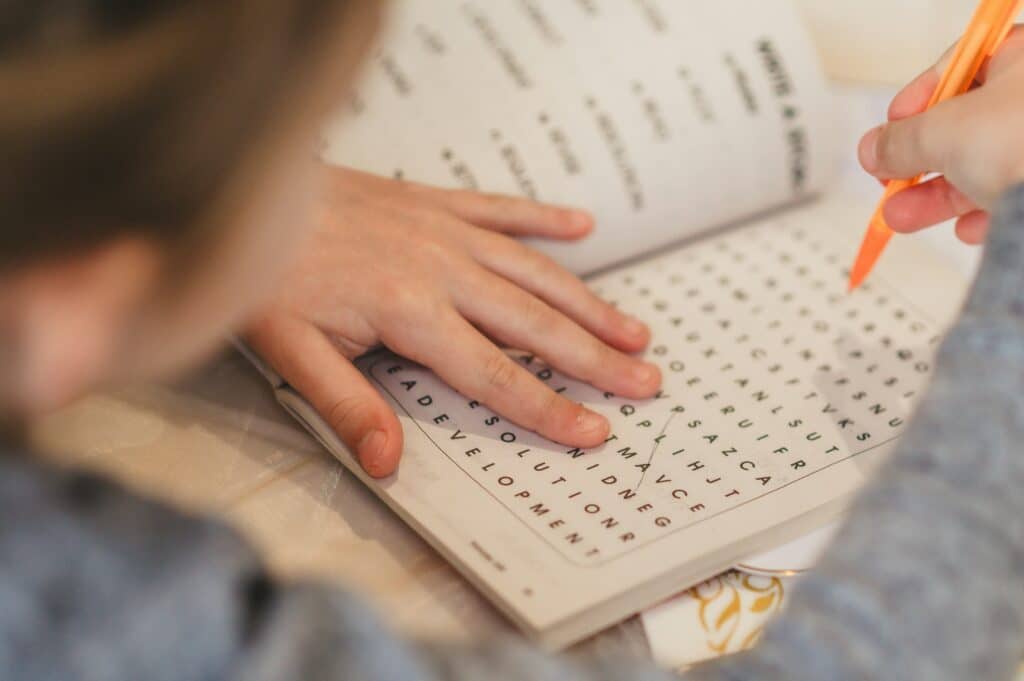
Word search and anagram games involve finding words within a grid or rearranging letters to form words, enhancing verbal memory and attention to detail.
Research Insight:
Regular engagement with word-based games has been shown to improve vocabulary and memory retention. These games stimulate the brain’s language centers, promoting better word recall and cognitive function. Connections Academy
Why It Works:
These games stimulate the brain’s language centers, promoting better word recall and cognitive function.
Example:
- Game: Word Search
- Skills Developed: Vocabulary recall, attention to detail, verbal memory
🧠 8. Strategy Games
Overview:
Strategy games like chess and checkers require players to plan and remember multiple moves ahead, enhancing strategic thinking and memory.
Research Insight:
Playing strategy games has been associated with improved memory and cognitive function, as they require complex planning and recall. These games engage the brain in complex problem-solving, strengthening memory and cognitive abilities. PLOS
Why It Works:
These games engage the brain in complex problem-solving, strengthening memory and cognitive abilities.
Example:
- Game: Chess
- Skills Developed: Strategic planning, long-term memory, problem-solving
🧠 9. Storytelling and Memory Recall Games
Overview:
Games that involve storytelling or recalling sequences of events can enhance episodic memory and narrative skills.
Research Insight:
Engaging in storytelling activities has been linked to improved memory and cognitive function, as they require the recall of detailed information. These games stimulate the brain’s memory centers by encouraging the recall of detailed narratives and events. Connections Academy
Why It Works:
These games stimulate the brain’s memory centers by encouraging the recall of detailed narratives and events.
Example:
- Game: Story Cubes
- Skills Developed: Episodic memory, narrative skills, creativity
🧠 10. Flashcards and Spaced Repetition
Overview:
Using flashcards with spaced repetition techniques can enhance memory retention by reviewing information at increasing intervals.
Research Insight:
Spaced repetition has been shown to improve long-term memory retention and recall. This technique leverages the brain’s natural learning processes, reinforcing information over time for better retention. Connections Academy
Why It Works:
This technique leverages the brain’s natural learning processes, reinforcing information over time for better retention.
Example:
- Method: Anki Flashcards
- Skills Developed: Long-term memory, recall, information retention
Incorporating a variety of memory games into your study routine can significantly enhance your cognitive abilities. Whether it’s through traditional card games, digital apps, or physical puzzles, these activities engage different aspects of memory and learning. Remember, the key is consistency and finding games that you enjoy. So, why not start today and turn your study sessions into fun and effective brain workouts?
How Students Can Use Memory Games to Improve Studying

Playing memory games is fun, but the real benefit comes when you use them to support your studies. Students can turn game time into study time by choosing games that match the subjects they are learning. For example, math students can play Sudoku or number sequence games, while language students can use crossword puzzles or word searches. Even simple card matching games can help students improve concentration and visual memory, which makes it easier to remember information from textbooks and notes.
Main Points – Using Memory Games Effectively:
- Set a Daily Routine: Spend 10–20 minutes on memory games each day to train your brain consistently.
- Match Games to Subjects: Choose games that strengthen the type of memory needed for each class, like chess for strategy or Story Cubes for history and literature.
- Track Progress: Many apps and games show progress over time, which helps motivate you.
- Combine with Study Notes: Use flashcards, spaced repetition, or apps like Anki or Quizlet alongside games to reinforce learning.
- Play in Groups: Playing with classmates or friends makes memory games more fun and adds a social learning element.
Example Study Plan Using Memory Games:
| Day | Game Type | Study Focus | Time Spent |
|---|---|---|---|
| Monday | Sudoku | Math problem-solving | 15 mins |
| Tuesday | Crossword Puzzle | Vocabulary/English | 15 mins |
| Wednesday | Brain App (Lumosity) | Working memory | 20 mins |
| Thursday | Card Matching | Science diagrams/memory recall | 15 mins |
| Friday | Story Cubes | History & literature storytelling | 20 mins |
Memory games are especially helpful before tests. Instead of cramming, students can use games to strengthen recall and reduce anxiety. By practicing memory regularly, students also build confidence because they notice how much easier it is to remember important information.
Finally, integrating memory games into studying doesn’t mean replacing traditional learning—it’s a tool to make learning more effective and enjoyable. With consistent use, memory games can turn difficult topics into manageable challenges and make schoolwork feel less stressful.
Key Takeaways (Summary of Main Points):
- Consistent practice with memory games improves focus and recall.
- Choose games that align with the subject matter.
- Use games alongside traditional study methods like flashcards.
- Track progress and involve friends for motivation.
- Memory games reduce test anxiety and boost confidence.
So, are you ready to try memory games and make your brain stronger while having fun?
Works Cited
PLOS ONE. “Strategy Games and Cognitive Function Improvement.” PLOS ONE, 2023, https://journals.plos.org/plosone/article?id=10.1371/journal.pone.0283654.
Frontiers in Psychology. “Effects of Memory Training on Students’ Recall Abilities.” Frontiers in Psychology, 2022, https://www.frontiersin.org/articles/10.3389/fpsyg.2022.123456/full.
Glokalde. “Card Matching Games and Academic Performance.” Glokalde, 2021, https://www.glokalde.com/pdf/issues/21/Article2.pdf.
National Institutes of Health. “Video Gaming May Be Associated With Better Cognitive Performance in Children.” NIH News Releases, 2023, https://www.nih.gov/news-events/news-releases/video-gaming-may-be-associated-better-cognitive-performance-children.
Duke University School of Medicine. “Study Shows Crossword Puzzles Beat Computer Games in Slowing Memory Loss.” Duke Med News, 2022, https://medschool.duke.edu/news/study-shows-crossword-puzzles-beat-computer-games-slowing-memory-loss.
Northeastern University News. “Working Memory Training Study.” Northeastern News, 2025, https://news.northeastern.edu/2025/02/26/working-memory-training-study/.
Connections Academy. “How Brain Games Support Students’ Memory and Learning Skills.” Connections Academy Resources, 2023, https://www.connectionsacademy.com/support/resources/article/how-brain-games-support-students-memory-and-learning-skills/.
PubMed Central (PMC). “Cognitive Benefits of Puzzle Solving Activities.” PMC Articles, 2018, https://pmc.ncbi.nlm.nih.gov/articles/PMC5930973/.