Educational Games That Make Learning Addictive

You’re about to give your 8-year-old another worksheet when they roll their eyes and dramatically flop onto the couch. Sound familiar? Your kid just declared math “boring” for the third time this week, but here’s the plot twist – they spent two hours last night building elaborate castles in their favorite game without a single complaint.
Fun educational games bridge this gap between your child’s natural love for play and their need to learn essential skills. For parents, teachers, and caregivers searching for engaging learning solutions, these digital tools transform traditionally challenging subjects into exciting adventures that kids actually want to tackle.
STEM-Focused Educational Games That Transform Complex Concepts Into Engaging Adventures
Your child can master algebra before middle school or explore space physics through hands-on rocket building. These games make abstract concepts tangible and exciting.
• Math becomes visual play – Games like DragonBox teach algebraic thinking through colorful puzzles
• Science turns into experimentation – Platforms let kids build rockets, create universes, and test real physics
• Engineering feels like creative building – Students design cities, factories, and complex systems
Strategy and Critical Thinking Games That Develop Real-World Skills
Beyond academic subjects, certain games cultivate the strategic thinking and decision-making abilities your child needs for future success.
• Resource management – Games teach budgeting, planning, and efficient use of materials
• Problem-solving under pressure – Time-based challenges develop quick thinking and adaptability
• Long-term strategic planning – Building civilizations and managing cities requires foresight and patience
The Science Behind Why Educational Games Create Addictive Learning Experiences
The secret lies in how games trigger your brain’s reward systems while sneaking in serious learning. You’ll discover why kids who resist traditional homework become completely absorbed in educational gameplay for hours.
STEM-Focused Educational Games That Transform Complex Concepts Into Engaging Adventures
Master Algebra Through Visual Problem-Solving With Dragon Box

Dragon Box transforms abstract algebraic concepts into intuitive visual puzzles that make complex mathematical relationships feel like game mechanics. Instead of memorizing formulas, you discover algebraic principles through interactive manipulation of colorful objects and symbols that respond to your touch and creativity.
The game’s genius lies in its progressive difficulty system that gradually introduces formal mathematical notation. You begin by moving mysterious boxes and creatures around a virtual board, learning fundamental algebraic operations without realizing you’re solving equations that would traditionally intimidate middle school students.
Core Learning Mechanics That Drive Engagement
Dragon Box employs three distinct approaches to cement algebraic understanding:
• Visual substitution methods that replace traditional variables with engaging animated characters
• Progressive complexity scaling from simple object manipulation to formal equation solving
• Immediate feedback systems that reward correct reasoning while gently correcting mathematical mistakes
Your learning journey starts with simple balance puzzles where you maintain equilibrium by performing identical operations on both sides. This foundational concept becomes second nature through repetitive gameplay that feels more like entertainment than mathematical drill work.
The transition from visual metaphors to algebraic notation happens so seamlessly that you barely notice when cartoon creatures transform into standard mathematical variables. This gradual progression ensures you understand the underlying logic before confronting traditional algebraic symbolism.
Advanced Problem-Solving Features
Dragon Box’s sophisticated assessment system adapts to your individual learning pace while maintaining optimal challenge levels. The game tracks your problem-solving strategies and adjusts subsequent puzzles to reinforce areas where you need additional practice without overwhelming you with concepts you haven’t mastered.
Explore Space Physics and Engineering With Kerbal Space Program
Real Physics Simulation in Gaming Format

Kerbal Space Program delivers authentic orbital mechanics, aerodynamics, and engineering principles through hands-on spacecraft construction and mission planning. You’ll grasp complex physics concepts like gravitational slingshots, delta-v calculations, and atmospheric drag by experiencing their practical applications in realistic space exploration scenarios.
The game’s physics engine accurately simulates real-world space travel challenges, forcing you to consider fuel efficiency, structural integrity, and orbital trajectories. Every failed mission becomes a valuable learning opportunity that reinforces scientific principles through trial and error experimentation.
Engineering Design Process Integration
Your spacecraft construction experience mirrors professional engineering workflows from initial concept through testing and refinement. You’ll learn to balance competing design requirements like payload capacity, fuel efficiency, and structural stability while working within realistic budget and resource constraints.
Kerbal Space Program teaches essential engineering skills through three integrated learning pathways:
• Iterative design methodology that encourages experimentation and continuous improvement
• Systems thinking approaches that reveal interdependencies between spacecraft components
• Problem-solving resilience built through overcoming complex technical challenges
The game’s sandbox mode allows unlimited experimentation with advanced propulsion systems, life support technologies, and interplanetary mission architectures. You’ll develop intuitive understanding of rocket staging, orbital rendezvous procedures, and landing approach optimization through repeated hands-on practice.
Mission Planning and Execution Skills
Successful Kerbal missions require careful planning that integrates multiple STEM disciplines simultaneously. You’ll calculate launch windows using orbital mechanics, design efficient flight paths using physics principles, and manage resources using mathematical optimization techniques that mirror real aerospace engineering practices.
Understand Universe-Scale Physics Through Interactive Simulations

Interactive physics simulations allow you to manipulate fundamental forces and observe their effects across dramatically different scales. You can adjust gravitational constants to watch solar systems form, modify electromagnetic properties to observe atomic behavior, or alter space-time curvature to visualize relativistic effects in accessible, visual formats.
These simulations compress billions of years of cosmic evolution into minutes of interactive exploration. You’ll develop intuitive understanding of how microscopic quantum phenomena scale up to influence galactic structure formation and cosmic background radiation patterns.
Hands-On Experimentation With Universal Constants
Physics simulation games provide unprecedented access to experimental scenarios impossible in traditional laboratory settings. You can create binary star systems, design custom atomic structures, or model black hole interactions while observing how changing fundamental constants affects universal behavior patterns.
The experimental freedom offered by universe-scale simulations includes:
• Gravitational manipulation tools for creating custom stellar and galactic configurations
• Time acceleration controls that reveal long-term consequences of physical processes
• Multi-scale visualization connecting quantum mechanics to cosmological phenomena
Your experimentation reveals deep connections between seemingly unrelated physical phenomena. Adjusting particle physics parameters shows their influence on stellar nucleosynthesis, while modifying cosmological constants demonstrates their impact on galaxy formation and cosmic structure development.
Advanced Visualization of Abstract Concepts
Interactive simulations transform abstract theoretical physics into concrete visual experiences that build intuitive understanding. You’ll see how wave-particle duality manifests in quantum systems, observe relativistic effects in high-velocity scenarios, and visualize multidimensional mathematical concepts through carefully designed interactive demonstrations.
Build and Program in Virtual Worlds With Minecraft Education Edition
Computational Thinking Through Block-Based Construction
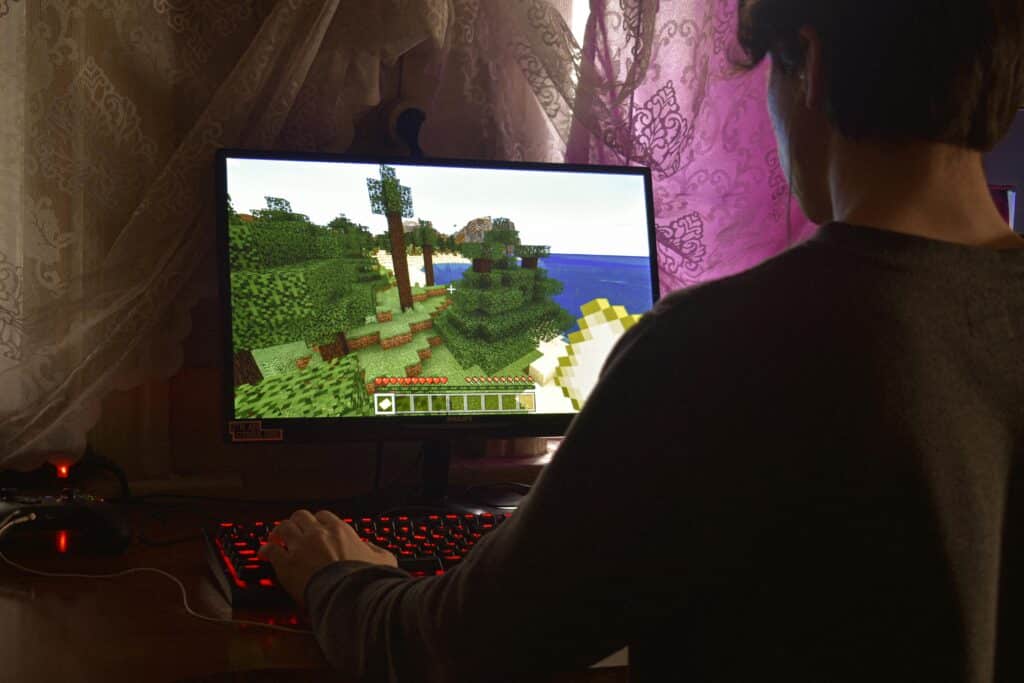
Minecraft Education Edition seamlessly integrates programming concepts with creative construction activities that feel more like play than formal computer science instruction. You’ll develop algorithmic thinking skills by planning complex building projects that require systematic problem decomposition and logical sequence organization.
The game’s block-based environment provides perfect scaffolding for understanding fundamental programming concepts. You naturally encounter loops when creating repetitive patterns, discover conditional logic through redstone circuitry, and grasp variable concepts when managing resource inventory systems.
Collaborative Programming Projects
Minecraft’s multiplayer functionality creates authentic collaborative programming experiences where you work in teams to solve complex computational challenges. These group projects mirror professional software development environments while maintaining the engaging, creative atmosphere that keeps you motivated throughout extended learning sessions.
Educational programming features include comprehensive tools for collaborative development:
• Shared workspace environments that support simultaneous multi-user code development
• Version control systems adapted for educational settings and age-appropriate interfaces
• Peer review processes that encourage constructive feedback and collaborative problem-solving
Your collaborative experiences teach essential software engineering practices including code documentation, debugging strategies, and project management skills. You’ll learn to communicate technical concepts clearly while coordinating complex group projects that require sustained effort and careful planning.
Real Programming Language Integration
Advanced Minecraft Education features include direct integration with professional programming languages like Python and JavaScript. You can write actual code that controls in-game characters, automates construction processes, and creates custom game mechanics that respond to real programming logic.
The transition from visual block programming to text-based coding happens gradually through guided tutorials that maintain continuity between different programming paradigms. You’ll discover how visual programming concepts translate directly into traditional syntax while building increasingly sophisticated automated systems and interactive experiences.
| Game Title | Primary STEM Focus | Key Learning Outcomes |
|---|---|---|
| Dragon Box | Algebra & Mathematics | Visual equation solving, abstract reasoning |
| Kerbal Space Program | Physics & Engineering | Orbital mechanics, spacecraft design |
| Physics Simulations | Universal Physics | Scale-dependent phenomena, experimentation |
| Minecraft Education | Programming & Logic | Computational thinking, collaboration |
These STEM-focused educational games demonstrate how complex scientific and mathematical concepts become accessible through interactive, engaging gameplay experiences. Each platform offers unique approaches to transforming abstract theoretical knowledge into concrete, manipulable experiences that build deep understanding through active experimentation and creative problem-solving activities.
Strategy and Critical Thinking Games That Develop Real-World Skills
Civilization VI: Learn History and Economics Through Empire Building

Now that we’ve explored STEM-focused educational games, let’s examine how strategy games develop real-world skills through complex civilization management. Civilization VI transforms abstract historical and economic concepts into engaging gameplay experiences.
You’ll discover that building empires requires strategic planning across multiple centuries. Your decisions impact technological advancement, diplomatic relationships, and economic prosperity. Each choice creates long-term consequences that teach cause-and-effect relationships in historical contexts.
Master Historical Timeline Development
• Technology Tree Navigation: You progress through authentic historical discoveries, from writing systems to space exploration. Your research choices mirror actual civilizational development patterns. This process teaches chronological thinking and technological interdependence.
• Cultural Evolution Management: You witness how societies develop unique characteristics through gameplay mechanics. Religious beliefs, artistic movements, and social structures emerge naturally. These elements demonstrate how cultures influence each other through trade and conflict.
• Diplomatic Relationship Building: You negotiate with world leaders representing different civilizations and time periods. Trade agreements, military alliances, and cultural exchanges teach international relations principles. Your diplomatic choices affect global stability and economic prosperity.
Economic System Mastery Through Resource Management
Strategic resource allocation becomes your primary challenge throughout gameplay sessions. You balance immediate needs against future investments while managing citizen happiness. These decisions directly parallel real-world economic planning and policy implementation.
• Supply Chain Understanding: You manage complex trade networks spanning continents and centuries. Raw materials transform into finished goods through production chains. Your cities specialize in different industries, teaching economic specialization benefits.
• Market Economics Application: You experience supply and demand principles through dynamic pricing systems. Luxury resources become valuable based on scarcity and demand patterns. Currency systems evolve from bartering to modern banking structures.
• Budget Planning Skills: You allocate limited resources between military, infrastructure, and research investments. Tax policies affect citizen satisfaction and economic growth rates. These choices teach fiscal responsibility and long-term planning strategies.
Cities: Skylines – Master Urban Planning Through Interactive City Management

Your urban planning skills develop through hands-on city construction and management challenges. Cities: Skylines provides realistic simulation of municipal governance, infrastructure development, and citizen welfare systems that mirror actual city planning principles.
You’ll encounter complex urban challenges requiring creative problem-solving and strategic thinking. Traffic congestion, pollution management, and housing shortages become your responsibility. These scenarios teach practical skills applicable to real urban development projects.
Infrastructure Development and Systems Thinking
• Transportation Network Design: You create efficient road systems, public transit routes, and pedestrian pathways. Traffic flow optimization requires understanding of urban mobility patterns. Your designs directly impact citizen satisfaction and economic productivity levels.
• Utility Management Systems: You provide electricity, water, sewage, and waste management services citywide. Power grids require redundancy planning and renewable energy integration. These systems teach infrastructure interdependence and sustainability principles.
• Zoning Strategy Implementation: You balance residential, commercial, and industrial development across districts. Mixed-use planning affects traffic patterns and citizen convenience levels. Your zoning decisions influence property values and neighborhood character development.
Municipal Finance and Public Policy Administration
Budget management becomes crucial as your city grows and citizen demands increase. You collect taxes, issue bonds, and prioritize spending across competing municipal needs. These financial decisions teach government budgeting and public accountability principles.
• Revenue Generation Strategies: You implement various taxation methods including property, income, and business taxes. Policy changes affect citizen happiness and economic growth rates. Your fiscal policies demonstrate taxation’s impact on urban development patterns.
• Service Delivery Optimization: You provide education, healthcare, fire protection, and police services efficiently. Service quality affects citizen satisfaction and population growth rates. Budget constraints force prioritization of essential versus luxury municipal services.
• Environmental Policy Implementation: You address pollution, waste management, and green space development challenges. Environmental regulations affect industrial development and citizen health outcomes. Your policies balance economic growth with environmental sustainability requirements.
Factorio: Develop Industrial Process Thinking Through Automation Engineering

Factorio transforms abstract engineering concepts into compelling gameplay experiences focused on automation and efficiency optimization. You’ll develop systematic thinking skills while designing complex production systems that mirror real-world manufacturing processes.
Your factory construction requires understanding of industrial engineering principles including workflow optimization, bottleneck identification, and resource efficiency maximization. These skills directly transfer to modern manufacturing and business process improvement methodologies.
Production Chain Optimization and Systems Engineering
• Assembly Line Design: You create efficient manufacturing workflows using conveyor belts and automated machinery. Production bottlenecks require identification and resolution through system redesign. Your factories demonstrate lean manufacturing and continuous improvement principles.
• Quality Control Implementation: You monitor production rates, identify defects, and implement corrective measures. Statistical analysis helps optimize throughput and minimize waste generation. These processes teach industrial quality management and Six Sigma methodologies.
• Logistics Network Planning: You design transportation systems moving raw materials and finished products efficiently. Inventory management prevents shortages and overproduction scenarios. Your logistics solutions demonstrate supply chain management and just-in-time delivery principles.
Resource Management and Process Improvement
Complex resource extraction and processing systems require careful planning and continuous optimization. You balance multiple production chains simultaneously while managing limited raw material supplies. These challenges develop skills applicable to project management and operations research.
• Efficiency Maximization Strategies: You analyze production data to identify improvement opportunities continuously. Automation reduces manual labor while increasing consistent output quality. Your optimization efforts demonstrate industrial engineering and lean manufacturing principles.
• Scalability Planning Methods: You design production systems capable of exponential growth and expansion. Modular construction allows easy modification and capacity increases. These approaches teach systems thinking and architectural planning methodologies.
• Problem-Solving Through Innovation: You encounter production challenges requiring creative engineering solutions. Limited resources force innovative approaches to complex manufacturing problems. Your solutions demonstrate engineering creativity and technical problem-solving capabilities.

Game Comparison Summary
| Game | Primary Skills Developed | Key Learning Areas |
|---|---|---|
| Civilization VI | Strategic planning, historical analysis, economic management | Technology progression, diplomatic relations, cultural development, resource allocation |
| Cities: Skylines | Urban planning, systems thinking, public administration | Infrastructure design, municipal finance, transportation planning, environmental policy |
| Factorio | Process optimization, systems engineering, automation design | Production chain management, quality control, logistics planning, efficiency maximization |
These strategy games create addictive learning experiences by providing immediate feedback on your decisions while maintaining long-term consequences. You develop critical thinking skills through complex problem-solving scenarios that mirror real-world challenges in history, economics, urban planning, and industrial engineering.
Your analytical thinking improves through constant evaluation of multiple variables and strategic alternatives. Decision-making skills strengthen as you assess risks and rewards across different time horizons. These fun educational gamestransform abstract concepts into engaging interactive experiences that promote deep learning and skill development.
The adaptability required in these games prepares you for dynamic real-world situations requiring quick thinking and strategic adjustment. Resource management skills developed through gameplay directly transfer to personal finance, project management, and business operations. Strategic planning abilities enhance your capacity for long-term goal setting and systematic achievement strategies.
Language Learning and Academic Foundation Games for Early Development
Duolingo – The Gamified Language Learning Revolution

You’ll discover that Duolingo has revolutionized language learning through its addictive game-like structure. The app transforms vocabulary acquisition into an engaging adventure that keeps learners coming back daily.
Core Game Mechanics:
- Streak System: You maintain daily learning streaks that create powerful motivation to continue your language journey
- XP Points and Leagues: You earn experience points for completed lessons and compete in weekly leagues against other learners
- Heart System: You lose hearts for incorrect answers, adding stakes that make each decision meaningful
The platform’s bite-sized lessons ensure you never feel overwhelmed. Each session typically lasts 5-15 minutes, making it perfect for busy schedules while maintaining consistent progress.
Progressive Difficulty Scaling:
- Adaptive Learning: The system adjusts difficulty based on your performance, ensuring optimal challenge levels
- Spaced Repetition: Previously learned words reappear at calculated intervals to strengthen long-term retention
- Contextual Learning: You encounter new vocabulary within sentences rather than isolated word lists
Your learning experience becomes deeply personalized as the algorithm identifies your weak points and provides targeted practice. This intelligent adaptation keeps you engaged without causing frustration.
Babbel – Conversation-Focused Interactive Learning

You’ll find Babbel takes a more structured approach to language learning, emphasizing real-world conversation skills. The platform focuses on practical vocabulary you’ll actually use in daily interactions.
Interactive Dialogue Features:
- Speech Recognition: You practice pronunciation with advanced voice recognition technology that provides instant feedback
- Role-Playing Scenarios: You engage in simulated conversations covering common situations like ordering food or asking directions
- Cultural Context: Each lesson includes cultural insights that help you understand when and how to use specific phrases
The game elements feel natural and purposeful rather than forced. You progress through levels that mirror real language learning milestones, building confidence with each completed module.
Structured Learning Path:
- Grammar Integration: Grammar rules are woven into practical exercises rather than taught in isolation
- Review System: You revisit challenging concepts through varied exercises that prevent boredom
- Progress Tracking: Visual progress indicators show your advancement and maintain motivation
Build Early Learning Skills With Comprehensive Educational Platforms
ABCmouse – Complete Early Learning Ecosystem

You’ll discover that ABCmouse creates an immersive educational world where young learners develop fundamental academic skills through engaging games and activities.
Comprehensive Curriculum Coverage:
- Reading Foundation: You guide children through phonics-based reading instruction with interactive stories and games
- Math Concepts: Number recognition, counting, and basic arithmetic become playful adventures rather than tedious drills
- Art and Creativity: Digital art tools and music activities foster creative expression while developing fine motor skills
The platform’s strength lies in its systematic approach to early childhood education. You can track your child’s progress across multiple subjects while they remain completely engaged in the gaming experience.
Reward and Motivation Systems:
- Ticket Collection: Children earn tickets for completed activities that can be spent in virtual stores
- Customizable Avatar: Personal avatars create ownership and investment in the learning process
- Achievement Badges: Visual recognition of accomplishments builds self-esteem and encourages continued exploration
Your child experiences genuine joy while building essential academic foundations. The seamless integration of learning objectives with entertaining gameplay eliminates the traditional struggle between education and fun.
Khan Academy Kids – Adaptive Learning Adventures
You’ll appreciate how Khan Academy Kids combines rigorous educational content with delightful gaming elements. The platform adapts to each child’s learning pace and style.
Personalized Learning Journeys:
- Individual Pathways: The system creates unique learning paths based on each child’s strengths and areas for improvement
- Multi-Modal Learning: Visual, auditory, and kinesthetic learners all find activities that match their preferred learning styles
- Real-Time Adaptation: Difficulty adjusts instantly based on performance, preventing frustration while maintaining appropriate challenges
The educational games feel genuinely entertaining rather than thinly disguised lessons. You’ll notice children naturally gravitate toward subjects they previously found challenging.
Interactive Reading Development:
- Phonics Games: Letter recognition and sound association become engaging puzzles and adventures
- Comprehension Activities: Story-based games develop critical thinking and reading comprehension skills
- Vocabulary Building: Word games expand vocabulary through context and repetition without memorization fatigue
Explore Science and Social Studies Through Animated Educational Content
National Geographic Kids – Discovery Through Interactive Exploration

You’ll find that National Geographic Kids transforms complex scientific and cultural concepts into accessible, engaging adventures for young minds.
Scientific Discovery Games:
- Animal Habitats: Interactive games teach ecosystem relationships through virtual exploration of different biomes
- Geography Challenges: Map-based games develop spatial awareness and cultural understanding of different regions
- Conservation Adventures: Environmental games create awareness about wildlife protection and sustainability
The platform leverages National Geographic’s renowned visual storytelling to create immersive learning experiences. You’ll notice children developing genuine curiosity about the natural world.
Cultural Awareness Development:
- World Cultures: Interactive activities introduce children to diverse traditions, languages, and customs
- Historical Timelines: Animated sequences make historical events accessible and memorable for young learners
- Current Events: Age-appropriate news content helps children understand their world and develop critical thinking skills
Your child gains global perspective while building foundational knowledge across multiple academic disciplines. The high-quality content maintains educational integrity while maximizing engagement.
PBS Kids Games – Educational Broadcasting Excellence

You’ll discover that PBS Kids brings decades of educational broadcasting expertise to interactive gaming platforms. Their games seamlessly blend entertainment with learning objectives.
Character-Based Learning:
- Familiar Faces: Beloved PBS characters guide children through educational adventures, creating instant connection and trust
- Curriculum Alignment: Games align with early childhood education standards while maintaining the playful spirit children expect
- Social-Emotional Learning: Character interactions model positive behaviors and emotional intelligence skills
The platform’s strength comes from its deep understanding of child development and learning psychology. You’ll notice games that challenge children appropriately while building confidence.
Subject Integration Approach:
- Cross-Curricular Connections: Single games often incorporate multiple subjects, showing children how knowledge areas interconnect
- Problem-Solving Focus: Puzzles and challenges develop critical thinking skills across various academic contexts
- Creative Expression: Art and music activities integrate with academic content to support whole-child development
Game Comparison Summary
| Game Platform | Primary Focus | Key Features |
|---|---|---|
| Duolingo | Foreign Language | Streaks, XP, Leagues |
| Babbel | Conversation Skills | Speech recognition, Cultural context |
| ABCmouse | Early Academics | Tickets, Avatars, Badges |
| Khan Academy Kids | Adaptive Learning | Personalized paths, Multi-modal |
| National Geographic Kids | Science & Culture | Interactive exploration, Visual storytelling |
| PBS Kids Games | Character-based Learning | Familiar characters, Social-emotional focus |
Implementation Strategies for Maximum Effectiveness
Setting Up Success:
- Time Management: You should establish consistent daily practice periods rather than marathon sessions
- Progress Monitoring: Regular check-ins help you understand which concepts need additional reinforcement
- Balance Integration: These games work best when combined with traditional learning methods rather than replacing them entirely
Maximizing Engagement:
- Goal Setting: You can help children set achievable short-term goals that build toward larger learning objectives
- Celebration Rituals: Acknowledging achievements reinforces positive associations with learning and builds intrinsic motivation
- Social Connection: Many platforms offer safe ways for children to connect with peers or family members for collaborative learning
The key to success lies in understanding that these fun educational games work best as part of a comprehensive learning ecosystem. You’ll find the greatest impact when digital tools complement hands-on activities, real-world experiences, and meaningful adult interaction.
Creating Sustainable Learning Habits:
- Routine Development: You should integrate game time into daily routines so learning becomes automatic rather than negotiated
- Interest Following: Pay attention to which subjects or games capture your child’s natural curiosity and expand from there
- Challenge Calibration: Monitor difficulty levels to ensure children experience success while building resilience through appropriate challenges
Your role as facilitator becomes crucial in maximizing these platforms’ educational potential. You’re not just providing access to games; you’re curating learning experiences that build lifelong skills and positive associations with education.
The Science Behind Why Educational Games Create Addictive Learning Experiences
Transform Boring Subjects Into Exciting Adventures Through Game Mechanic

When you play fun educational games, your brain experiences something extraordinary that traditional learning methods rarely achieve. Game mechanics transform mundane academic concepts into thrilling adventures that capture your attention completely.
The secret lies in how games structure challenges and rewards. Instead of memorizing facts passively, you actively solve puzzles and overcome obstacles. This approach makes complex subjects feel manageable and exciting.
Key Game Mechanics That Transform Learning:
• Progressive difficulty levels that adapt to your skill development
• Interactive storytelling that makes abstract concepts tangible
• Achievement systems that celebrate every small victory
Game designers understand that your brain craves novelty and challenge. They create experiences where learning feels like exploration rather than obligation. You become the hero of your educational journey, not just a passive recipient of information.
Collaboration and Social Validation Through Community Features
Educational games tap into your fundamental need for social connection and validation. Community features create shared experiences that make learning feel less isolating and more engaging than solitary study sessions.
Social comparison theory explains why leaderboards and peer achievements motivate you so effectively. You naturally evaluate your abilities by comparing them to others, fostering healthy competition and collaborative learning environments.
Community Features That Enhance Learning:
• Multiplayer challenges that encourage teamwork and knowledge sharing
• Discussion forums where you can ask questions and help others
• Social sharing tools that let you celebrate achievements publicly
These social elements satisfy your core psychological needs for autonomy, competence, and relatedness. You feel connected to a learning community while maintaining control over your educational journey. This combination creates powerful motivation that sustains long-term engagement with educational content.
Transform Your Learning Experience Today

These educational games prove that learning doesn’t have to feel like work. From STEM concepts to creative skills, each game creates addictive experiences through meaningful rewards and engaging challenges.
The Power of Game-Based Learning
Educational games succeed because they tap into natural motivations. When you complete challenges and see immediate progress, your brain releases dopamine, making you crave more learning.
Key benefits include:
• Enhanced problem-solving through hands-on experimentation
• Improved retention through interactive engagement
• Development of critical thinking skills naturally
Making Learning Stick
The science behind these games reveals why traditional methods often fail. Games provide immediate feedback, allowing you to adjust strategies instantly. This creates deeper understanding than passive learning methods.
Games excel at:
• Building confidence through achievable milestones
• Encouraging experimentation without fear of failure
• Creating emotional connections to abstract concepts
Your learning journey doesn’t have to be boring or frustrating. With these proven educational games, you can master complex subjects while genuinely enjoying the process. Which game will you try first to revolutionize your learning experience?
References
Vlachopoulos, Dimitrios, and Agoritsa Makri. “The Effect of Games and Simulations on Higher Education: A Systematic Literature Review.” International Journal of Educational Technology in Higher Education, vol. 14, no. 22, 2017. DOI:10.1186/s41239-017-0062-1. https://educationaltechnologyjournal.springeropen.com/articles/10.1186/s41239-017-0062-1
Li, Youling; Chen, Di; and Deng, Xinxia. “The Impact of Digital Educational Games on Student’s Motivation for Learning: The Mediating Effect of Learning Engagement and the Moderating Effect of the Digital Environment.” PLOS ONE, 11 Jan. 2024, vol. 19, no. 1, e0294350. DOI:10.1371/journal.pone.0294350. https://doi.org/10.1371/journal.pone.0294350
Camacho-Sánchez, Rubén; Rillo‑Albert, Aaron; and Lavega‑Burgués, Pere. “Gamified Digital Game‑Based Learning as a Pedagogical Strategy: Student Academic Performance and Motivation.” Applied Sciences, vol. 12, no. 21, 2022, article 11214. DOI:10.3390/app122111214. https://doi.org/10.3390/app122111214
Forsström, S. et al. “The impact of digital technologies on students’ learning: Results from a literature review.” OECD Education Working Papers, no. 335, 2025, OECD Publishing, Paris. DOI:10.1787/9997e7b3-en. https://doi.org/10.1787/9997e7b3-en
Ud Din, Shuja; Baig, Muhammad Zeeshan; and Khan, Muhammad Khateeb. “Serious Games: An Updated Systematic Literature Review.” 31 May 2023. arXiv, https://arxiv.org/abs/2306.03098
De Smale, Stephanie; Overmans, Tom; Jeuring, Johan; and van de Grint, Liesbeth. “The Effect of Simulations and Games on Learning Objectives in Tertiary Education: A Systematic Review.” In GALA 2015, Lecture Notes in Computer Science, vol. 9599, 2016, pp. 506–516. DOI:10.1007/978-3-319-40216-1_55. https://doi.org/10.1007/978-3-319-40216-1_55
Cózar‑Gutiérrez, Ramón; Sáez‑López, José Manuel. “Game-Based Learning and Gamification in Initial Teacher Training in the Social Sciences: An Experiment With MinecraftEdu.” International Journal of Educational Technology in Higher Education, vol. 13, article 2, 2016. https://educationaltechnologyjournal.springeropen.com/articles/10.1186/s41239-016-0003-4
Pineda-Martínez, María; Llanos-Ruiz, David; Puente‑Torre, Paula; and García‑Delgado, Miguel Ángel. “Impact of Video Games, Gamification, and Game‑Based Learning on Sustainability Education in Higher Education.” Sustainability, vol. 15, no. 17, 2023, article 13032. DOI:10.3390/su151713032. https://doi.org/10.3390/su151713032
Juan, Andrés A. A.; et al. “Games and Simulation in Higher Education: Pedagogical Use and Learning Outcomes.”International Journal of Educational Technology in Higher Education, 2017. https://educationaltechnologyjournal.springeropen.com/articles/10.1186/s41239-017-0075-9
Jeuring, Johan; et al. “How to Evaluate Games in Education: A Literature Review.” 4 July 2024. arXiv, https://arxiv.org/abs/2407.03879
Song, Y.; et al. “The Impact of Digital Learning Competence on the Academic Performance of Students.” 2025. PMC, https://pmc.ncbi.nlm.nih.gov/articles/PMC12292602/