8 Ways in How Education Prepares Students For the Future
A classroom, a choice, and a notebook

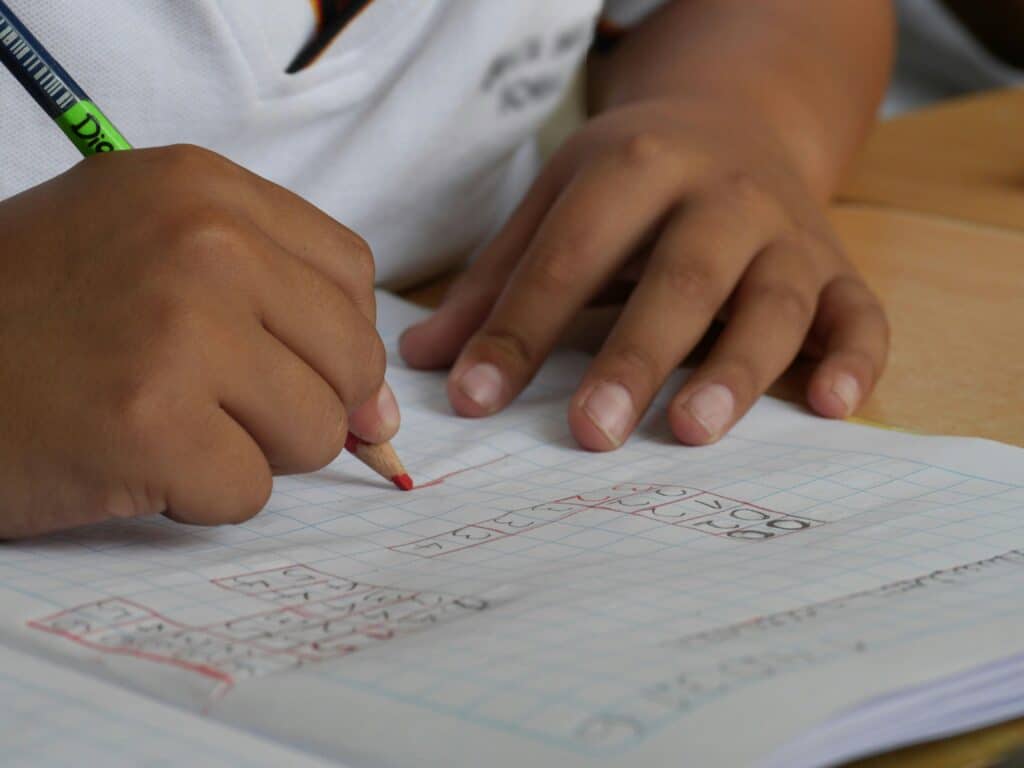
You walk into a classroom where Maya, a shy tenth grader, nervously prepares a short presentation.
Her teacher guides her through planning, note-taking, and a quick retrieval practice warm-up.
You watch as confidence grows with small, steady skills.
This moment shows how education prepares students by building habits you use outside school.
Schools are shifting to teach adaptable skills for changing jobs and global challenges (World Economic Forum).
Systems also map long-term learning outcomes to future-ready competencies (Organisation for Economic Co-operation and Development).
You don’t need a dramatic change to see impact.
Small routines—planning, spacing study, and active practice—stack into larger abilities.
These routines show how education prepares students for unpredictable careers and complex problems.
- Plan, practice, reflect — routine study habits boost retention and confidence in new tasks.
- Write to understand — longhand note-taking supports deeper processing and recall.
- Practice retrieval — testing yourself often beats passive review for durable learning.
The 8 Ways Education Prepares Students For the Future
- Way 1: Building Adaptable Thinking for Changing Careers
- Way 2: Strengthening Critical Thinking Through Real Problems
- Way 3: Developing College and Career Readiness Skills Early
- Way 4: Using Effective Note-Taking to Support Long-Term Learning
- Way 5: Applying Research-Based Study Methods for Retention
- Way 6: Encouraging Active Learning Methods in Daily Lessons
- Way 7: Supporting Social, Emotional, and Collaborative Skills
- Way 8: Creating Habits That Support Lifelong Learning
Way 1: Building Adaptable Thinking for Changing Careers

You learn to shift quickly when tasks or tools change.
That adaptability is central to how education prepares students for tomorrow. (Organisation for Economic Co-operation and Development)
Global forecasts suggest new jobs will appear as others change, and adaptable thinking helps you move between roles. (World Economic Forum)
Teachers can design lessons that ask you to evaluate differing solutions, not memorize one answer.
This practice builds flexible reasoning you use in new workplaces. (Organisation for Economic Co-operation and Development)
- Try short scenario tasks where you change constraints mid-activity to model workplace shifts.
- Ask for two solutions, then require a quick swap and defense of the other.
- Give a one-minute reflection on what changed in your thinking.
Way 2: Strengthening Critical Thinking Through Real Problems
You practice critical thinking development when you analyze real-world problems.
Classroom tasks that mirror real issues deepen reasoning and decision-making. (Dunlosky et al.)
Research shows that engaging with problems rather than memorizing facts improves transfer to new tasks. (Dunlosky et al.)
When you discuss evidence, critique assumptions, and weigh trade-offs, you rehearse the mental moves needed beyond school.
That rehearsal is part of how education prepares students for messy, real problems. (Organisation for Economic Co-operation and Development)
- Use short case studies and ask you to list assumptions and consequences.
- Run a two-minute peer debate on a single claim from the case.
- End with a one-sentence plan you’d test tomorrow.
Way 3: Developing College and Career Readiness Skills Early
Schools map curriculum to college and career readiness so you practice future tasks now. (National Center for Education Statistics)
Career-focused learning combines knowledge with practical performance and reflection. (Advance CTE)
Building those skills in class makes transitions smoother when you choose next steps.
You grow confidence and evidence you can show later, such as portfolios or presentations. (Advance CTE)
Short practice cycles, feedback, and reflection produce steady skill growth that signals readiness. (National Center for Education Statistics)
- Build a short portfolio item from one lesson, then revise after feedback.
- Practice a 90-second presentation to simulated employers or peers.
- Add a one-paragraph reflection about next steps.
Way 4: Using Effective Note-Taking to Support Long-Term Learning
How you capture ideas matters.
Longhand note-taking encourages processing and deeper understanding. (Mueller and Oppenheimer)
Students who take notes by hand tend to reframe information, which improves later recall for conceptual questions. (Mueller and Oppenheimer)
Pair longhand notes with brief self-quizzing and spaced review to make notes work harder for you. (Karpicke and Blunt) (Cepeda et al.)
These simple routines show how education prepares students by turning momentary lessons into lasting knowledge. (Dunlosky et al.)
- Take key ideas by hand, then write a one-sentence summary after class.
- Quiz yourself on three note items the next day.
- Revisit notes after one week and again after several weeks.
Scholarlysphere note (for you and your colleagues):
Use Scholarlysphere to guide you through your studies by out academic blogs which provide tips that will help you throughout your academic journey.
Way 5: Applying Research-Based Study Methods for Retention
You want students to remember what matters.
Using proven study methods helps durable learning, not just short-term recall.
Retrieval practice—having students recall information—often produces stronger memory than extra study time alone. (Karpicke and Blunt)
Spacing study sessions over days or weeks boosts long-term retention compared with cramming. (Cepeda et al.; Dunlosky et al.)
Combine retrieval and spacing for best results; both receive strong support in cognitive research. (Dunlosky et al.)
When you design lessons with short, spaced quizzes and cumulative review, you model how education prepares students to learn deeply.
Those routines make transfer to new tasks easier because knowledge is better integrated.
- Short, frequent quizzes—use low-stakes retrieval to build durable recall and confidence.
- Planned spacing—schedule review across weeks, not just before tests.
- Mix practice types—blend recall, application, and explanation to deepen learning.
These actions directly connect how education prepares students by turning isolated facts into flexible knowledge. (Dunlosky et al.)
Way 6: Encouraging Active Learning Methods in Daily Lessons
You can shift class time from lectures to doing.
Active learning increases engagement and improves performance on assessments. (Freeman et al.)
When you ask students to solve, debate, or explain, they practice critical thinking development in context.
Group work and problem-based tasks let learners test ideas and revise strategies in real time. (Freeman et al.)
Active routines help students see how education prepares students for collaboration and real-world problem solving.
Be mindful of access: digital activities often help, but not all students have equal home technology access.
Address gaps so the benefits of active, tech-enabled learning reach everyone. (Pew Research Center)
- Problem-based tasks—students apply concepts, then reflect on strategies.
- Peer instruction—students explain ideas to each other, strengthening understanding.
- Frequent formative checks—you gather evidence and adjust instruction quickly.
These practices show how education prepares students for teamwork, communication, and adaptable thinking. (Freeman et al.; Pew Research Center)
Way 7: Supporting Social, Emotional, and Collaborative Skills

You know learning isn’t only cognitive.
Students who manage emotions, set goals, and work with others learn more effectively. (CASEL)
Social and emotional learning (SEL) programs show positive effects on social behavior and academic outcomes. (CASEL)
When you teach teamwork, perspective-taking, and self-regulation, you strengthen critical thinking developmentthrough reflective practice.
Those habits prepare students to adapt in diverse workplaces and communities.
Collaborative projects let learners practice negotiation, leadership, and shared responsibility.
When tasks mimic real teams, students learn to plan, communicate, and revise together—core ways how education prepares students for adult roles. (Advance CTE; NCES)
- Role-based group projects—students rotate roles and reflect on team choices.
- Explicit SEL mini-lessons—teach goal-setting, feedback, and emotion regulation.
- Structured reflection—students document what worked, what didn’t, and next steps.
These routines support both learning and wellbeing, linking classroom habits to future success. (CASEL; Advance CTE)
Way 8: Creating Habits That Support Lifelong Learning
You want students who keep learning after graduation.
Teaching lifelong learning habits ensures ongoing growth and resilience.
Explicitly teach meta-cognitive strategies: planning, monitoring, and adapting study approaches. (Dunlosky et al.)
When students practice self-directed inquiry, note-review cycles, and goal tracking, they internalize study methods that last. (Mueller and Oppenheimer; Karpicke and Blunt)
Platforms like Scholarlysphere can support students with out academic blogs which give insights on topics from note-taking to study tips.
Career-readiness work also builds habit formation—project deadlines, iterative feedback, and real-world deliverables mirror adult workflows. (National Center for Education Statistics; Advance CTE)
Those experiences show how education prepares students to manage complexity and persist through challenges.
- Teach a study cycle—plan, practice, test, reflect, then revise.
- Notebook routines—regularly revisit notes with prompts for retrieval and connection.
- Goal-driven projects—students set milestones and monitor progress publicly.
These habits help students leave school with tools for continuous learning and adaptation. (Dunlosky et al.; NCES)
Connecting Classroom Skills to the Real World
From Classroom to Career

When you map class tasks to workplace habits, the classroom becomes a practice field.
That mapping shows how education prepares students by giving you real tasks and feedback. (National Center for Education Statistics)
Employers value transferable abilities like problem framing and communication.
Those abilities often begin as classroom routines and assessments. (Advance CTE)
You can use short, authentic tasks to make lessons matter outside school.
These tasks help you see the “why” behind content and the “how” for later work. (Organisation for Economic Co-operation and Development)
- Assign one real-world task each week and ask for a one-page reflection.
- Have you present a workplace-style solution in three minutes, then revise.
- Create a simple rubric that links class skills to job skills.
Designing Lessons That Transfer
Focus lessons on process, not just answers, to show how education prepares students for messy problems.
Teach bolded strategies like retrieval, spacing, and deliberate practice to help transfer. (Karpicke and Blunt) (Cepeda et al.)
When you emphasize critical thinking development, ask students to explain decisions and cite evidence.
That practice strengthens reasoning and helps you apply knowledge to new settings. (Dunlosky et al.)
Use structured reflection so you and your students spot links between the lesson and life tasks.
Reflection turns isolated skills into repeatable approaches for future work. (National Center for Education Statistics)
- End a lesson with a quick “one-thing-I’d-use-today” reflection from you.
- Model how to move from a classroom answer to a workplace step.
- Convert a quiz question into a short applied task for practice.
Making Study Skills That Last
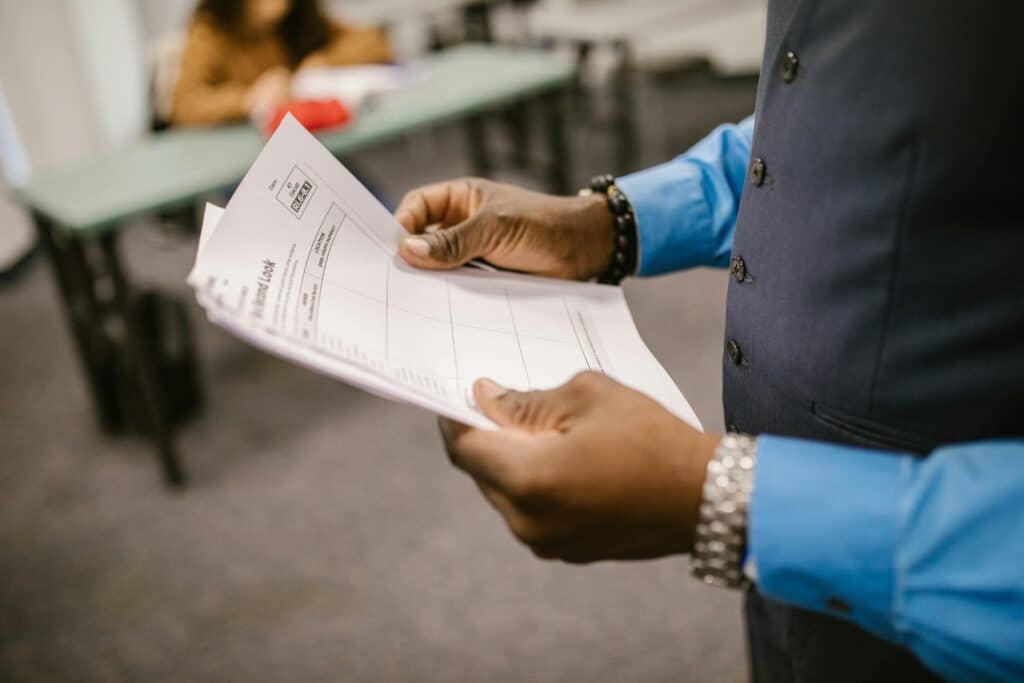
How you teach study methods influences long-term success.
Spacing, retrieval practice, and guided note review help you retain and use learning later. (Cepeda et al.) (Karpicke and Blunt)
Encourage longhand notes paired with brief self-testing.
This combination supports deeper processing and better recall on applied tasks. (Mueller and Oppenheimer)
You can scaffold study plans for students, showing how short, spaced sessions beat marathon cramming.
That habit supports both immediate learning and future adaptability. (Dunlosky et al.)
- Teach a two-step study plan: five-minute retrieval, ten-minute spaced review.
- Ask students to convert notes into a one-minute oral summary.
- Show an example study calendar with short, repeated sessions.
Measuring Growth and Reflecting Together
Measure small improvements with quick performance checks, not just one exam.
Portfolios, short presentations, and reflective journals show how skills develop over time. (Advance CTE) (National Center for Education Statistics)
When you track progress, you and your students can adjust instruction and practice.
This feedback loop clarifies how education prepares students by making learning visible and actionable. (Freeman et al.)
Include social and emotional checkpoints—self-management and teamwork matter in most future roles.
These skills support collaboration and resilience in real-life tasks. (CASEL)
Next steps you can try tomorrow

Start one small habit: a two-minute retrieval at the end of class or a one-line reflection.
Repeat it for two weeks and notice changes in confidence and transfer.
If you adopt one focused routine, you’ll see clearer links between classroom work and future roles.
How will you pick the first routine to try in your next lesson?
References
Organisation for Economic Co-operation and Development. The Future of Education and Skills: Education 2030. OECD, 2018, https://www.oecd.org/content/dam/oecd/en/publications/reports/2018/06/the-future-of-education-and-skills_5424dd26/54ac7020-en.pdf Accessed 27 Dec. 2025
World Economic Forum. The Future of Jobs Report 2025. World Economic Forum, 2025, https://www.weforum.org/publications/the-future-of-jobs-report-2025/ Accessed 27 Dec. 2025
United Nations Educational, Scientific and Cultural Organization. Report on the Implementation of Education for Sustainable Development (ESD) for 2030. UNESCO, 2023, https://unesdoc.unesco.org/ark:/48223/pf0000387344Accessed 27 Dec. 2025
National Center for Education Statistics. The Condition of Education 2023. U.S. Dept. of Education, 2023, https://nces.ed.gov/pubs2023/2023144.pdf Accessed 27 Dec. 2025
National Center for Education Statistics. Forum Guide to College and Career Readiness (CCR) Data. NFES 2026-003, NCES, Nov. 2025, https://nces.ed.gov/use-work/resource-library/report/forum-guide/forum-guide-college-and-career-readiness-ccr-data Accessed 27 Dec. 2025
Dunlosky, John, et al. “Improving Students’ Learning With Effective Learning Techniques: Promising Directions From Cognitive and Educational Psychology.” Psychological Science in the Public Interest, vol. 14, no. 1, 2013, https://pubmed.ncbi.nlm.nih.gov/26173288/ Accessed 27 Dec. 2025
Mueller, Pam A., and Daniel M. Oppenheimer. “The Pen Is Mightier Than the Keyboard: Advantages of Longhand Over Laptop Note Taking.” Psychological Science, 2014, https://psychologyrocks.org/wp-content/uploads/2019/07/mueller2014.pdf Accessed 27 Dec. 2025
Freeman, Scott, et al. “Active Learning Increases Student Performance in Science, Engineering, and Mathematics.” Proceedings of the National Academy of Sciences, 2014, https://math.stanford.edu/~conrad/papers/PNAS.pdf Accessed 27 Dec. 2025
Cepeda, Nicholas J., et al. “Spacing Effects in Learning: A Temporal Ridgeline of Optimal Retention.” Psychological Science, 2008, https://laplab.ucsd.edu/articles/Cepeda%20et%20al%202008_psychsci.pdf Accessed 27 Dec. 2025
Karpicke, Jeffrey D., and Janell R. Blunt. “Retrieval Practice Produces More Learning Than Elaborative Studying With Concept Mapping.” Science, 2011, https://www.bates.edu/research/files/2018/07/science.1199327.full_.pdf Accessed 27 Dec. 2025
Pew Research Center. Research & Data: Digital Divide / Education and Online Learning. Pew Research Center, 2021–2024, https://www.pewresearch.org/topic/internet-technology/technology-policy-issues/digital-divide/ Accessed 27 Dec. 2025
Collaborative for Academic, Social, and Emotional Learning (CASEL). “What Does the Research Say?” CASEL, https://casel.org/fundamentals-of-sel/what-does-the-research-say/ Accessed 27 Dec. 2025
Advance CTE. Condition of Career Readiness in the United States. Advance CTE, Jan. 2023, https://careertech.org/wp-content/uploads/2023/01/CCDC-Report-V9_0.pdf Accessed 27 Dec. 2025