How to Get a 5 on Your AP Calc BC Exam

You stare blankly after a practice test.
You thought you knew series and parametric equations, yet a few questions shook how confidence you felt.
That night you decide to change how you study.
If your a high school student in AP Calc BC or planning to take it, you need a clear plan that actually makes your progress.
Why this matters to you
Getting around a 3 or above can give you college credit opportunities and more money saved in college.
It can also boost your confidence for STEM classes you plan to take.
Knowing how to study smart matters more than just studying harder.
What we’ll explain in this article
- How to create a study plan tailored to your strengths and weaknesses.
- Techniques for mastering challenging topics like series, integrals, and parametric equations.
- How to use AP exam resources effectively to boost scores.
- Strategies for applying practice problem solving to actual exam questions.
- Tips for building confidence and reducing stress during the AP Calc BC exam.
we will show you yhe evidence-based AP Calculus BC strategies, reliable AP exam resources, and how to turn practice into a better score
Evidence-Backed Steps to Raise Your Score
- Understand the exam structure and score patterns
- Build a targeted study plan using proven resources
- Active practice: deliberate problem solving and error analysis
- Master high-value topics with focused drills
- Use timing and strategy to beat the clock
- Study habits and mental approach that actually help
Understand the exam structure and score patterns

You need to know exactly what the exam asks and the score bracket.
The 2025 distributions show roughly 40–45% of students earn a 5 on AP Calculus BC. (College Board)
That means many students reach the top score, but it is important to note most people who take this class already have a strong basis in math; you can have that with the right plan. (College Board)
- What the two exam halves test: multiple choice and free response, including calculator and noncalculator sections. (College Board)
- How score ranges tend to cluster so you can target the middle-ground improvements that push your score up. (College Board)
- Why practicing actual AP questions matters more than guessing from random calculus problems. (College Board)
Build a targeted study plan using proven resources
A smart plan focuses on your weak spots and uses reliable materials.
Use AP Calculus BC strategies that combine official practice questions with deep concept review. (College Board)
Khan Academy pairs topic drills with practice items to mirror real AP tasks. (Khan Academy)
- Start with an official diagnostic: take a past AP free-response and multiple-choice set under timed conditions. (College Board)
- Match weak topics to curated resources: OpenStax for foundational reading, MIT OCW for lecture clarity, and Paul’s Online Math Notes for worked examples. (OpenStax) (Massachusetts Institute of Technology) (Dawkins)
- Include AP exam resources such as College Board sample questions weekly, not just monthly. (College Board)
- Consider Scholarlysphere for general help on math.
Active practice: deliberate problem solving and error analysis

Practice must be deliberate, not busywork.
Work on practice tests that mimic AP questions and format, then analyze your errors deeply. (College Board) (Khan Academy)
- Work 3 to 5 timed, mixed-topic problem sets each week that include series, parametrics, and integration by parts. (College Board)
- After every set, write a single-paragraph error summary explaining why you missed each problem. (Manfre)
- Convert errors into micro-lessons: rework a wrong solution until you can teach it aloud in two minutes. (Manfre)
- Use official scoring rubrics to mark free-response answers so you learn exam expectations. (College Board)
Master high-value topics with focused drills
Certain topics appear more often than others and carry outsized score weight.
Give series, convergence tests, and polar/parametric work priority in your reviews. (College Board) (Khan Academy)
- For series and convergence, alternate proof-style practice with computation drills twice a week. (College Board)
- For parametric and polar problems, translate between representations and sketch by hand every session. (Khan Academy)
- For integral applications, practice setting up integrals from real contexts and check units or signs. (OpenStax)
Use timing and strategy to beat the clock

Time management often separates a 4 from a 5.
Train the pacing of each section so you never leave easy points on the table. (College Board)
- Divide practice time by question type: spend more time on multi-step free-response early in prep cycles. (College Board)
- Learn fast-check shortcuts for algebraic simplification, sign checks, and derivative/integral sanity checks. (Dawkins)
- Simulate full exams at least three times before test day to build stamina. (Khan Academy)
Use college outcomes to stay motivated
Doing well on APs can affect your college path and course placements.
Research finds students scoring 3–5 on AP exams often have higher first-year college GPAs and retention rates. (Mattern, Shaw, and Xiong)
- Use that long-term payoff as fuel when practice feels repetitive. (Mattern, Shaw, and Xiong)
- Check your target colleges’ credit policies early so you know which score range earns credit. (Stanford University)
- If you aim for credit, focus practice on question types that match the college’s placement expectations. (Stanford University)
Study habits and mental approach that actually help

How you study matters as much as what you study.
Active recall, spaced practice, and interleaving come from education research and work for math. (Manfre) (Mattern, Shaw, and Xiong)
- Use spaced review: revisit a topic after one day, three days, one week, and two weeks. (Manfre)
- Interleave topics so you practice switching between derivatives, integrals, and series in the same session. (Manfre)
- Keep short reflection notes after each study block to record what worked and what did not. (Manfre)
Which materials to prioritize and why
Not every resource is equal.
Prioritize official College Board materials and quality open textbooks for concept clarity, then use targeted tutorials. (College Board) (OpenStax)
Tertiary: OpenStax, MIT OCW, and Paul’s Online Math Notes for deep explanations when concepts feel shaky. (OpenStax) (Massachusetts Institute of Technology) (Dawkins)
Primary: College Board past questions and sample packets for exam realism. (College Board)
Secondary: Khan Academy practice for skill drills and instant feedback. (Khan Academy)
Daily routines, exam day plans, and what comes next
Daily routines that stick
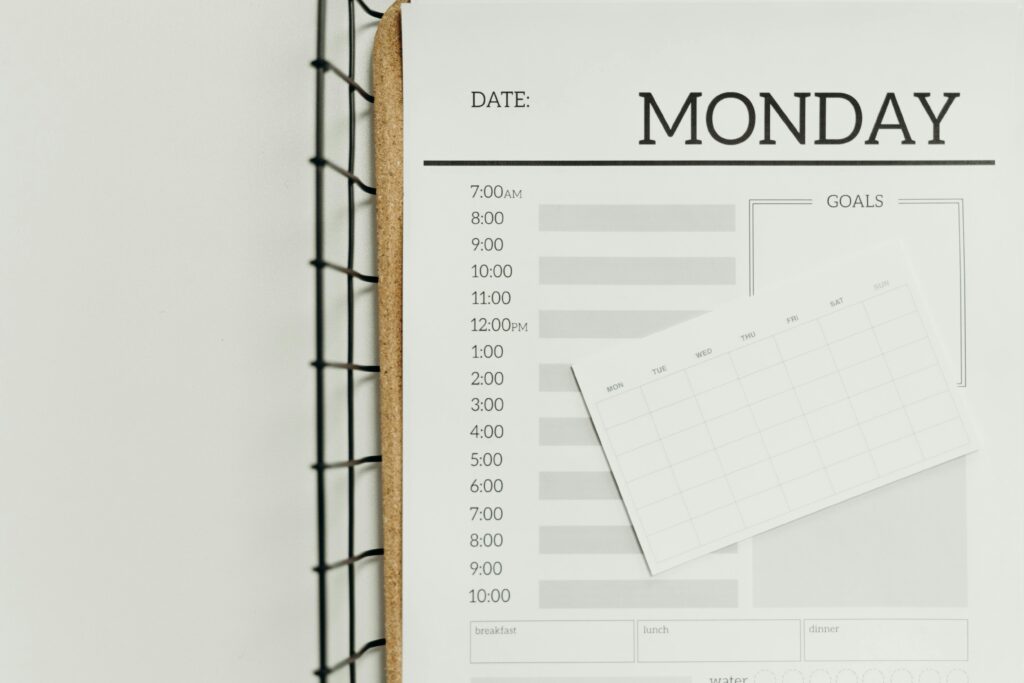
Build habits that make progress steady.
Use AP Calculus BC strategies that mix short, focused practice with quick reviews. (Manfre)
- Morning: 20 minutes of active recall on formulas and key concepts.
- Afternoon: one timed mixed problem set using official questions. (College Board)
- Evening: 10 minutes reviewing errors and writing a one-line takeaway. (Manfre)
- Weekly: one full practice section, then adjust your plan based on mistakes. (College Board)
You should rotate topics each day so you do not get stuck repeating the same skill.
This helps you use spaced practice and interleaving effectively. (Manfre)
Make sure your plan uses trusted AP exam resources for realistic practice. (College Board)
Khan Academy and OpenStax help drill skills, while College Board materials mirror the test. (Khan Academy) (OpenStax)
Exam day blueprint
Have a step-by-step plan so you can focus on solving problems.
Good exam preparation tips reduce stress and keep you efficient. (Manfre)
- Night before: light review, simple practice, and sleep priority.
- Morning of exam: breakfast, a short warm-up set of derivatives, then a calm walk.
- During the test: answer straightforward multiple choice first, then tackle free response. (College Board)
- If stuck: move on and mark the problem, then return with fresh focus. (Dawkins)
Practice this routine in at least three full timed simulations. (Khan Academy)
That builds stamina and makes exam nerves feel smaller on test day. (College Board)
How to turn a 4 into a 5

Small targeted gains often push your score past the threshold.
Focus on the most frequent partial-credit opportunities on free response. (College Board)
- Identify the kinds of errors that lose just one point, and fix them first. (College Board)
- Practice showing clear steps and final answers to match rubrics. (College Board)
- Use micro-lessons where you teach a missed concept to a peer or a recorder. (Manfre)
- Track progress weekly with a simple spreadsheet of topic accuracy and timing. (Khan Academy)
If you want college credit, confirm your target colleges’ score policies so you know where to aim. (Stanford University)
This keeps your practice aligned with real outcomes. (College Board Research)
Next steps and lasting benefits
When you pass your exam, keep on working on your math skills to have an stronger foundation for college math.
Your success in How to Get a 5 on Your AP Calc BC Exam can shape course placements and confidence. (College Board Research)
Save a folder of solved free responses and notes to use in the first college semester.
Review the big ideas: limits, derivatives, integrals, and series, and keep practicing problem solving. (OpenStax)
Use AP Calculus BC strategies to guide college learning, not just the exam.
These methods help you in higher calculus and engineering classes. (MIT OpenCourseWare)
Remember to use exam preparation tips before each practice test, and rely on AP exam resources that match the test format. (Khan Academy) (College Board)
How will you change your study plan this week to make measurable progress on How to Get a 5 on Your AP Calc BC Exam?
References
College Board. “2025 AP Score Distributions.” AP Students, College Board, 2025, https://apstudents.collegeboard.org/about-ap-scores/score-distributions Accessed 25 Jan. 2026.
College Board. “Past AP Calculus BC Score Distributions.” AP Students, College Board, https://apstudents.collegeboard.org/about-ap-scores/score-distributions/ap-calculus-bc Accessed 25 Jan. 2026.
College Board. “AP® Calculus BC Student Score Distributions – Global. AP Exams – May 2024.” AP Central, Board, 2024, https://apcentral.collegeboard.org/media/pdf/ap24-calculus-bc-score-distributions.pdf Accessed 25 Jan. 2026.
College Board. “AP Calculus AB and AP Calculus BC Sample Questions.” College Board, https://secure-media.collegeboard.org/digitalServices/pdf/ap/sample-questions-ap-calculus-ab-and-bc-exams.pdf Accessed 25 Jan. 2026.
College Board. “AP Calculus BC Exam Questions.” AP Central, College Board, https://apcentral.collegeboard.org/courses/ap-calculus-bc/exam/past-exam-questions Accessed 25 Jan. 2026.
Khan Academy. “AP®/College Calculus BC.” Khan Academy, https://www.khanacademy.org/math/ap-calculus-bcAccessed 25 Jan. 2026.
Massachusetts Institute of Technology. “Single Variable Calculus.” MIT OpenCourseWare, Fall 2010, https://ocw.mit.edu/courses/18-01sc-single-variable-calculus-fall-2010/ Accessed 25 Jan. 2026.
OpenStax. Calculus Volume 1. OpenStax, 2016, https://openstax.org/details/books/calculus-volume-1 Accessed 25 Jan. 2026.
Dawkins, Paul. “Paul’s Online Math Notes.” Lamar University, https://tutorial.math.lamar.edu/ Accessed 25 Jan. 2026.
Stanford University. “External Test Credit Equivalency Charts.” Student Services, Stanford University, https://studentservices.stanford.edu/my-academics/earn-my-degree/undergraduate-degree-progress/test-transfer-credit/external-test-0 Accessed 25 Jan. 2026.
College Board Research. “The Relationship Between AP® Exam Performance and College Outcomes.” ERIC (ED561021), College Board, https://files.eric.ed.gov/fulltext/ED561021.pdf Accessed 25 Jan. 2026.
Manfre, Joseph. “Teaching Students How to Study Math.” Edutopia, 3 Sept. 2021, https://www.edutopia.org/article/teaching-students-how-study-math Accessed 25 Jan. 2026.