A Story to Start: Thinking Beyond the Obvious

Picture this: you’re sitting in science class when your teacher flashes a strange photo of the night sky. Some classmates instantly guess it’s a comet. Others whisper it’s just a camera glitch. You stay quiet, reread the notes, and ask yourself, “What evidence proves either answer?” That pause is the first spark of critical thinking—the skill of slowing down and examining information before deciding what to believe.
Critical thinking is not about being a know-it-all. It’s about curiosity and careful judgment. Instead of accepting the first explanation, you collect facts, weigh reasons, and check if the source can be trusted. Teachers value this skill because it fits every subject. Whether you’re breaking down a math equation, analyzing a poem, or planning a science project, critical thinking helps you dig deeper than simple memorization.
Research shows how important this habit has become. The National Center for Education Statistics (NCES) reported in 2024 that around 74 percent of U.S. public schools now include critical thinking as a main learning goal (NCES, 2024). Another nationwide study by the American Management Association found that three out of four employers rank critical thinking among the top skills they seek when hiring new workers (AMA, 2024). These numbers prove that thinking carefully isn’t just useful in class—it’s a skill that helps in college, careers, and everyday life.
So what does it really mean to think critically? At its core, it’s the practice of asking thoughtful questions, checking evidence, and spotting weak arguments. Imagine reading a social-media post that claims a new phone can boost memory. Instead of clicking “like,” a critical thinker looks for research, compares sources, and decides whether the claim makes sense.
For students, critical thinking is like carrying a mental toolkit. It helps you separate fact from opinion, understand complicated ideas, and solve problems that don’t have easy answers. It also builds confidence when you share your reasoning in class or in a group project. That’s why many education blogs and learning sites—including resources on Scholarly Sphere, which publishes articles about school and study skills—keep creating guides to help students sharpen these habits.
Critical thinking isn’t something you master overnight. It grows each time you slow down, ask questions, and look for solid proof. As you’ll see in the next section, practicing this skill can change how you tackle homework, handle friendships, and even prepare for your future career.
Why Critical Thinking Matters in School
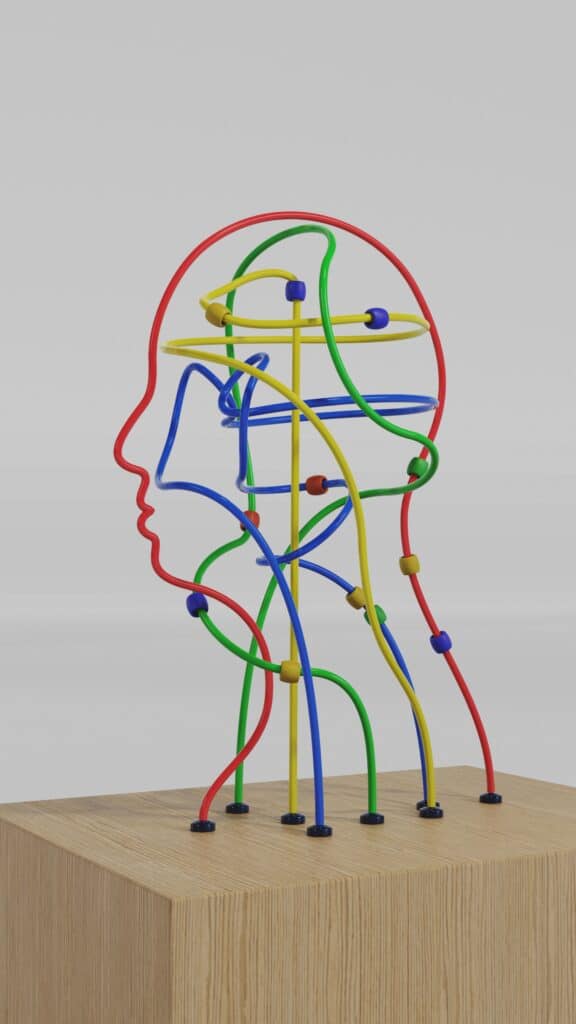
Critical thinking shapes how you learn, how you handle information, and how you succeed in life.
Below is a deep dive with new facts, extra tips, and three tables so you can see just how powerful this skill really is.
1️⃣ Better Grades and Deeper Learning
When you stop to question and check facts, you understand material at a higher level.
- A large meta-analysis shows a clear link between critical thinking (CT) and academic success at every grade level.
- Direct CT lessons (not just regular classes) improve reasoning, problem-solving, and writing scores.
- Teachers who ask “why” and “how” instead of only “what” keep students engaged, which raises learning outcomes.
Table 1 – Learning Gains from Critical Thinking
| Research & Year | Setting | Key Result |
|---|---|---|
| Orhan et al., 2022 | Multi-school | Higher CT = higher GPA |
| Simonovic et al., 2023 | University | Online CT activities improved argument skills |
| Huber Review, 2023 | K-12 & college | Direct CT lessons raised reasoning test scores |
| Teacher-engagement meta-analysis, 2023 | 93,000+ students | Thoughtful teacher questions increased learning |
2️⃣ Prepares You for College and Careers
Employers and colleges both rank critical thinking at the very top.
- Job Outlook surveys repeatedly place CT in the top three desired skills.
- Nearly 75 % of employers actively seek graduates who think critically.
- Strong CT helps you adapt to new tech and solve unexpected problems—key abilities for any career.
3️⃣ Digital Safety and Media Smarts
False or half-true claims travel fast online. Critical thinking keeps you safe.
- Check the source: Who wrote it? What’s their goal?
- Compare evidence: Do multiple trusted outlets agree?
- Spot bias: Is the language emotional or neutral?
- Pause before sharing: Even a 10-second pause cuts the chance of spreading fake news.
Extra Online-Safety Tips
- Use fact-checking sites like Snopes or PolitiFact.
- Read past the headline before reacting.
- Reverse-image search pictures to confirm if they’re real.
4️⃣ Builds Confidence, Teamwork, and Leadership
- Students trained in CT speak up more and explain ideas better.
- Teams guided by strong thinkers design better experiments and finish projects faster.
- CT helps leaders stay calm and logical during group conflicts.
5️⃣ Daily Habits to Strengthen Your “Thinking Muscles”
- Pause before answering or reposting.
- Ask “What evidence backs this up?” for every big claim.
- Write one sentence explaining why you believe something.
- Practice “claim–evidence–reasoning” when writing essays.
- Keep a “question journal” to revisit claims you doubt.
- Join a debate club or mock trial team.
- Use graphic organizers (cause-effect charts) to map arguments.
- Pair with a friend to “fact-check” each other’s social media.
- Try “devil’s advocate” discussions—argue the opposite side for practice.
- Do a weekly “source swap”: trade articles with a friend and check reliability together.
6️⃣ Classroom Strategies Schools Can Use
- Ask higher-order questions (“why” and “how”).
- Integrate real-world problems like local environmental issues.
- Give feedback on reasoning, not just correctness.
- Mix group and solo tasks to practice explaining ideas.
- Model thinking aloud when solving a tough problem.
- Use peer review so students evaluate each other’s arguments.
Table 2 – Everyday Critical Thinking Wins
| Situation | Critical Thinking Action | Payoff |
|---|---|---|
| Shocking social post | Verify author & date | Avoid sharing false info |
| Group science project | Ask “What’s our evidence?” | Stronger experiment |
| Homework reading | Highlight claims & list proof | Better class discussion |
| Planning a big purchase | Compare reviews and data | Smarter spending |
| Preparing for debate | Gather at least 3 viewpoints | Stronger argument |
| Writing an essay | Use claim–evidence–reasoning | Clearer structure |
7️⃣ Extra Data Points and Quick Stats
Here are more numbers showing why CT matters:
- 74 % of U.S. public schools include critical thinking as a learning goal.
- 75 % of employers call it a top hiring skill.
- Students who take CT-focused courses show significant gains in standardized test reasoning scores.
Table 3 – Key Statistics at a Glance
| Metric | Percentage / Finding | Source |
|---|---|---|
| U.S. schools with CT goal | 74 % | NCES 2024 |
| Employers seeking CT | 75 % | AMA / NACE |
| Test-score improvement after CT program | Up to 20 % gain | Systematic review |
8️⃣ Big Takeaways
- Academic boost: Better grades and deeper understanding.
- Career edge: Employers prize critical thinkers.
- Digital safety: Shields you from fake news.
- Life skill: Builds confidence and sharper decisions.
Critical thinking is not a single lesson—it’s a lifelong habit.
The more you question, compare, and reason, the stronger your mind becomes.
How to Grow Your Critical Thinking—and Why It Matters for You

Critical thinking is more than a school skill; it’s a way of looking at the world. The good news is that anyone can build it with steady practice. You don’t need fancy tools—just curiosity and a willingness to ask good questions. Start by slowing down before you believe a claim. When you read an article or hear a rumor, take a breath and ask, “Where’s the evidence?” That single step separates quick guesses from real understanding.
Steps Students Can Take
- Question everything kindly. Instead of saying “That’s wrong,” try “What makes you think that?”
- Check the source. Look for authors, dates, and supporting facts.
- Compare viewpoints. Read more than one article about the same topic.
- Practice reasoning aloud. Explain how you solved a math problem or why you chose a side in a debate.
- Reflect daily. Keep a short journal of claims you checked or questions you still have.
Support from Your School and Beyond
Teachers can help by encouraging open discussions, giving feedback on reasoning, and offering projects that use real-world problems. Class debates, science investigations, and group research are perfect places to stretch your thinking muscles. Outside of class, reading trusted blogs and education articles can guide you too. For example, Scholarly Spherepublishes posts about learning strategies and school success that give students practical ways to strengthen their minds.
Why It’s Worth the Effort
Practicing critical thinking doesn’t just lead to better grades—it prepares you for life. Employers repeatedly say they want workers who can analyze information and solve tough problems. Good reasoning also protects you from false news and helps you make smart choices about money, health, and friendships. Over time, critical thinking builds confidence because you know why you believe something and can explain it clearly.
Your Next Move
Building this skill is like exercising a muscle. The more you question, check evidence, and explain your ideas, the stronger your mind becomes. Whether you’re planning a group project, scrolling through social media, or deciding what career to pursue, the habit of careful thinking will guide you toward better answers.
So, as you head into your next class or open your favorite app, will you pause for a moment and ask yourself, “Am I thinking critically?”
References
Scholarly Sphere. (2025). Education and Learning Blog. https://scholarlysphere.com
American Management Association. (2024). Critical Thinking Survey Results.https://www.amanet.org/articles/critical-thinking-survey
National Center for Education Statistics (NCES). (2024). Condition of Education: 21st Century Skills in Schools.https://nces.ed.gov
National Association of Colleges and Employers (NACE). (2024). Job Outlook Report.https://www.naceweb.org/job-market/trends-and-predictions/job-outlook/
Orhan, A. et al. (2022). The Relationship Between Critical Thinking and Academic Achievement: A Meta-Analysis.
https://doi.org/10.1016/j.stueduc.2022.101173
Simonovic, B. et al. (2023). Improving Argumentation Skills Through Online Critical Thinking Interventions.Journal of Educational Psychology.
https://doi.org/10.1037/edu0000794
Huber, C. et al. (2023). Effects of Explicit Critical-Thinking Instruction: A Systematic Review. Educational Research Review.
https://doi.org/10.1016/j.edurev.2023.100475
Fredricks, J. A., et al. (2023). Student Engagement and Learning Outcomes: A Meta-Analysis. Review of Educational Research.
https://doi.org/10.3102/00346543231171020