Introduction & The Transition After Algebra 2

I still remember the day I finished Algebra 2. It felt like I had climbed a mountain of equations, graphs, and functions. Some classmates celebrated because they thought they were finally done with tough math, while others wondered what kind of math classes might come next. At scholarly sphere, we share blogs and articles about learning and education to help students with moments just like this, when the path forward feels uncertain.
When you reach the end of Algebra 2, you stand at a turning point. This class is often considered a gateway that separates basic high school math from more advanced studies. According to the National Center for Education Statistics (NCES), about 80% of U.S. high school students complete Algebra 2 or a higher math course before graduating(NCES.gov). This means most students don’t stop there—they move into other math classes that prepare them for college, careers, and even real-world problem solving.
But what does “after Algebra 2” really mean? For many students, it means deciding whether they want to follow a path toward advanced math, explore applied math, or even focus on math connected to science and technology. The choice depends on your school, your future goals, and sometimes even your interests outside the classroom. Some schools require students to continue math all the way through senior year, while others allow flexibility once Algebra 2 is done.
Here’s a quick look at how schools usually think about the stage after Algebra 2:
- Foundational Gate – Algebra 2 is the line that shows you’re ready for deeper math.
- Multiple Pathways – Students may branch into advanced math, statistics, or math tied to real-life applications.
- Preparation for College – Most colleges expect math beyond Algebra 2 for competitive applications.
| Stage of Learning | What It Represents |
|---|---|
| Before Algebra 2 | Basic skills: arithmetic, algebra, geometry |
| Algebra 2 | Gateway to higher-level math |
| After Algebra 2 | Choice of advanced or applied math classes |
This stage is important because it helps students figure out what kind of learner they are. Do you enjoy problem-solving with numbers, or do you prefer applying math to real-world questions? By the end of Algebra 2, you’re ready to find out.
The Main Math Paths After Algebra 2
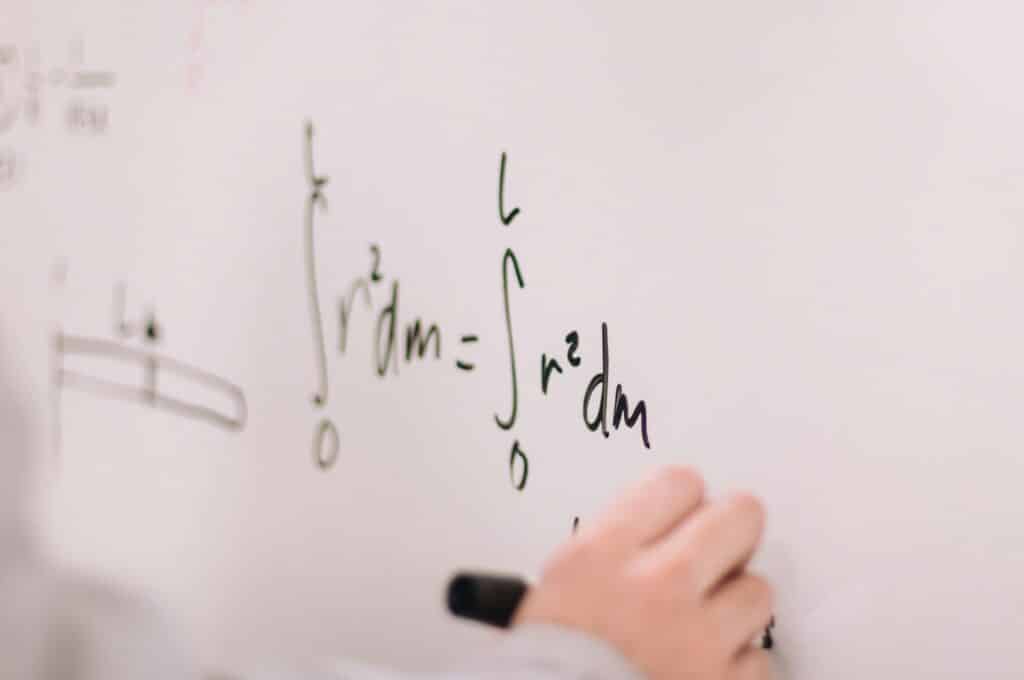
Finishing Algebra 2 is like reaching the base of a mountain range—you’ve climbed high, but now you must decide which trail to take next. Some trails lead to the peak of Calculus, others wind through real-world data in Statistics, while some focus on practical uses like financial math. Each path has its own challenges and rewards, and understanding them can make choosing easier.
Why Going Beyond Algebra 2 Pays Off
The National Center for Education Statistics (NCES) found that about 80% of high school graduates complete Algebra 2 or a higher course, but only around 16% reach Calculus before graduation. Students who push beyond Algebra 2 often see lasting benefits. Research from the U.S. Department of Education shows that students taking math above Algebra 2 are 50% more likely to earn a bachelor’s degree than those who stop there.
The payoff is not just in college readiness. Many jobs in business, health, and technology require math skills beyond Algebra 2. For example, the Bureau of Labor Statistics reports that careers in data science and analytics are growing much faster than average, and those roles require a solid understanding of statistics and advanced algebra.
Pre-Calculus and Trigonometry: Building the Bridge
Pre-Calculus is often the most natural step after Algebra 2. It focuses on functions, trigonometric graphs, and complex numbers. Imagine working with sine and cosine curves to describe sound waves or even the movement of planets. That’s the power of trigonometry.
- Skills gained: mastering functions, analyzing graphs, and solving trig equations
- Best for: students preparing to take Calculus or planning to major in STEM fields
According to PrepScholar, most students on a college-prep track will take Pre-Calculus by junior or senior year to stay competitive for admissions.
Calculus: The Peak of High School Math
For students aiming high, Calculus is often seen as the “summit” of high school math. AP Calculus AB introduces limits, derivatives, and integrals, while BC covers those plus advanced series and polar coordinates.
Every year, nearly 400,000 students take AP Calculus exams, according to the College Board. Students who score well may earn college credit, saving both time and money. Beyond academics, calculus skills are used in physics, economics, biology, and even sports analytics.
- Skills gained: understanding motion, change, and optimization
- Best for: students planning majors in engineering, computer science, physics, or advanced math
Statistics: Math You Can Use Every Day
Unlike calculus, Statistics focuses on data—how to collect it, analyze it, and draw conclusions. In today’s world, statistics powers everything from election polls to sports rankings to medical research.
According to the American Statistical Association, demand for data-related jobs is expected to keep rising, making statistics one of the most practical math classes a student can take. Students learn about probability, sampling, and significance testing, which are skills used in careers ranging from psychology to marketing.
- Skills gained: interpreting graphs, testing claims, predicting outcomes
- Best for: students interested in social sciences, business, medicine, or everyday problem solving
College Algebra: A Strong Review with Depth
Not every student wants or needs Calculus. College Algebra, sometimes called Algebra 3, strengthens skills with polynomials, logarithms, and exponential functions. It’s especially useful for students planning to attend college but not major in STEM. Many community colleges and universities use College Algebra as an entry requirement.
- Skills gained: strong problem-solving with equations and functions
- Best for: students preparing for general college math requirements
Specialized Paths: Discrete Math and Linear Algebra
Some schools and dual-enrollment programs offer advanced electives like Discrete Math and Linear Algebra. These courses move away from standard high school math into more specialized areas.
- Discrete Math: covers logic, proofs, set theory, and algorithms—perfect for computer science.
- Linear Algebra: focuses on vectors and matrices, which are used in graphics, coding, and artificial intelligence.
Though fewer students take these classes in high school, they can provide a huge advantage for STEM majors.
Applied Math and Modeling: Math in the Real World
Applied Math courses bring math alive by showing how equations solve real-world problems. Students might explore compound interest in finance, model population growth in biology, or design structures in engineering.
According to Edutopia, connecting math to practical uses helps increase motivation and engagement among students who otherwise feel disconnected from abstract math.
- Skills gained: problem-solving with real-world applications, technology use, collaboration
- Best for: students who prefer hands-on learning and practical examples
Side-by-Side Comparison
| Course | Main Topics Covered | Who Might Like It? |
|---|---|---|
| Pre-Calculus / Trig | Functions, trig, complex numbers, graphs | Students preparing for Calculus |
| AP Calculus AB / BC | Limits, derivatives, integrals, series (BC extra) | Students aiming for STEM majors |
| AP Statistics / Statistics | Data analysis, probability, inference | Students interested in social science, business, or data jobs |
| College Algebra | Polynomial equations, logs, exponents | Students who want math but not calculus |
| Discrete / Linear Algebra | Proofs, logic, matrices, algorithms | Students into CS, engineering, or math research |
| Applied Math / Modeling | Real problems, simulations, finance, population | Students who like applied, hands-on work |
The Big Picture
Studies show that students who take advanced math classes not only have more college options, but also build stronger critical thinking skills. A 2019 NCES study noted that higher-level math completion correlates with better problem-solving abilities and stronger career outcomes.
For students, the key is not to ask “Which class is easiest?” but instead “Which class connects best with my future?” Whether it’s Statistics for social sciences, Calculus for STEM, or Applied Math for real-world uses, each path has value. And with the right support—through teachers, peers, and resources like our blogs at scholarly sphere—you can find the path that matches your strengths.
Choosing Your Next Step and Moving Forward

Finishing Algebra 2 can feel like reaching the top of a staircase and suddenly seeing many new doors in front of you. Which one should you open? The good news is that you don’t have to choose blindly. With the right information, you can pick a math class that fits your interests, your goals, and even your learning style.
Tips for Choosing the Right Math Class
- Think about your goals. If you want to go into science, engineering, or technology, Calculus and Pre-Calculus are often the best paths. If you see yourself in business, social sciences, or medicine, Statistics may be more useful.
- Ask your counselor or teacher. Schools often have slightly different requirements and recommendations, so checking with an advisor makes sure you’re on track for graduation and college.
- Be honest about your strengths. If you enjoy solving equations and puzzles, advanced algebra or calculus may excite you. If you like real-world examples, then Applied Math or Statistics could feel more natural.
- Look at college plans. Many universities want to see math beyond Algebra 2, even if you are not a STEM major. Strong math preparation shows persistence and problem-solving ability.
- Use extra resources. Blogs, videos, and study guides (like the ones we share at scholarly sphere) can give extra help when the material feels tough.
Why This Choice Matters
Math is not just about numbers—it’s about how you think. Taking classes after Algebra 2 strengthens skills like problem-solving, reasoning, and analyzing information. These skills show up in unexpected places: figuring out the best cell phone plan, understanding interest rates, or interpreting graphs in the news. According to research from the NCES, students who go beyond Algebra 2 are more likely to finish college, and that can shape their entire future.
Every class after Algebra 2, whether it’s Statistics, Pre-Calculus, or Applied Math, adds another layer to the way you see the world. It’s not just about memorizing formulas—it’s about learning how to ask good questions and find answers.
Conclusion
Reaching the end of Algebra 2 is not the end of your math journey—it’s the start of an exciting new chapter. Whether you want to dive into Calculus, explore Statistics, or connect math to real-life problems, the choice you make can open doors for your education and career. With guidance from teachers, counselors, and resources like our blogs, you can find a math class that truly fits you.
So now that you know what’s out there, which math class will you choose after Algebra 2?
Works Cited
Mathematical Association of America. “The Decline in High School Calculus.” MAA, 2022. Reports that only 15.8% of graduates completed Calculus in 2019, down from 19.3% in 2013. https://maa.org/math-values/the-decline-in-high-school-calculus/?
U.S. Department of Education, National Center for Education Statistics. “High School Mathematics and Science Course Completion.” Digest of Education Statistics 2021, NCES, May 2022. Reports that in 2019, 85% of high school graduates completed Algebra II, 40% completed Pre-Calculus, and 16% completed Calculus.
National Center for Education Statistics
Cortes, Kalena; Goodman, Joshua; Nomi, Takako. Intensive Math Instruction and Educational Attainment: Long-Run Impacts of Double-Dose Algebra. NBER Working Paper No. 20211, June 2014. Provides evidence that intensive math instruction can significantly improve college enrollment and academic success.
NBER
Poulsen, S. “The Effect of Additional Math in High School on College Success.” ERIC, 2019. Presents research showing that taking additional math courses in high school causally increases college enrollment and wages.
ERIC
Byun, S.; Irie, K.; Hou, H.; Chung, C.; Makino, A. “Effects on Math Achievement and College Enrollment.” PMC, 2014. Demonstrates that advanced math coursework positively affects math achievement and college outcomes.
PMC
Cleveland Fed – Economic Commentary. “The Surprising Impact of High School Math on Job Market Outcomes.” Federal Reserve Bank of Cleveland, 2013. Observes that even among workers with the same education level, those with more math training earn higher wages and have lower unemployment.
Cleveland Fed
NCES. Fast Facts: Advanced Mathematics and Science Courses. NCES, displays trends showing growth in Algebra II and Pre-Calculus course completion over time.
National Center for Education Statistics
National Assessment of Educational Progress (NAEP). Paths Through Mathematics and Science. NCES, 2018. Provides data on the percentages of students taking Calculus and other advanced math by grade level.
National Center for Education Statistics