The Benefits of Peer Collaboration: Why Studying Together Improves Learning

I remember the first time I participated in a study group. I was nervous, clutching my messy notes and hoping someone was in the same situation as I.
Pretty quickly, I realized I wasn’t alone. Every member brought different strengths and different types of confusion/weaknesses.
Why does this matter for you: The Benefits of Peer Collaboration for students reach farther than just your grade. You’ll build applicable social skills, gain confidence, and more!
Here’s what you’ll find in this article:
- How studying with peers boosts your learning and grades
- Ways group work sharpens your critical thinking and social skills
- Simple, effective group study techniques you can try
Core Advantages of Peer Collaboration
Peer collaboration improves almost everything: your academic performance, your grades, your confidence, and your ability to concentrate. You’ll score higher on tests and actually feel motivated.
Enhanced Academic Performance
Collaborative learning improves your academics, plain and simple. Educational Psychology by Keith J. Topping (2005) showed that students in collaborative learning environments achieve up to 13–15% higher academic performance compared to individual study.
Each person brings their own advantages, so when you give a diverse group an assignment, your knowledge is more secure and complete.
Peer collaboration also builds better study habits by practicing active recall and organizational skills, thereby improving your communication. These won’t only help you in school, but also in the future.
You know what encourages good time management? When your team counts on you for info. You don’t want to let them down, which encourages you to show up to the meeting on time.
Deeper Conceptual Understanding
By explaining to others, even your buddies, you allow your mind to have a more complete understanding of a subject. Teaching shows you areas where you could improve and develop.
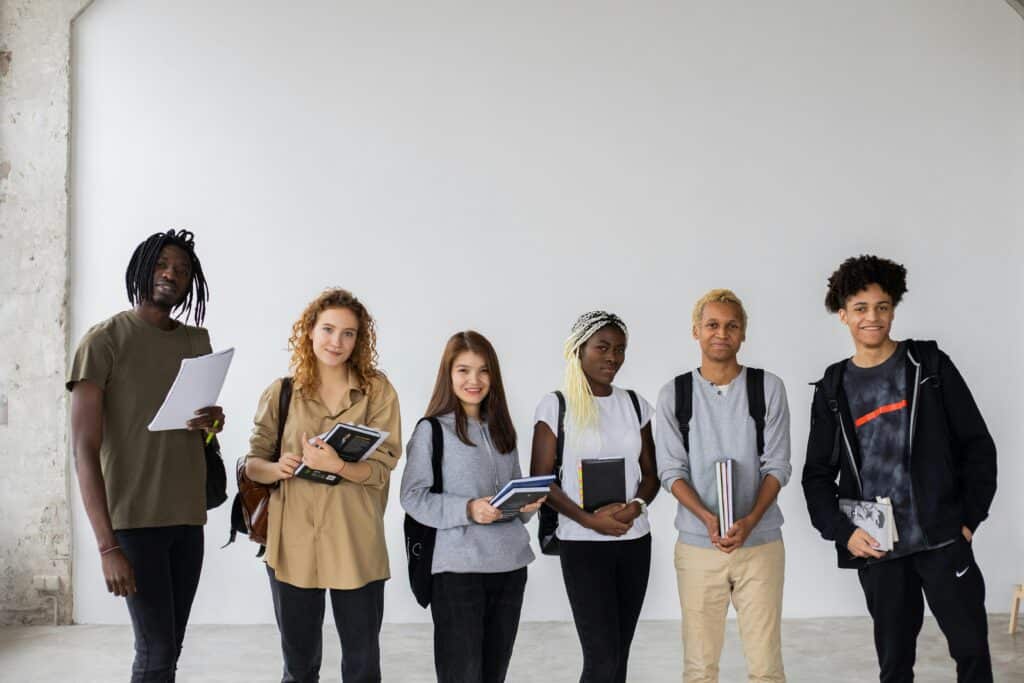
Peer interaction turns hard, confusing topics into short and understandable chunks. When your buddies use language and examples that make sense to you, you might even learn better than with a textbook.
You know what also improves understanding? Feedback. When you get that, you can actually improve and understand.
When you’re in a group, you argue and defend your position. That’s how you not only build memorization, but a better understanding.
Increased Student Engagement
Studying together is a fun way to retain information. With your buddies, you can learn in a way that’s not dreadful, unlike a textbook.
Being part of a group gives you a sense of belonging. You’re more likely to show up and participate because you don’t want to leave them hanging.
Working with peers also builds your confidence. You feel obligated to speak, which can be the start to improving your social skills, even if it’s a bit scary.
Plus, you practice communication skills you’ll use anywhere: explaining, listening, and giving feedback.
How Studying Together Empowers Cognitive and Social Skills
Learning with others gives you many of the necessary skills specific to academics. The Benefits of Peer Collaboration will be shown in how you feel and react.
Critical Thinking and Problem Solving
Explaining ideas makes you more knowledgeable about the information you know. It shows you gaps in your understanding, helps you organize your thoughts, and reminds you to get stronger.
Group work brings people with different ideas together, giving you a complete understanding of a topic. It’s not always easy, but that’s how you learn to listen rather than argue.
Watching different ways to solve a problem is how you learn different skills and methods that might be even better than yours.
Cognitive perks from collaboration:
- Looking from new angles
- Comparing arguments and weighing the evidence
- Finding creative solutions together
Development of Communication Skills

Group collaboration is a great way for you to improve your explaining. When you learn to explain to others as a teacher, you’ll learn a skill that’ll be useful far beyond school.
Listening is half the battle. The rest is paying attention, asking questions, and helping others. These social skills come from down-to-earth, authentic conversations.
You’ll also learn how to explain better depending on who you’re talking to. Explaining to a beginner is way different from chatting with an expert. One knows almost nothing; meanwhile, the other might know more than you do.
Effective Collaborative Learning Techniques
There’s no right way to study together, but there are many methods that might improve your session. The Benefits of peer collaboration come from putting these methods into practice.
You need group discussions, peer tutoring, and structured activities. These methods will help make every session better!
Group Discussions and Peer Instruction
Sometimes you don’t even know that you’re lost; that’s why group discussions are important. They show you where you’re lost and actually help you get on track.
Peer instruction is students teaching each other with the help of a teacher. When you explain a topic, you’ll learn to organize and clarify it, reinforcing your own knowledge. Even if you don’t clarify, your teacher will help.
Here’s what makes discussions work:
- Set a goal for each session
- Make sure everyone gets a chance to talk
- Ask questions if something’s unclear
- Connect new info to what you already know
Peer Tutoring and Structured Peer Tutoring
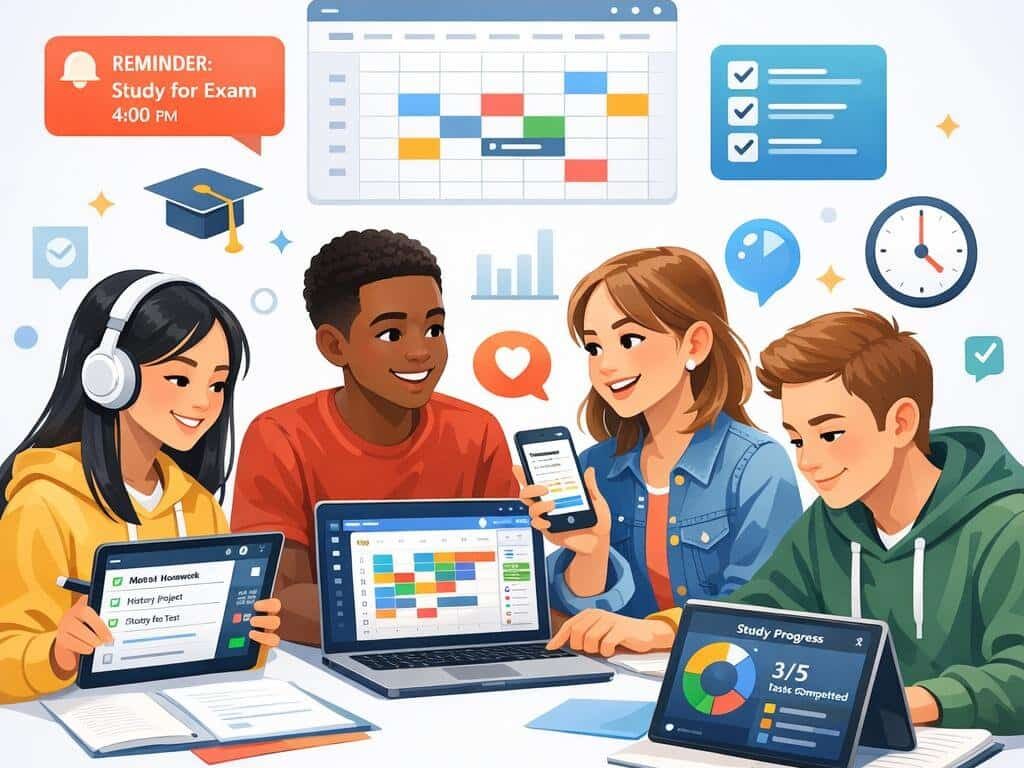
Peer tutoring pairs you with another. One explains, the other listens and then asks questions. Then you switch to a better distribution of understanding.
The “tutor” solidifies their own knowledge by teaching. The “learner” learns from a different perspective. You can swap when moving to a different topic, according to who knows more.
Structure is important, so don’t forget it. Plan which topics you’re going over, come up with a practice question beforehand, and confirm each person understands. That’s how you get all the benefits of peer collaboration.
Accountability, Equal Participation, and Assessment
If no one’s on track, your group session is worthless. To make sure your session moves forward, do this: create a space for all and use feedback to help each other. This is how you get the benefits of peer collaboration.
Promoting Individual Accountability
Individual accountability means you’re responsible for your own work. This is important for an effective group session; you need to know what your job is before any work is done, so no one is all over the place.
Individual accountability increases when the performance of individual students is measured separately from the group. This can be done through individual progress reports and mini quizzes.
That way, everyone is bound to get work done, not just one member.
This pushes everyone to learn, not just the person doing the work. When your grade is based on your contribution, you’ll get more.
Ensuring Equal Participation
Ever been in a group session where one person takes charge and does it all? Equal participation means everyone gets a fair opportunity to contribute.
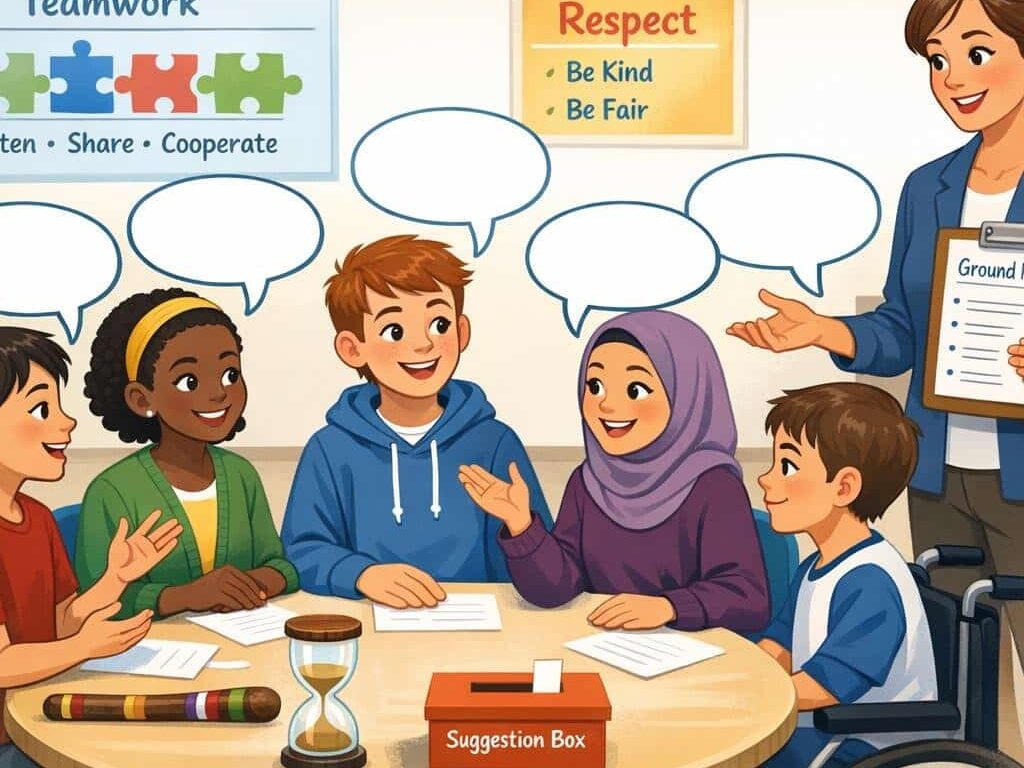
Without some rules, it’s easy for someone to take leadership and do everything incorrectly. Here are some tips to help you:
- Assign rotating roles like discussion leader, note-taker, or timekeeper
- Set speaking time limits so one person doesn’t take over
- Use round-robin sharing where each person takes turns
- Create participation tracking sheets to monitor contributions
Peer-to-peer promotive interaction and individual accountability enhance students’ academic achievements when participation is even. The benefits of peer collaboration aren’t perfect if it’s not truly peer collaboration.
Teachers can encourage this by creating activities that require everyone to contribute, like an around-the-classroom video discussion where everyone’s involved.
Peer Assessment and Feedback
Peer assessment is when you evaluate your peers’ work and provide them with constructive feedback. One study found a 42% increase in positive student feedback on teamwork. So don’t knock it down until you try it.
Peer assessment can improve academic performance by improving your critical thinking by prompting you to question both your classmates’ work and your own.
Feedback should be specific and helpful — say what they did well and what they could improve on, and include some of your personal suggestions. This kind of collaborative learning and peer assessment can enhance student performance by encouraging you to take responsibility for learning.
Peer Collaboration in Modern Educational Contexts
Modern classrooms show the benefits of peer collaboration. Even in simple traditional group projects or presentations, you’ll see them!
Group Projects in Higher Education
Group work is everywhere in college. It’s to make you better at communicating with people from diverse backgrounds, which you’ll do in a job and basically everywhere.
In higher education, group projects help students develop critical thinking and communication skills as they solve complex problems.
Research shows that successful group projects need clear roles and common goals. That’s how you unlock the benefits of peer collaboration when everyone is on one page.
Key elements of effective group projects include:
- Defined individual responsibilities
- Regular check-in meetings
- Shared document platforms
- Clear grading criteria for both group and individual work
Peer Collaboration in Online Learning
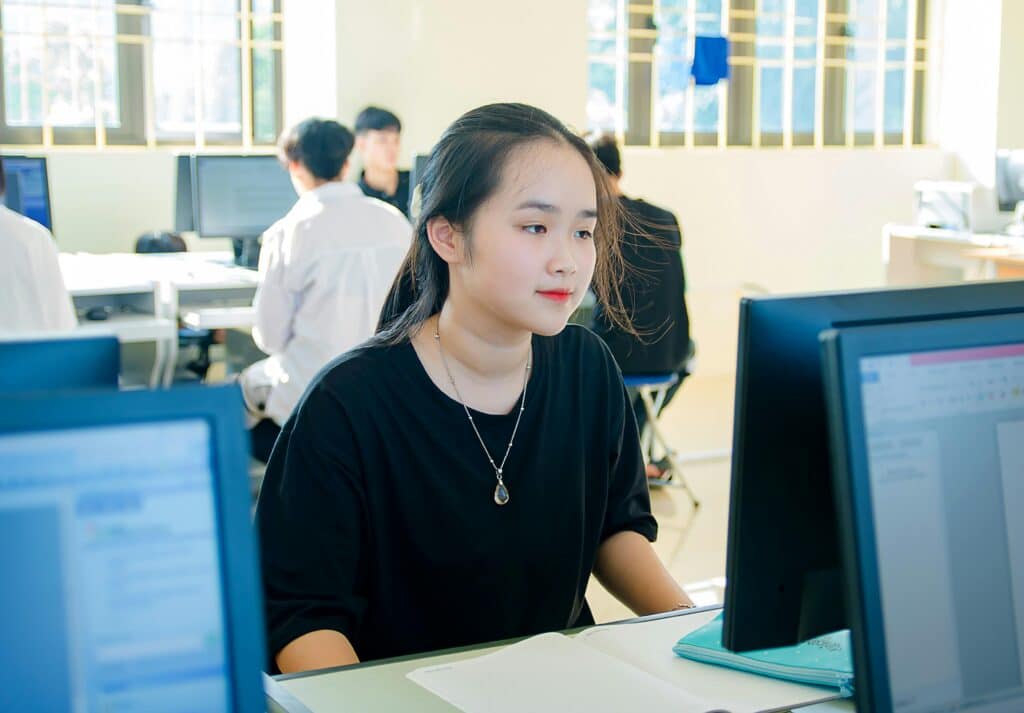
Online learning offers many ways to collaborate with others. CSCL (Computer-Supported Collaborative Learning) platforms let you work with people from all over the world.
Research on evaluating peer learning in online collaborative environments shows that digital collaboration needs structure, especially since you guys can’t meet in one place. So you’ll need a forum to discuss ideas, shared workspaces, and weekly video calls to keep everyone on track to see the benefits of group study for students.
Maximizing the Impact of Collaborative Learning
You won’t see all the benefits of collaboration just from your actions — how you prepare and the setup, both physical and mental, matter.
It’s about the mindset and how you approach the task at hand. Let’s see how The Benefits of Peer Collaboration really come together.
Designing Effective Collaborative Learning Environments
Your meet setup can make or break your group’s progress. Arrange your seats so people can see each other’s work.
Tables work better than desks because they let you be in one little area and discuss. Here’s what else helps:
- Space for small groups and whole class discussions
- Access to shared resources like whiteboards or tablets
- Noise levels that let you talk without yelling
- Furniture you can move around for different group sizes
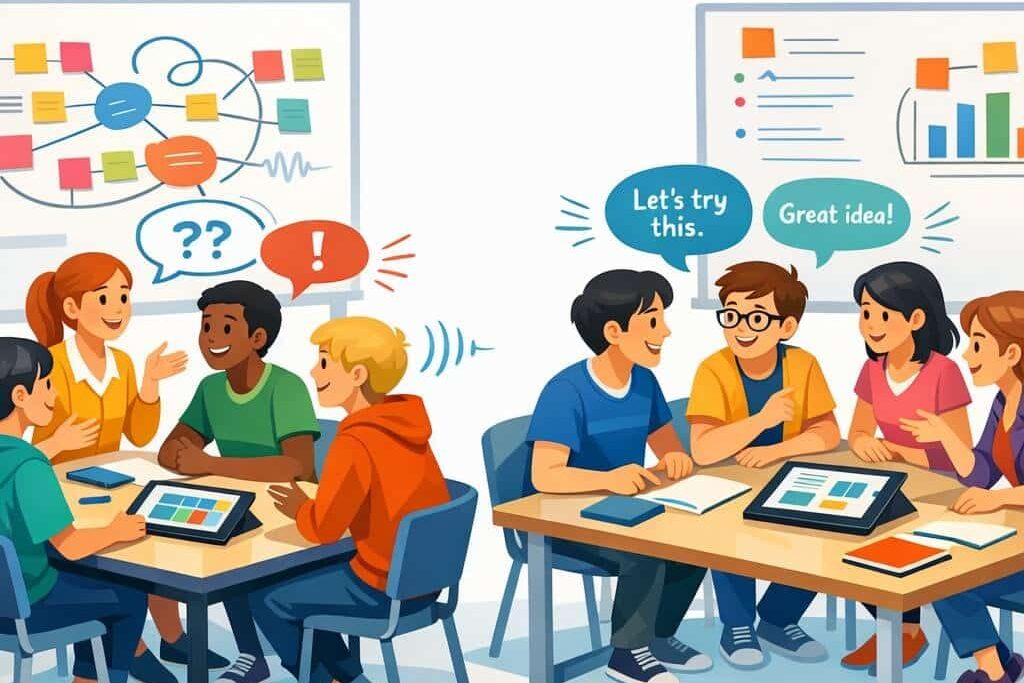
For teachers: if the work is achievable for one person to do, you won’t see the benefits of peer collaboration. Make the work difficult enough to need collaboration.
Active Learning’s Role
Active learning is not just listening. In a group, you might explain ideas, ask questions, or defend your answer; that’s how you learn.
Metacognitive practices that boost collaboration:
- Ask yourself what you really know (and what you don’t)
- Explain your thinking out loud
- Check your understanding against your teammates’ ideas
- Change your study approach if something isn’t working
Research in educational psychology says that collaborative work gets better when you reflect on your learning strategies. Take time to ensure your group is making progress.
Final Thoughts: The Benefits of Group Study For Students
Of course, not every group session goes perfectly. Sometimes, distractions come, or the conversation drifts. But when you are all on the same page, that’s where you’ll see the Benefits of Peer Collaboration for students really reveal themselves.
Maybe it’s time to reach out, talk to some of your peers, and see the benefits of peer collaboration for students really come to you — and honestly, you’ll be surprised how big the difference is. So, what’s stopping you? Which peer collaboration technique might you use this week?
References
Altınay, Zehra. “Evaluating Peer Learning and Assessment in Online Collaborative Learning Environments.” Behaviour & Information Technology, vol. 36, no. 3, 2017, pp. 312-320, https://doi.org/10.1080/0144929X.2016.1232752
Alqassab, Maryam, Jan-Willem Strijbos, Ernesto Panadero, Javier Fernández Ruiz, Marieke Warrens, and Joni To. “A Systematic Review of Peer Assessment Design Elements.” Educational Psychology Review, vol. 35, 2023, article 18, https://doi.org/10.1007/s10648-023-09723-7
Bach, Anabel, and Felicitas Thiel. “Collaborative Online Learning in Higher Education—Quality of Digital Interaction and Associations with Individual and Group-Related Factors.” Frontiers in Education, vol. 9, 2024, article 1356271, https://doi.org/10.3389/feduc.2024.1356271
Double, K. S., J. A. McGrane, and T. N. Hopfenbeck. “The Impact of Peer Assessment on Academic Performance: A Meta-analysis of Control Group Studies.” Educational Psychology Review, vol. 32, 2020, pp. 481-509, https://doi.org/10.1007/s10648-019-09510-3
Jaya, Aswadi, Rudi Hartono, Sri Wahyuni, and Henrikus Joko Yulianto. “The Power of Collaborative Learning: How Peer Interaction Improves Student Learning Outcomes?” Journal of Education and Applied Teaching, vol. 1, no. 1, 2025, pp. 1-10, https://journal.horizonedukasipublisher.com/jeat/article/view/1
Jordan, D. W., and Joanna Le Métais. “Social Skilling through Cooperative Learning.” Educational Research, vol. 39, no. 1, 1997, pp. 3-21, https://doi.org/10.1080/0013188970390101
Nokes-Malach, Timothy, J. Elizabeth Richey, and Soniya Gadgil. “When Is It Better to Learn Together? Insights from Research on Collaborative Learning.” Educational Psychology Review, vol. 27, no. 4, 2015, https://doi.org/10.1007/s10648-015-9312-8
Panitz, Theodore. “The Case for Student Centered Instruction via Collaborative Learning Paradigms.” ERIC, 1999, https://eric.ed.gov/?id=ED448444
Topping, Keith J. “Trends in Peer Learning.” Educational Psychology, vol. 25, no. 6, 2005, pp. 631-645, https://doi.org/10.1080/01443410500345172
Wentzel, Kathryn R., and Deborah E. Watkins. “Peer Relationships and Collaborative Learning as Contexts for Academic Enablers.” School Psychology Review, vol. 31, 2002, pp. 366-377, https://doi.org/10.1080/02796015.2002.12086161
Zhou, T., et al. “Cooperative Learning Promoting Cultural Diversity and Individual Accountability: A Systematic Review.” Education Sciences, vol. 14, no. 6, 2024, article 567, https://www.mdpi.com/2227-7102/14/6/567