Trade School Vs College: Which One Is Better For You? Expert Comparison
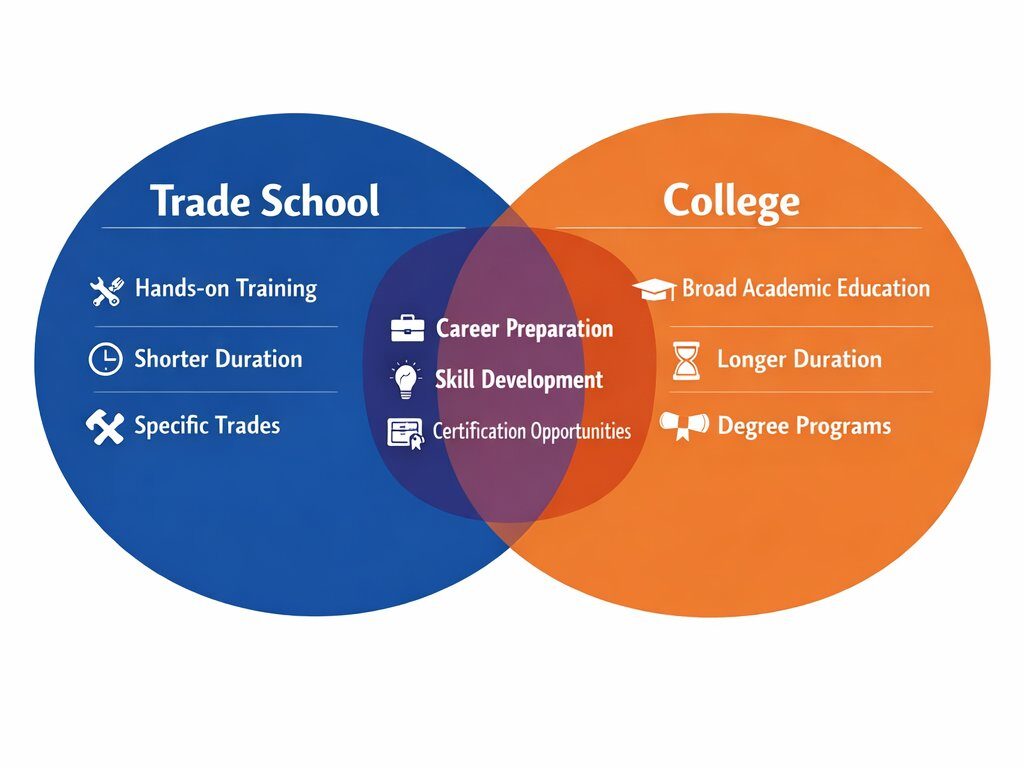
If you want a faster, cheaper route to a skilled job, trade school is hard to beat. If you’re after long-term flexibility or jobs that demand a degree, college might edge ahead.
Key Takeaways
- Trade school gets you working sooner and usually costs less.
- College offers a wider range of careers and advanced degree paths.
- Think about your timeline, budget, and job goals before picking.
Understanding Trade School and College
Let’s untangle what trade school and college actually offer, and how they set you up for different jobs.
What Is a Trade School?
Trade school, sometimes called technical or vocational school, teaches you hands-on skills for a specific job. Think electrician, welder, dental hygienist, or HVAC tech.
You’ll spend most of your time in labs and workshops, not lecture halls. Many programs include apprenticeships or internships, and tuition is usually much lower than college.
- Programs last 6 months to 2 years
- Certificates, diplomas, or associate degrees awarded
- Employer partnerships often lead to jobs
What Is a College?
College is broader: you’ll take general courses plus major-specific classes in fields like business, engineering, or nursing. A bachelor’s degree takes about four years, while an associate degree is closer to two.
Colleges focus more on theory and critical thinking, and many have career services, clubs, and research labs. Some jobs require a degree, and you can often transfer credits from community college to save money.
- General education plus major classes
- Associate or bachelor’s degrees
- More campus resources
| Aspect | Trade School | College |
|---|---|---|
| Duration | 6 months–2 years | 2–4 years |
| Focus | Hands-on job skills | Academic & critical thinking |
| Credentials | Certificate/diploma/associate | Associate/bachelor’s |
Key Differences Between Trade School and College
Trade programs are short and targeted, while college gives you a mix of general education and deep study. Credentials differ too—trade schools hand out certificates or diplomas, while colleges offer degrees.
Trade school costs less and can even pay you during apprenticeships. College is pricier and usually means more debt. Trade school gets you into hands-on work fast; college opens doors to white-collar roles and grad school.
- Trade = focused, fast, less debt
- College = broad, longer, more options
Comparing Costs, Duration, and Admissions
Let’s talk numbers: how much you’ll pay, how long it takes, and what it takes to get in. Choosing trade school or college after high school depends a lot on this.
Tuition and Overall Cost
Trade school can cost anywhere from $5,000 to $33,000 total, with many programs under $15,000. You’ll probably avoid big room-and-board bills.
College, on the other hand, can run $30,000 a year (or more) at public schools, and private colleges are even higher. That’s why college grads often have more debt than trade school grads.
- Trade school = lower tuition, less debt
- College = higher tuition, more loans
Program Length and Completion Time
Most trade programs finish in under two years—some in just six months. You can start earning a paycheck way sooner than your college-bound friends.
Bachelor’s degrees take about four years, but plenty of students take longer. Shorter trade programs mean you can save or invest earlier, but college may boost lifetime earnings in some fields.
- Trade = 6 months–2 years
- College = 2–4+ years
| Factor | Trade School | College |
|---|---|---|
| Cost | $5,000–$33,000 | $30,000+/year |
| Time to Complete | 6–24 months | 2–6 years |
| Debt | Low to none | Often high |
Admissions Requirements and Process
Trade school admissions are usually simple. You’ll need a high school diploma or GED, maybe a placement test, and sometimes a hands-on skill check.
Colleges ask for transcripts, test scores, essays, and recommendations. Competitive programs want a strong GPA and extra activities. Always check deadlines—missing FAFSA can cost you real money.
- Trade = easier, rolling admissions
- College = more selective, more paperwork
Career Outcomes, Job Prospects, and Lifestyle Differences
So, should you choose trade school or college after high school? Job speed, pay, and work style all change depending on your pick.
Career Paths in Trade School and College
Trade school sets you up for jobs like electrician, welder, dental hygienist, or truck driver. Programs range from a few months to two years, and you’ll likely do an apprenticeship or on-the-job training.
College grads go into engineering, construction management, nursing, or business. You’ll spend more time in class and might need extra degrees or certifications to move up.
- Trade = direct path to skilled jobs
- College = broader options, more schooling
Earning Potential and Average Salaries
Some trades pay well fast—electricians, plumbers, and mechanics can hit solid wages in a few years. Dental hygienists often earn above-average pay with just an associate degree.
College degrees can lead to higher salaries over time, especially in engineering or management. But don’t forget student debt and the years before you start earning full-time.
- Trades = good early pay, less debt
- College = higher long-term earning, more debt
| Path | Starting Pay | Long-Term Pay |
|---|---|---|
| Trade School | $35k–$60k | $50k–$90k+ |
| College | $40k–$55k | $60k–$120k+ |
Job Outlook and Security

Trades are in demand—there’s a shortage of skilled workers, so job security is strong. Construction, plumbing, and healthcare support roles are especially steady.
College grads in STEM and healthcare do well too, but demand depends on your field. Both paths require ongoing training and sometimes licensing to stay competitive.
- Trades = high demand, strong job outlook
- College = depends on major and market
Work Environment and Lifestyle Fit
Trade jobs are physical, often outdoors, and sometimes unpredictable. You might travel or work shifts, but you’ll see the results of your work every day.
College-trained roles are often in offices, clinics, or labs with more regular hours. If you want flexibility or management roles, a degree and internships help you get there.
- Trades = active, hands-on, sometimes self-employed
- College = office/lab, more routine, career mobility
Making the Right Choice for Your Future
At the end of the day, it’s about your goals, your finances, and how you want to spend your days. Should you choose trade school or college after high school? Only you know your priorities.
Return on Investment and Financial Considerations
Don’t just look at tuition—add up the total cost, including living expenses and lost wages. Trade programs might cost $5,000–$20,000, while four-year college can top $100,000.
Compare that to what you’ll actually earn in your first year. Some trades, like dental hygiene or elevator repair, pay near six figures without a bachelor’s. Use net price calculators and break-even math to see what makes sense for you.
- Trade = lower cost, faster payback
- College = bigger investment, longer payoff
Professional Development and Career Growth
Will your program help you grow? Colleges teach general skills you can use in other careers. Trade schools focus on job skills, but some offer stackable credentials so you can keep moving up.
Look for employer ties, internships, or apprenticeships—they boost your odds of getting hired. Make sure you can keep learning, whether through night classes or new certifications. Should you choose trade school or college after high school, aim for a path with real growth potential.
- Colleges = general skills, career flexibility
- Trades = hands-on, upgrade options
| Factor | Trade School | College |
|---|---|---|
| Cost | $5k–$20k | $100k+ |
| Payback Time | 1–3 years | 5–10 years |
| Growth | Certifications, apprenticeships | Advanced degrees, broad skills |
It’s not easy to decide—should you choose trade school or college after high school? There’s no universal answer, and honestly, both paths can lead to a rewarding life if you’re intentional about your choice.
Weigh your timeline, debt tolerance, and what kind of work makes you happy. Should you choose trade school or college after high school, what will your future self thank you for?
Key Factors to Consider When Deciding

Start with a checklist for both paths. Score each item for trade school and college.
Think about the total cost, especially after financial aid. How long will it take to finish?
Check if the program’s accredited. Local job demand matters—don’t skip that.
Look at the average starting salary for your field. See if employers in your area hire from that school.
- Consider class schedules and hands-on labs
- Find out licensing exam pass rates
- Ask about placement rates and alumni salaries
- Compare with BLS job outlooks
Visit campuses or actual worksites if you can. Chat with instructors, recent grads, and local employers—get their honest opinions.
Use official data to compare schools’ placement stats. Don’t just trust glossy brochures.
| Factor | Why It Matters |
|---|---|
| Cost after aid | Impacts debt and early career freedom |
| Program length | Shorter programs can mean faster income |
| Job demand | Leads to better chances of employment |
| Employer ties | Improves hiring odds after graduation |
If you need income quickly, shorter programs with strong employer connections make sense. Should you choose trade school or college after high school?
References
Bureau of Labor Statistics. “Electricians.” Occupational Outlook Handbook, U.S. Bureau of Labor Statistics, May 2024, https://www.bls.gov/ooh/construction-and-extraction/electricians.htm
Bureau of Labor Statistics. “Dental Hygienists.” Occupational Outlook Handbook, U.S. Bureau of Labor Statistics, May 2024, https://www.bls.gov/ooh/healthcare/dental-hygienists.htm
Bureau of Labor Statistics. “Occupational Employment and Wages — May 2024 (news release).” U.S. Bureau of Labor Statistics, Apr. 2025, https://www.bls.gov/news.release/pdf/ocwage.pdf
National Center for Education Statistics. “Price of Attending an Undergraduate Institution (Fast Facts).” Condition of Education, National Center for Education Statistics, U.S. Department of Education, 2024, https://nces.ed.gov/programs/coe/indicator/cua
Federal Reserve. “Higher Education and Student Loans.” Economic Well-Being of U.S. Households in 2024, Federal Reserve, 12 June 2025, https://www.federalreserve.gov/publications/2025-economic-well-being-of-us-households-in-2024-higher-education-and-student-loans.htm
Georgetown University Center on Education and the Workforce. Ranking 4,600 Colleges by ROI / The Major Payoff: Evaluating Earnings and Employment, Georgetown University — Center on Education and the Workforce, 2025, https://cew.georgetown.edu/cew-reports/roi2025/