The Ultimate Guide to Teaching Critical Thinking Skills

A middle school student stares at conflicting news headlines about climate change, unsure which information to trust. Meanwhile, their classmate confidently shares a social media post without checking if it’s actually true. These scenarios happen every day in this digital age, where information flows faster than ever and students need more than just facts—they need the ability to think through problems, question what they see, and make smart decisions.
This guide explores how educators can build these essential critical thinking abilities in their students. Whether you teach elementary, middle, or high school, you’ll discover practical classroom strategies that help students become thoughtful problem-solvers and confident decision-makers.
We’ll cover proven methods for developing critical thinking through engaging classroom activities, show you how to connect learning to real-world challenges that matter to students, and share effective ways to measure and support their growing analytical skills. You’ll also learn how to create a lasting impact by building these thinking skills into your everyday teaching approach, giving students tools they’ll use long after they leave your classroom.
Understanding Critical Thinking for Educational Success
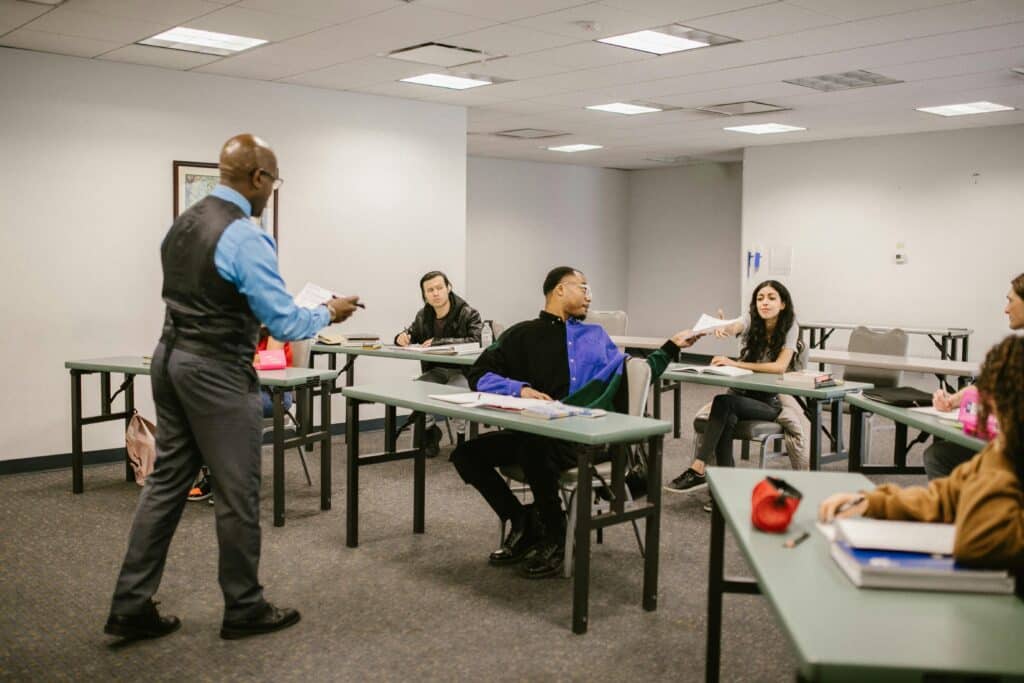
What Are Critical Thinking Skills and Core Competencies
Critical thinking represents an intellectually disciplined process that actively engages with information through conceptualizing, applying, analyzing, synthesizing, and evaluating data gathered from observation, experience, reflection, reasoning, or communication. This comprehensive approach serves as a guide to action, transcending subject matter divisions through universal intellectual values including clarity, accuracy, precision, consistency, relevance, sound evidence, good reasons, depth, breadth, and fairness.
The process involves examining fundamental structures of thought implicit in all reasoning: purpose, problems or questions-at-issue, assumptions, concepts, empirical grounding, reasoning leading to conclusions, implications and consequences, objections from other viewpoints, and frame of reference. Critical thinking incorporates various interwoven modes including scientific, mathematical, historical, anthropological, economic, moral, and philosophical thinking approaches.
Looking For Characteristics of Effective Critical Thinkers
Effective critical thinkers consistently attempt to live rationally, reasonably, and empathically while remaining keenly aware of the flawed nature of human thinking when left unchecked. They strive to diminish the power of their egocentric and sociocentric tendencies, working diligently to develop intellectual virtues such as intellectual integrity, humility, civility, empathy, sense of justice, and confidence in reason.
These individuals raise vital questions and problems while formulating them clearly and precisely, gather and assess relevant information using abstract ideas for effective interpretation, and come to well-reasoned conclusions tested against relevant criteria and standards. They think open-mindedly within alternative systems of thought, recognizing and assessing assumptions, implications, and practical consequences while communicating effectively with others to solve complex problems.
Connecting Critical Thinking to Career Readiness and Global Citizenship
Critical thinking serves as a foundational skill for career readiness by enabling individuals to analyze complex workplace challenges, evaluate multiple solutions, and make informed decisions based on sound evidence and reasoning. The ability to think critically about any subject, content, or problem allows professionals to improve the quality of their thinking by skillfully taking charge of inherent thinking structures and imposing intellectual standards upon them.
For global citizenship, critical thinking promotes fair-minded reasoning and empathetic understanding of diverse perspectives, enabling individuals to contribute to a more rational and civilized society. This self-directed, self-disciplined, self-monitored, and self-corrective thinking approach helps overcome native egocentrism and sociocentrism while fostering effective communication and problem-solving abilities essential for addressing complex global challenges.
Key Points:
- Critical thinking is an intellectually disciplined process involving analysis, synthesis, and evaluation
- Effective critical thinkers demonstrate intellectual virtues and well thought approaches to problem-solving
- These skills directly connect to career success and responsible global citizenship
- Development requires a lifelong commitment to self-improvement and rational thinking
Classroom Strategies for Developing Critical Thinking

Promoting Open-Ended Problem Solving Approaches
Effective critical thinking development begins with moving away from traditional answer-focused instruction toward open-ended problem solving that encourages multiple pathways to solutions. The “explore-before-explain” teaching methodology prioritizes giving students firsthand experiences with data collection and analysis before providing direct instruction. This approach requires students to construct evidence-based claims, analyze validity and reliability of their findings, and scrutinize outlying data points that may reveal deeper insights.
When students engage in open-ended problem solving, they must collect data, determine what the information means, consider how results might differ if investigations were repeated, and form robust understanding through intellectual activities. This process naturally develops critical thinking skills because students learn content by practicing the same methods experts use to generate knowledge in their respective fields.
The key to successful implementation lies in planning lessons that provide a knowledge base while offering excellent prompts that allow students to explore their own thinking. Rather than seeking single correct answers, educators should script questions that force higher thinking and avoid answering their own questions during instruction.
Integrating Globally Focused Learning
Critical thinking flourishes when students engage with compelling, globally relevant topics that connect to their lives and worldviews. Using current events as a foundation, educators can create learning spaces where thinking becomes the primary goal rather than achieving scores on standardized assessments. The FIRE Write technique demonstrates this approach effectively, where students Focus on current event materials, Identify specific phrases or sections, Reframe their responses around chosen elements, and Exchange thoughts with classmates.
This method proved particularly powerful when applied to controversial global issues, such as examining imagery from social justice movements alongside commercial advertisements. Students developed sophisticated analysis skills by comparing authentic protest photography with corporate messaging, leading to discussions about privilege, representation, and social responsibility.
Global connections help students understand that critical thinking skills transfer across all courses and into life beyond the classroom. When students analyze international events, cultural differences, and global challenges, they develop the analytical skills necessary for navigating an increasingly interconnected world.
Implementing Discussion and Reflective Practices
Meaningful discussion and reflection require educators to reduce their talk time and become comfortable with less classroom control. Rigorous lessons involving critical thinking must allow students to work independently, collaborate with peers, and connect their ideas organically. This shift feels counterintuitive but proves essential for developing deeper thinking skills.
Effective discussion facilitation involves asking questions and providing prompts that lead to multiple valid responses rather than single correct answers. When students receive identical assignments and produce very similar results, the activity likely lacks rigor. Conversely, when one assignment generates varied, thoughtful products, students have engaged in meaningful critical thinking.
Reflective practices should be embedded throughout learning experiences, encouraging students to examine their previously held beliefs and consider how their perspectives have evolved. This metacognitive awareness helps students understand their own thinking processes and develop more sophisticated analytical capabilities.
Implementing Action-Driven Learning Projects
Project-based learning immerses students in real-world problem scenarios that require collaboration, communication, information analysis, and solution development. These authentic experiences push students to engage in higher-order thinking throughout various project stages while connecting to issues relevant to their lives.
Successful action-driven projects often focus on local community connections, such as examining the impact of current events on neighborhood businesses or conducting interviews with local entrepreneurs. Students learn practical skills like interviewing techniques while evaluating multiple information sources and examining their assumptions about their communities.
The most effective projects require students to create authentic products for real audiences, moving beyond rote memorization toward meaningful creation. Whether developing blog posts, videos, research presentations, or community proposals, students must synthesize information, defend their conclusions, and communicate effectively with stakeholders.
Assessment of these projects should align with the rigor of instruction, ensuring that if lessons demand critical thinking, evaluations measure those same skills rather than simple recall or compliance.
Key Implementation Strategies
Strategy 1: Question-Driven Instruction
- Script five higher-order thinking questions before every lesson
- Avoid questions with single correct answers
- Allow wait time for student reflection and discussion
- Focus on prompts that encourage analysis, evaluation, and synthesis
Strategy 2: Authentic Assessment Alignment
- Design assessments that match lesson rigor levels
- Create rubrics that clearly define critical thinking components
- Expect varied student products that demonstrate individual thinking
- Provide opportunities for peer evaluation and self-reflection
Strategy 3: Community-Connected Learning
- Choose compelling, relevant topics that students care about
- Integrate local and global perspectives on issues
- Invite diverse viewpoints through guest speakers and primary sources
- Create opportunities for students to share learning with authentic audiences
Creating Real-World Connections Through Critical Analysis

Linking Classroom Concepts to Global Issues
Now that we have covered essential classroom strategies, connecting academic learning to real-world challenges transforms abstract concepts into meaningful applications. Critical thinking develops naturally when students analyze complex global issues through classroom lenses, examining evidence and questioning assumptions just as they would with skincare myths or scientific claims.
Encouraging Multiple Solutions
With this foundation in mind, students must learn that complex problems rarely have single solutions. By exploring various approaches to global challenges, learners develop the analytical skills needed to evaluate competing claims and evidence-based solutions.
Building Student Agency and Changemaker Mindset
Previously established critical thinking skills empower students to become active problem-solvers rather than passive consumers of information. When students learn to distinguish fact from fiction – whether analyzing anti-aging claims or social issues – they develop confidence in their analytical abilities.
Connecting Local Actions to Global Impact
Understanding how individual choices create broader consequences helps students see their role as critical thinkers in society. Just as prevention proves more effective than cure in skincare, early development of analytical skills creates lasting impact on students’ ability to navigate an information-rich world.
Key Points:
- Link classroom learning to real-world applications for meaningful engagement
- Encourage exploration of multiple solutions to complex problems
- Develop student confidence through evidence-based analysis
- Connect individual critical thinking skills to broader societal impact
Assessment and Evaluation of Critical Thinking Development

Measuring Student Progress in Critical Analysis
Effective assessment of critical thinking development requires establishing clear criteria that measure which skills are present and to what extent they need further development. Students demonstrating strong critical analysis accurately interpret evidence, statements, and graphics while asking relevant questions that drive deeper understanding. The assessment process should evaluate whether students can analyze and evaluate key information and alternative viewpoints clearly and precisely.
Evaluating Problem-Solving
Problem-solving assessment focuses on students’ ability to examine issues by breaking them down and evaluating them in a conscious manner while providing supporting arguments and evidence. Effective evaluation looks for students who can draw insightful, reasonable conclusions and justify their inferences and opinions. Assessment instruments should measure whether students can work with facts and observations to convince others of their thinking while identifying what they don’t yet understand.
Assessing Reasoning and Argumentation Skills
Strong reasoning assessment examines whether students can fair-mindedly examine beliefs, assumptions, and opinions, weighing them against factual evidence. Students should demonstrate the ability to thoughtfully address and evaluate major alternative points of view while thoroughly explaining their assumptions and reasoning processes. Assessment criteria should measure students’ capacity to engage in disciplined thinking within their subject areas, applying critical thinking concepts and principles across various forms of academic reasoning.
Key Assessment Points:
- Use multiple assessment instruments for comprehensive evaluation
- Establish explicit criteria that guide both students and teachers
- Assess throughout the course, not just at the end
- Focus on consequential validity to drive improved instruction
- Evaluate students’ ability to analyze, synthesize, and assess reasoning
Teaching critical thinking skills is one of the most valuable gifts educators can provide to their students. Throughout this guide, we’ve explored the fundamental nature of critical thinking, examined practical classroom strategies for development, discovered ways to create meaningful real-world connections, and learned effective methods for assessment and evaluation. These elements work together to build a comprehensive framework that prepares students not just for academic success, but for lifelong engagement as thoughtful, informed citizens.
The impact of critical thinking education extends far beyond the classroom walls. When students learn to examine multiple solutions, question assumptions, evaluate biases, and defend their reasoning with logical arguments, they develop the confidence to see themselves as changemakers. By integrating globally focused learning, facilitating meaningful discussions, and implementing action-driven projects that connect local community needs to broader global challenges, educators can foster the kind of innovative thinking our interconnected world demands. As students master these skills, they become career-ready individuals equipped to approach the global marketplace with confidence, adaptability, and a clear sense of purpose—ready to make a positive impact in their communities and beyond.
Works Cited
Batdı, V. (2024). Evaluation of the Effectiveness of Critical Thinking Training on Critical Thinking Skills and Academic Achievement: A Mixed-Meta Study. Wiley. Bera Journals
Bates, J. (2025). Cultivating Critical Thinking Skills: A Pedagogical Study in Higher Education. Taylor & Francis Online
Cáceres, M. (2020). “Integrating Critical Thinking into the Classroom: A Teacher’s …” Journal of Educational Research.ScienceDirect
Dwyer, C. P. (2023). “An Evaluative Review of Barriers to Critical Thinking in …” PMC
Golden, B. (2023). “Enabling Critical Thinking Development in Higher Education.” Taylor & Francis Online
Murawski, L. M. (2014). “Critical Thinking in the Classroom … and Beyond.” Journal of Learning in Higher Education, 25. ERIC
Shamboul, H. (2022). “The Importance of Critical Thinking on Teaching Learning Process.” Open Journal of Social Sciences, 10(1), 29-35. SCIRP
Sterkenburg, C. T. (2024). The Importance of Critical Thinking Skills in Secondary Classrooms. Graduate Projects, Grand Valley State University. ScholarWorks
Walker, S. E., & others. (2003). “Active Learning Strategies to Promote Critical Thinking.” PMC / peer-reviewed journal.PMC