How to Find Credible Sources for a Research Paper (And What to Avoid)
– Updated in May 2026

You’ve been working hard on a research report for your English teacher. It’s 8 pm, and you’re looking for new sources to back up your claims, but you can’t tell which ones would make you the most credible, and your teacher is putting a grade on your credibility.
Finding credible sources for a research paper is a top skill you can pick up as a student. The sources you choose are the basis of strength for your arguments and knowledge and also helps you avoid plagiarism.
The good news? Finding a credible source is easy when you follow a step-by-step guide on how to address and rank the credibility of online sources.
This guide will teach you how to:
- Start With the Right Source Types
- Where to Search for Strong Evidence
- Evaluate Credibility Fast
- Search Smarter and Avoid Common Traps
So, if you’re ready to sharpen your research skills, ScholarlySphere covers a range of study strategies and academic guides to help you build confidence in every part of the process.
Start With the Right Source Types
Knowing the differences between different types of online sources is the basis for starting your search for online resources. The type of sources you select depends on the depth of your research and assignment requirements.
Match the Assignment to Primary, Secondary, and Tertiary Material
Primary sources give you firsthand original evidence or research.
Examples: original research data, government documents, interviews, or historical letters.
A secondary source interprets or analyzes firsthand evidence from the primary source.
Examples: textbook chapters or review articles.
Tertiary sources summarize broad topics. They’re important for getting a decent understanding of a topic. However, they’re hardly ever necessary to put in your reference page.
Examples: encyclopedias and textbook glossaries.
As the Purdue OWL’s guide on evaluating sources points out, figuring out whether you need primary or secondary material early on helps you search more efficiently.
The two main types to focus on are primary and secondary sources. Primary sources should be used when original research is required; secondary sources should be used when the assignment requires an expert analysis.
Know When Scholarly Articles, Books, and Encyclopedias Fit Best
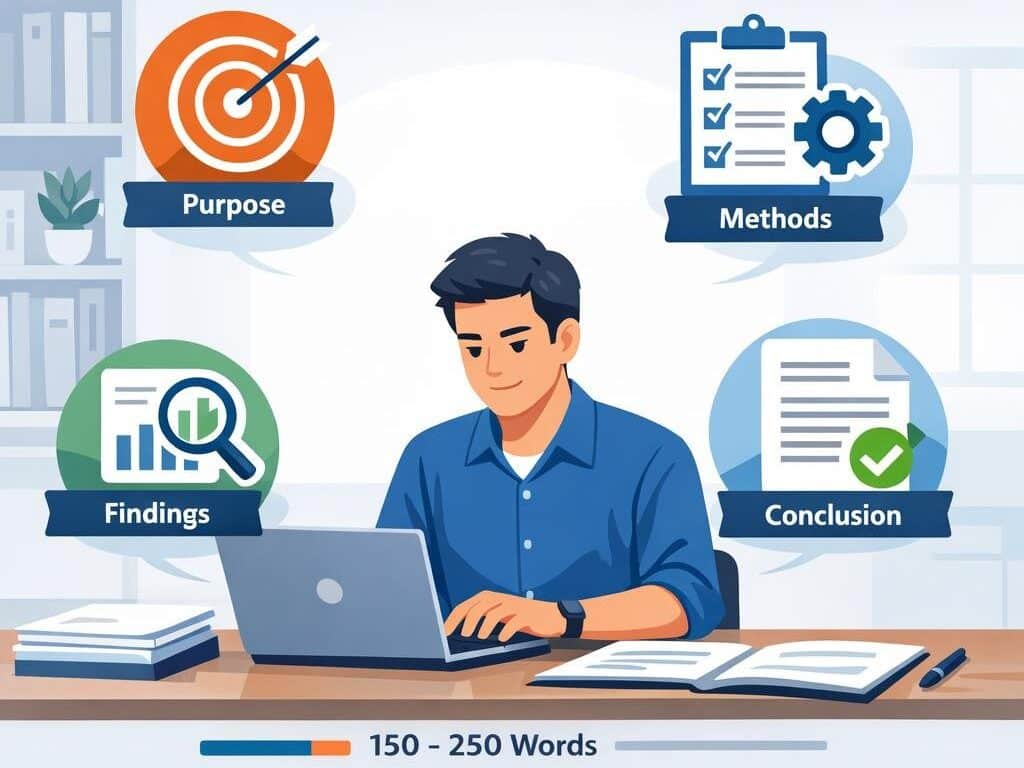
Scholarly journal articles normally go through peer review, meaning other experts have checked the work before publication. They’re most effective when you want to support a specific stance with a specific statistic.
Books and academic monographs are great for context. Usually, they cover a topic in more depth than a regular online page. Use these to obtain a solid basis of understanding and quotes or stats.
Encyclopedias and similar tertiary sources help you get up to speed quickly. Use them for background info; it’s normally not required to list these as cited sources.
Use Newspapers and Magazines Carefully
Newspapers can count as primary sources when they report on current events firsthand. Magazines and news websites, even though popular, don’t normally undergo a peer-reviewed check.
Don’t treat a magazine article the same way you’d treat a peer-reviewed journal article. Check if the publication has an editorial review process and whether the writer actually cites evidence.
Make sure it’s credible before moving on.
If your topic deals with public opinion or media coverage, newspapers and magazines might be appropriate. Before use, check for bias, as with public opinion, it might be weighted to one side.
For scientific or data-driven claims, stick with scholarly sources instead. Only use magazines if they are clearly peer-reviewed or have a rigorous review process.
Where to Search for Strong Evidence
Knowing which tool to use and when is an important step in cutting down on your research time. By starting strong, you’ll be less likely to have to search for more sources.
Use Google Scholar and Academic Databases Efficiently
Google Scholar is a great starting point for finding scholarly articles in multiple fields. It indexes journal articles, conference papers, theses, and books, giving you a broad, deep pool of information on almost every type of topic.
You can filter results by publication date to keep your sources current. For more specific searching, try these academic databases:
- JSTOR for humanities, social sciences, and historical journal articles
- PubMed for biomedical and life science research
- ERIC for education-related studies
- Web of Science and Scopus for citation-rich, multidisciplinary research
The BestColleges guide on online academic research tools notes that using subject-specific databases helps you find higher-quality results faster than a general web search.
Start with Google Scholar for a broad overview, then use more topic-specific databases for deeper, more focused knowledge.
Search Your University Library and Library Tools
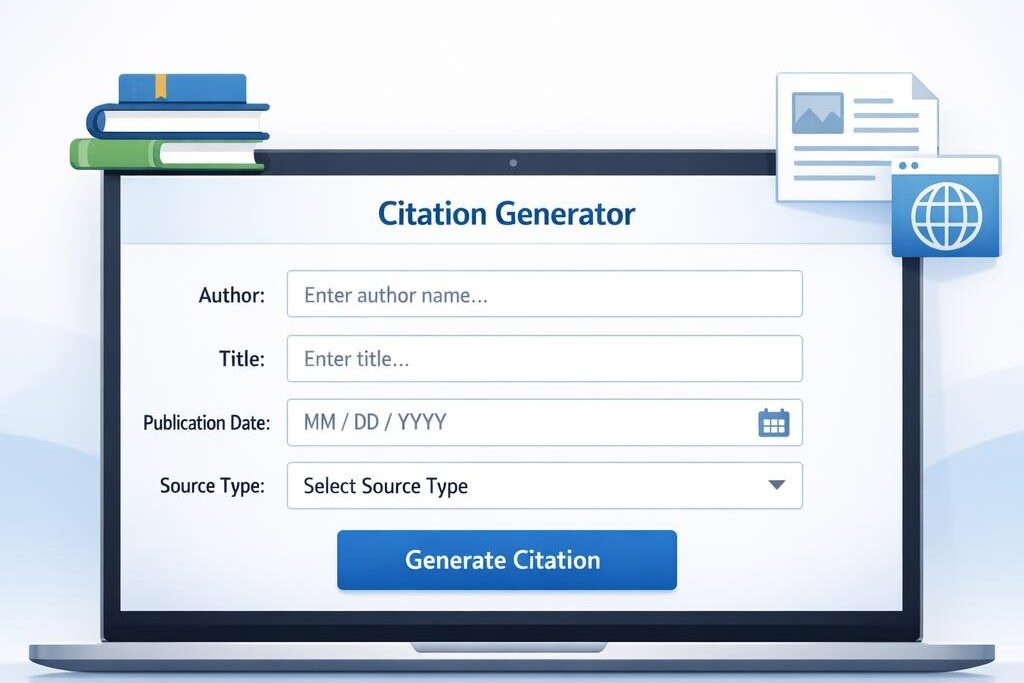
If you have a university library, it gives you access to thousands of journals and databases for free. Most library websites let you search their entire catalog and filter by source type, date, and subject.
If your library doesn’t have a specific article, use interlibrary loan. This service lets you request materials from other libraries, often at no charge.
Tools like WorldCat help you track down books and articles held by libraries worldwide. Also, don’t overlook your librarians; they can help you refine search terms and point you toward databases that are useful for your research topic.
Find Open-Access and Government Research Online
Several free resources offer peer-reviewed and government-backed content:
- PubMed Central for free full-text biomedical articles
- Directory of Open Access Journals (DOAJ) for peer-reviewed open-access journals
- Science.gov for U.S. government scientific research
- Google Books for previewing books and finding relevant chapters
- ResearchGate and the Digital Commons Network for author-shared papers
Government websites ending in .gov usually contain reliable data, reports, and policy documents. The Library of Congress also gives you access to primary source collections.
Open-access doesn’t mean low quality. Many respected and trusted research teams post on these platforms, keeping the quality high while making content available outside of a paywall.
How to Evaluate Credibility Fast
Finding sources is only the first half. The second is deciding whether a source lines up with your research topic and evaluating its credibility.

Check Authors, Publishers, and Peer Review
This is the first step; without this, the rest of your process falls apart.
Tip: ask, “Who is the author or researcher of this, and what makes them qualified to speak about this topic?”
Look for author credentials like academic titles, institutional affiliations, or a history of publishing in peer-reviewed journals. Also, check for any certificates or their field of study.
Tip: Don’t stop at PhD — check what field it is in and their position. You want it to be in and about the field you’re researching.
Next, check the publisher. University websites and established academic publishers follow strict editorial standards, ensuring the quality of the information is high.
The University of Arkansas research guide on credibility explains that the peer-review process involves expert reviewers who assess the work before publication.
If an article has no named author, no institutional backing, and no reference list, either don’t use it or only use it to build a general understanding of your research topic.
Read Domain Extensions Without Trusting Them Blindly
Domain extensions give you a starting basis for a source’s credibility, but don’t trust them without doing the evaluation steps mentioned above.
Here’s a simple guide to what each domain extension means:
| Domain | What It Suggests | Caution |
|---|---|---|
| .edu | University or college site | Student pages on .edu domains may lack peer review |
| .gov | Government agency | Generally reliable for data and official reports |
| .org | Nonprofit organization | Quality varies widely; some .org sites are advocacy-driven |
| .com | Commercial entity | May prioritize sales or clicks over accuracy |
A .edu or .gov domain is often a good sign. With .org or .com, evaluate the author as described above; if it’s a spammy blog or an advocacy-driven website, it’s better to move on.
Rule of thumb: always look further than the URL. .gov and .edu are always preferable, but not the end-all be-all when searching for credible sources.
Use Citation Count, Dates, and Reference Lists as Signals
A high citation count means other researchers found the work valuable. Google Scholar shows citation counts next to each result, making it easy to check a source’s influence at a glance.
Publication date matters, too. For evolving fields like technology or medicine, stick with sources from the last five to ten years.
For historical topics, older sources may still be perfectly valid. Finally, scan the reference list; strong sources cite other credible, peer-reviewed work.
If the reference list is missing or full of questionable or broken links, that’s a red flag. The JSTOR Research Basics module on establishing credibility explains how checking these elements helps you decide whether a publication is truly scholarly.
These are practical tips to assess credibility quickly. If you want a deeper analysis, you’ll need to read the source carefully and look into the author’s background and publication history.
Search Smarter and Avoid Common Traps
Refining how you search is just as important as knowing where to search. It helps you narrow your search from the beginning, making finding sources more efficient.
Build Better Search Queries With Boolean Operators
Boolean operators are simple words that tell a database how to combine your search terms. The three most common are AND, OR, and NOT.
- AND narrows results: “student motivation” AND “online learning.”
- OR broadens results: “study habits” OR “study techniques.”
- NOT excludes terms: “peer collaboration” NOT “workplace.”
Most academic databases and Google Scholar support these operators. You can also use quotation marks when searching for an exact phrase.
Using Boolean operators turns a vague search into a specific one. Try combining two or three operators in one query for the best results.
They not only speed up finding sources but also help make sure those sources are tightly related to your topic and can provide the specific answers your research requires.
Use Citation Chaining to Find More Relevant Studies
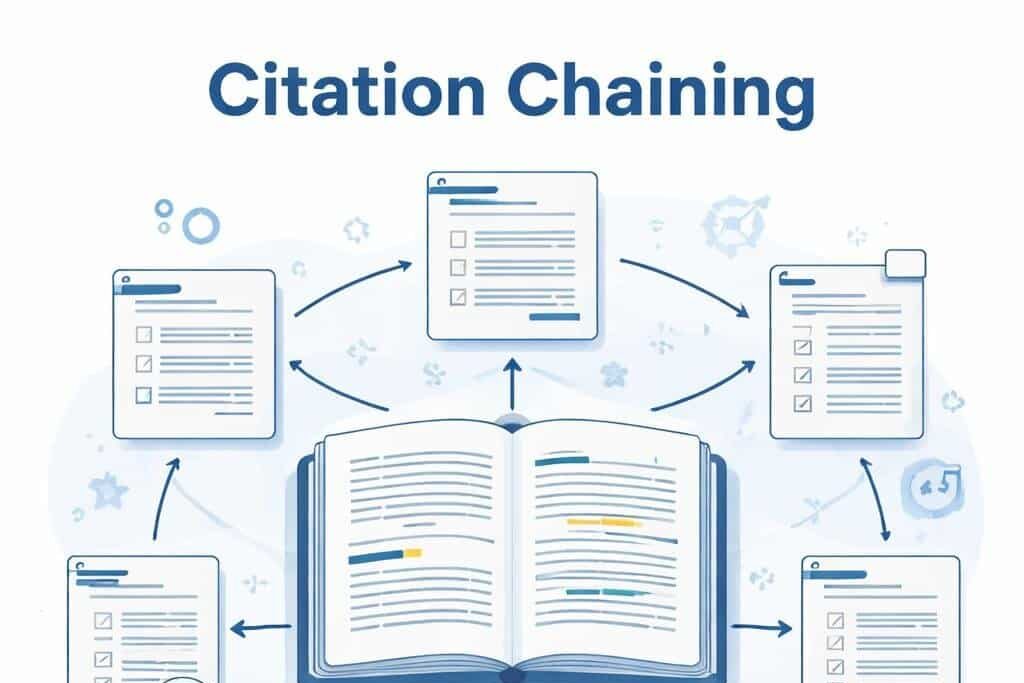
Citation chaining means using one good source to find others. There are two directions:
- Backward chaining: Check the reference list of a strong article. Each citation can lead you to another relevant study.
- Forward chaining: Use Google Scholar or Web of Science to see which newer articles have cited your source.
This technique helps you build a network of related, credible sources quickly. It also reveals which studies are most influential on a topic.
Tip: search your topic on Wikipedia, then go to the footnotes and you’ll find links to several original sources. Sometimes you’ll uncover three or four credible resources right there — just make sure to verify their credibility before using them.
Rowan University Libraries note that tracing citations is one of the most efficient ways to expand your research base, so use it.
Spot Red Flags Like Weak Websites and Unsupported Claims
Not every source that looks polished is actually trustworthy. Keep an eye out for these warning signs:
- No author name or credentials listed.
- No publication date, or it’s extremely outdated.
- No reference list or actual citations anywhere.
- Emotional or sensational language instead of straightforward reporting.
- A .com site packed with ads and zero editorial standards.
- Bold claims with no data or evidence to back them up.
If you see a source making bold claims but skipping the evidence, don’t cite it. For a specific step-by-step process, use Scribbr’s guide on evaluating sources, which covers the CRAAP test (Currency, Relevance, Authority, Accuracy, Purpose).
When in doubt, cross-check the claim with a peer-reviewed journal or a .gov database. It might take an extra two to three minutes, but it’s better to have a strong collection of sources than a weak one.
Conclusion
Now, imagine it’s 8 pm, you’re working on finding sources for your English teacher, but now you find 10 credible sources in under 30 minutes by using the steps mentioned in this article.
Finding credible sources for a research paper is not as complicated as it seems once you know what to look for.
When you find a source, don’t just accept it. Check the author’s credentials, verify the publisher, look for a peer-review process, and scan the reference list.
The sources you choose are the foundation your entire argument stands on. Take an extra five minutes to evaluate them properly, and your paper will be stronger for it.
This skill will not only be important for your academics but also when you leave school.
So, which steps will you use to improve your research skills and your grade?
Works Cited
Baer, Andrea. “Citation Chaining: Using One Source to Find More.” Rowan University Libraries, 15 Oct. 2025, https://libguides.rowan.edu/citationchaining
“Directory of Open Access Journals.” DOAJ, https://doaj.org
“Education Resources Information Center (ERIC).” Institute of Education Sciences, U.S. Department of Education, https://eric.ed.gov
“Evaluating Sources of Information.” Purdue Online Writing Lab, Purdue University, https://owl.purdue.edu/owl/research_and_citation/conducting_research/evaluating_sources_of_information/index.html
George, Tegan. “Applying the CRAAP Test & Evaluating Sources.” Scribbr, 31 May 2023, https://www.scribbr.com/working-with-sources/craap-test/
“Module 2: Establishing Credibility.” Research Basics: An Open Academic Research Skills Course, JSTOR, https://guides.jstor.org/researchbasics/credibility
“10 Best Online Academic Research Tools and Resources 2025.” BestColleges, 6 Nov. 2025, https://www.bestcolleges.com/blog/best-online-resources-academic-research/
Parker-Gibson, Necia. “Credibility: Identifying Reputable Sources for Papers and Projects.” University of Arkansas Libraries, 18 Sept. 2025, https://libguides.uark.edu/credibility
“PubMed Central: About PMC.” National Center for Biotechnology Information, U.S. National Library of Medicine, https://www.ncbi.nlm.nih.gov/pmc/about/intro/
“Scholar: About Google Scholar.” Google Scholar, Google, https://scholar.google.com/intl/en/scholar/about.html
“WorldCat.” OCLC, https://www.worldcat.org